Bhakti Chalak
Narayanpur Budruk, a village in Maharashtra's Marathwada region, is quietly challenging stereotypes. Home to an overwhelmingly Muslim population, the village has emerged as a model of religious harmony, environmental stewardship, digital governance and cleanliness, earning recognition as one of the country's model villages.
Located in Gangapur taluka of Chhatrapati Sambhajinagar district, nearly 90 per cent of Narayanpur Budruk's residents are Muslims. Both the sarpanch and deputy sarpanch belong to the community. Yet, one of the first landmarks visitors encounter at the entrance of the village is a beautifully renovated Hanuman temple—an enduring symbol of the village's inclusive ethos.
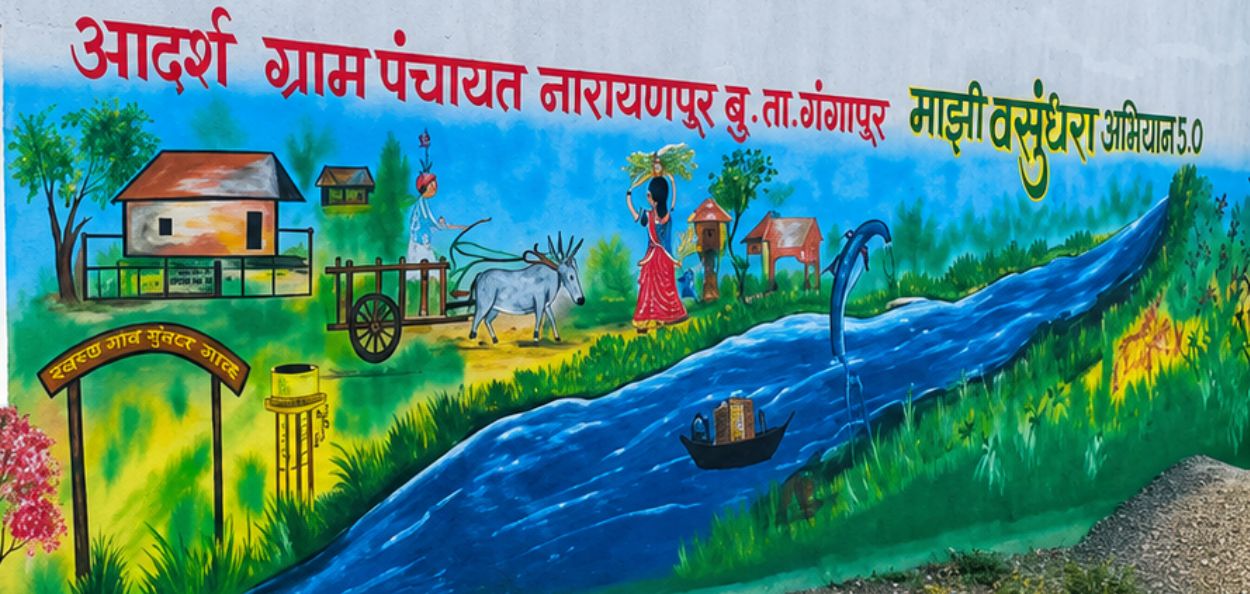 The entrance to the office of Sarpanch
Far from conforming to common prejudices about Muslim settlements, Narayanpur Budruk has become a district leader in sanitation, waste management and environmental conservation, drawing praise from both the government and the media.
Besides its Muslim majority, the village is home to a small Dalit population and has virtually no Maratha residents. Despite its unusual demographic composition, it has fostered remarkable social cohesion while preserving the religious heritage of all communities.
For decades, the village's ancient Hanuman temple had remained in ruins. According to local residents, the roof had collapsed long ago, leaving only the idol of Lord Hanuman exposed on a platform.
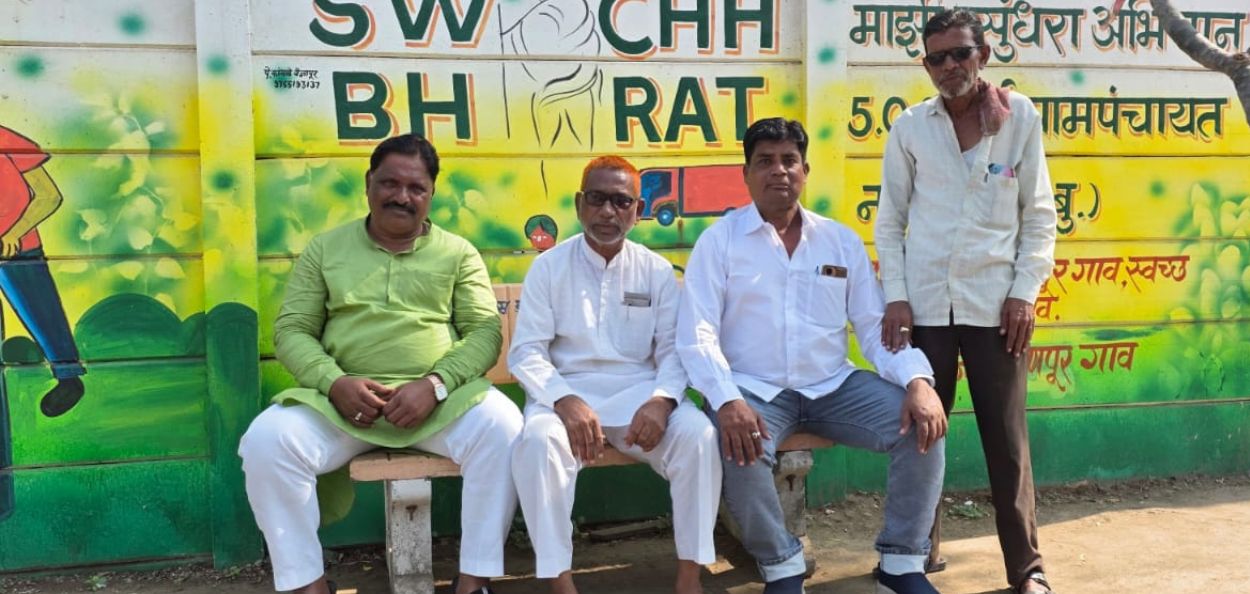 Villagers with Sarpanch Nasir Patel (Second from right)
The villagers unanimously resolved to restore the shrine. After consulting religious leaders, they rebuilt the sanctum and constructed a new roof, restoring the temple to its former dignity.
A video of the restoration has since gone viral on social media. It shows Muslim villagers gathered outside the temple, proudly declaring: "The temple is ours, the mosque is ours, and Babasaheb Ambedkar's statue is also ours."
Speaking to Awaz-The Voice, Sarpanch Nasir Patel said the temple had always been an integral part of the village's identity.
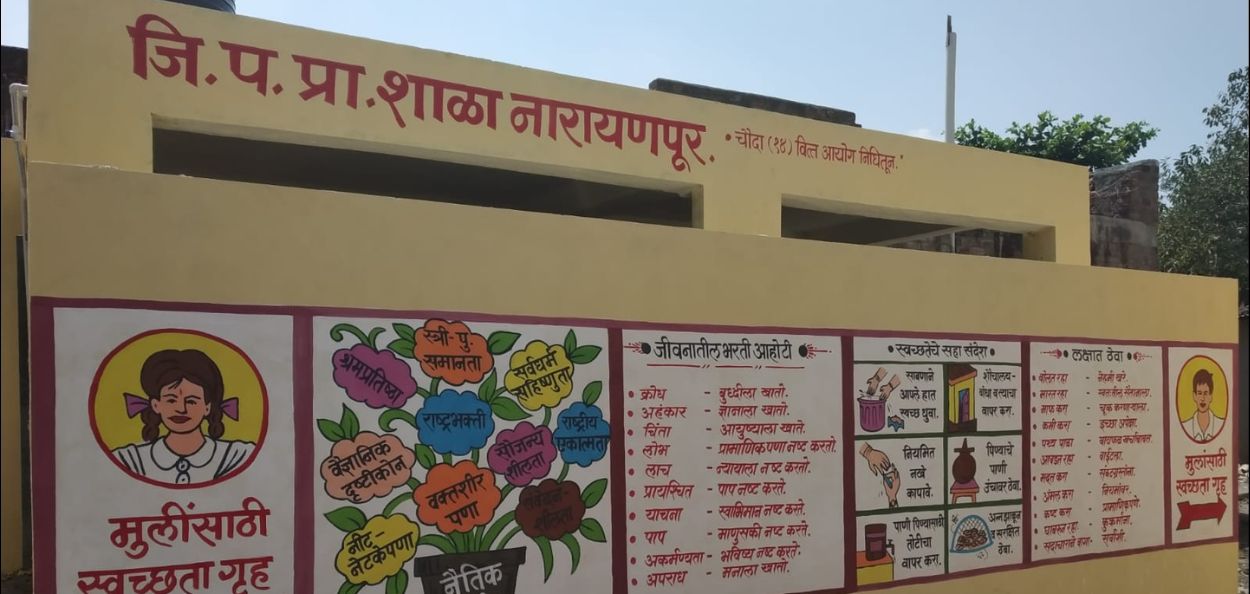 The village public toilet
"We have seen this Hanuman temple since childhood. When we realised the old structure had deteriorated, the villagers came together and rebuilt it through public donations," he said.
"The temple had no roof—only the Hanuman idol stood on a platform. We discussed the matter with the Maharaj before undertaking the renovation. Our village has always functioned through consensus and communal harmony."
Narayanpur Budruk has also distinguished itself through its environmental initiatives.
The Gram Panchayat secured first place in Chhatrapati Sambhajinagar district under the Majhi Vasundhara Abhiyan 5.0, a flagship campaign of Maharashtra's Department of Environment and Climate Change promoting environmental conservation and sustainable development.
Following a comprehensive desktop and field evaluation, the village was awarded ₹50 lakh for its outstanding performance in afforestation, solid waste management, cleanliness, public awareness and natural resource conservation.
Under Nasir Patel, who has been elected sarpanch for an unprecedented 30 consecutive years, the village has steadily transformed into a model of rural governance.
Visitors are greeted by cement concrete roads, underground drainage, a modern RO drinking water plant and meticulously maintained public spaces.
The village has become completely garbage-free. Separate facilities have been created for wet and dry waste segregation, while plastic waste is systematically collected and sent for recycling. Earlier, these initiatives earned Narayanpur Budruk the prestigious Sant Gadge Baba Gram Swachhta Puraskar.
Water conservation has become another defining feature of the village's development.
Led by Sarpanch Nasir Patel, Deputy Sarpanch Majid Patel and Gram Panchayat Officer Swapnil Gharmode, villagers undertook a large-scale rejuvenation drive for the Kham River flowing through the village.
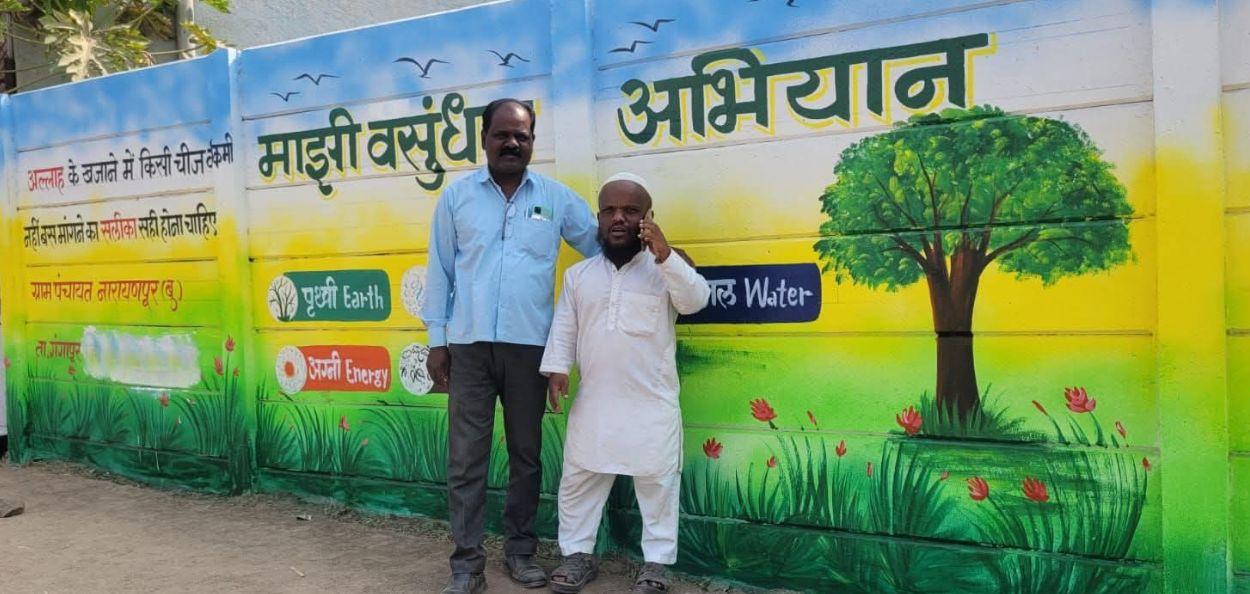 The locals of village Narayanpur Budruk
The river was desilted to increase its water-holding capacity and reduce flooding. A riverside walkway has been constructed, the banks have been landscaped, and extensive tree plantation is underway.
The village is currently planting 1,000 mango saplings, while Patel has announced an ambitious plan to plant 10,000 trees to transform Narayanpur Budruk into a fully green village.
The village's commitment to inclusivity extends beyond religious harmony.
A grand statue of Dr B.R. Ambedkar has been installed in the Dalit locality.
"Our objective was not merely to erect a statue but to introduce Babasaheb's ideals to the younger generation," Patel said.
ALSO READ: Dr. Sushil Razdan: The healer who united Kashmir
National festivals and religious celebrations are observed collectively. The birth anniversaries and commemorative days of national icons are marked to familiarise younger residents with their ideas and contributions.