
Mumbai
Every festival in India offers a glimpse of the country's unity and its composite culture, or Ganga-Jamuni Tehzeeb. Across communities, people often participate in, or show respect for, festivals that may not belong to their own faith.
A unique example of this spirit can be seen in Mumbai during Janmashtami. Before heading to Dahi Handi competitions, several Govinda Pathaks—teams that form human pyramids to break the traditional earthen pot—visit the nearly 600-year-old shrine of Hazrat Makhdoom Shah Baba in Mahim. They pay their respects and seek the saint's blessings before beginning their festivities.
The tradition dates back to 2014, with the exception of the years affected by the COVID-19 pandemic. Every year, young 'Govindas' gather outside the shrine and form human pyramids. But here, there is no Dahi Handi to break. Instead, the pyramid becomes a gesture of respect to Hazrat Makhdoom Shah Baba.
In a video circulating on social media, the Govindas can be heard collectively chanting, "Makhdoom Shah Baba ki Jai" (Victory to Makhdoom Shah Baba).
Over the years, the practice has evolved into a distinctive expression of love, brotherhood and mutual respect among communities.
The Dargah Trust warmly welcomes the visiting teams. Trust officials garland the Govindas and arrange refreshments for them. Team leaders are escorted inside the shrine to offer prayers and seek blessings, while the other members pay their respects at the entrance of the mausoleum.
Mumbai's diverse religious and cultural fabric is reflected in this unusual tradition. Some members of the Govinda Pathaks have also been seen wearing T-shirts associated with the organisation of Rahul Kanal, a figure linked to the Shiv Sena.
Their visit illustrates how communities can celebrate their own religious festivals while also participating in traditions associated with other faiths. The practice at the Mahim Dargah has thus become a small but striking example of Mumbai's long-standing culture of coexistence.
In a social media reel shared by the Dargah Trust, the tradition was described as a beautiful facet of Indian culture, carrying a message of peace, harmony and brotherhood.
The bond between the Dargah and Mumbai's festival traditions is not limited to Janmashtami.
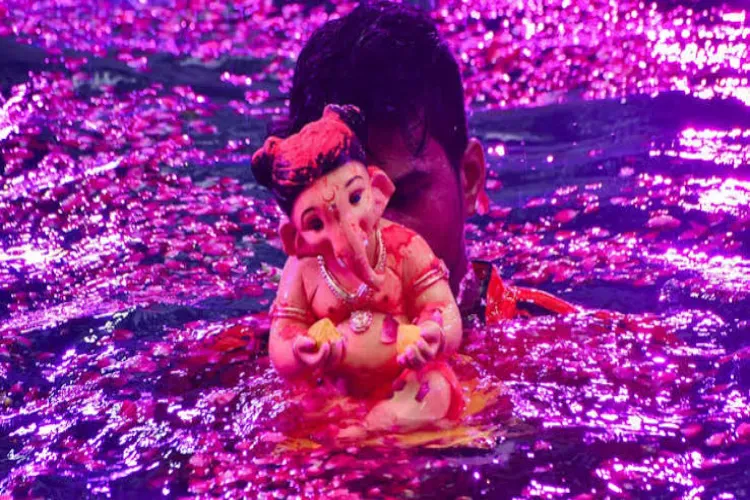
During the Ganpati festival, many mandals and devotees reportedly stop at the shrine while on their way to the immersion ceremony. They pause to pay their respects at the Dargah of Hazrat Makhdoom Shah Baba before continuing with their celebrations.
According to the Dargah administration, such interactions help spread messages of religious tolerance, peace and communal harmony. They also reflect Mumbai's distinctive cultural ethos, where people from different communities often share in one another's celebrations.
Who Was Hazrat Makhdoom Faqih Ali Mahaimi?
Hazrat Makhdoom Faqih Ali Mahaimi, popularly known as Makhdoom Ali Mahaimi, was a prominent Sufi saint and Shafi'i scholar. He is regarded as one of the important Shafi'i scholars of the 15th century and among the early Indian scholars to write a commentary on the Holy Qur'an.
Born in 1372 AD, on 10 Muharram 778 AH, in Mahim, he devoted his life to religious scholarship and spiritual guidance. His scholarly writings and fatwas continue to hold importance in religious circles.
Known for his intellectual depth and spiritual grace, Makhdoom Ali Mahaimi became an influential religious figure of his time. His shrine in Mahim remains an important spiritual centre and a place of devotion for people from different backgrounds.
The Dargah's annual Urs and Mela is also associated with a long-standing tradition involving the Mumbai Police. The celebrations begin with the police offering a ceremonial salute and presenting the first sandal. The practice is said to be more than a century old.
The association between the Mumbai Police and the Mahim Dargah is another reflection of the city's composite cultural traditions. The ceremonial salute and presentation of the chadar are seen as part of a longstanding relationship between the shrine and the wider community.
Hazrat Makhdoom Ali Mahaimi passed away in Mahim on February 7, 1432, and was laid to rest there. Centuries later, his name remains deeply woven into the religious and cultural identity of Mahim.
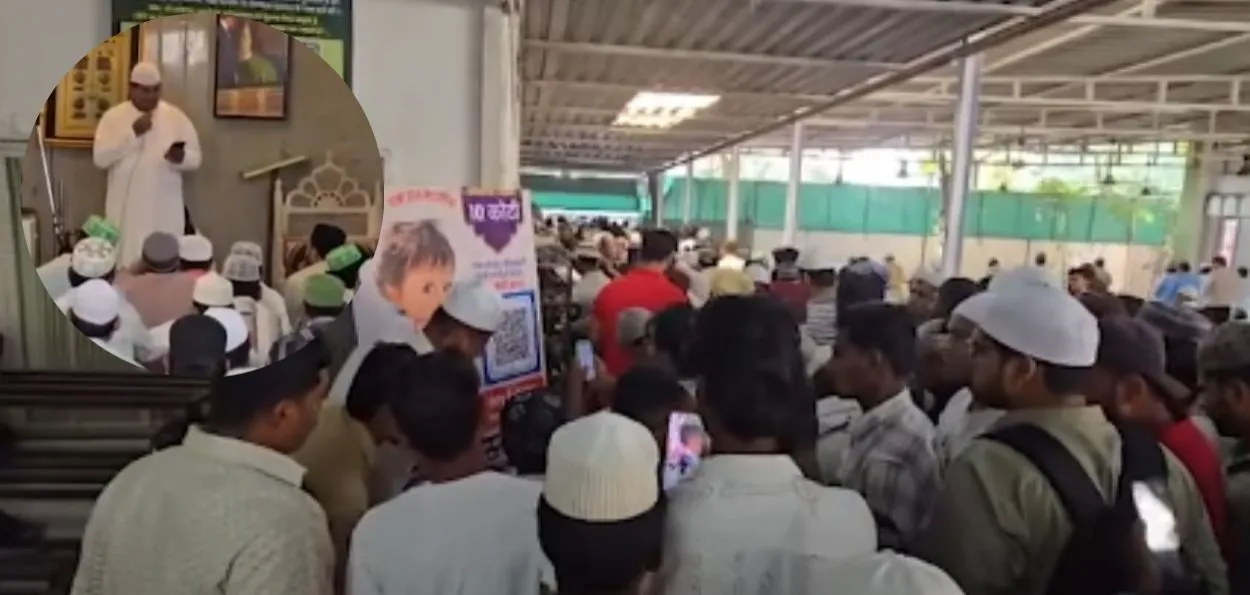
ALSO READ: Pune mosque offers prayers and raises funds for toddler Gargi's treatment
His shrine is not only a spiritual destination for devotees but has also become a living symbol of Mumbai's shared heritage—where faiths may remain distinct, but respect, celebration and community life often intersect.

.webp "Union Home Minister Amit Shah")









.webp)