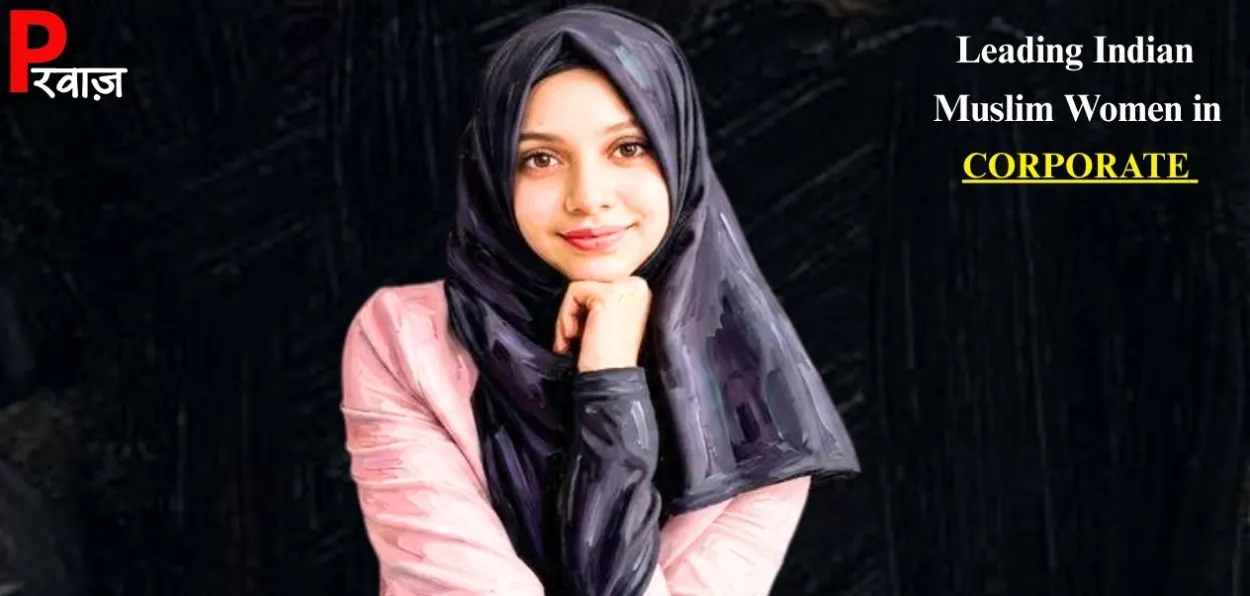
_(1).jpg "Noted advocate and columnist from Assam, Zeba Zoariah and former Bollywood actress Zaira Wasim")
Daulat Rahman/Guwahati
Noted advocate and columnist from Assam, Zeba Zoariah, has strongly criticised former Bollywood actress Zaira Wasim over her recent remarks questioning the participation of Kashmiri schoolgirls in Independence Day celebrations, describing the argument as a reflection of the radicalisation of Islam and a troubling misinterpretation of Muslim women’s education and identity.
Wasim, who quit acting in 2019 citing concerns over its compatibility with her faith, recently questioned the Jammu and Kashmir Waqf Board’s involvement in an Independence Day programme at a school in Kashmir. Referring to a video of girls performing on stage, she questioned whether a religious institution entrusted with serving the Muslim community should endorse an event where children, particularly girls, were made to perform.
Wasim argued that institutions should instead encourage children to “think, create, learn, discuss, build or contribute” and invoked Kashmir’s tradition of education, spirituality and intellectual development. She maintained that her criticism was directed not at the children but at the institutions organising and facilitating such programmes.
Zoariah who is often seen participating in television panel show on social issues, however, has taken strong exception to the argument, saying the issue is far more serious than a disagreement over a dance performance.
As an Assamese Muslim woman, I find this argument more disturbing than the dance she is offended by. And coming from a former Bollywood actor, the irony is difficult to miss.
— Zeba Zoariah (@ZZoariah) August 17, 2026
You built part of your own public career in an industry of cinema, music, dance and performance. Nobody… https://t.co/PUPyK2sv38
“As an Assamese Muslim woman, I find this argument more disturbing than the dance she is offended by,” Zoariah said in her post on X, adding that the argument becomes particularly ironic coming from someone who herself built a public career in cinema and performance.
She questioned why Kashmiri girls should be reduced to “stage props” simply because they danced during an Independence Day celebration.
According to Zoariah, there would be nothing objectionable in arguing that schools should provide girls with greater opportunities in debate, science, books, history, poetry, scholarship and sport. “Make that argument. I would support it,” she said.
However, she objected to bringing the Waqf Board and Islamic values into the discussion in a manner that makes Muslim children celebrating India’s Independence Day appear to be facing a religious dilemma.
“Why?” she asked.
‘My Islam does not require me to prove distance from India’
Drawing from her own experience as an Assamese Muslim woman, Zoariah said Muslim identity does not require cultural isolation from the country or society to which Muslims belong.
She pointed out that indigenous Muslim communities in Assam have histories deeply intertwined with Assamese society.
“My Assamese identity does not dilute my Islam. My Islam does not require me to constantly prove distance from India,” she said.
Zoariah also rejected the idea of treating the Waqf Board as some kind of “theological border checkpoint” determining how much Indianness Muslims are allowed to display.
According to her, Muslim educational and charitable institutions do not stop being Muslim simply because their students celebrate the country’s Independence Day.
She posed a pointed question: What exactly crossed the line—the dance, the girls, the Tiranga, or Kashmiri Muslim girls appearing completely comfortable with the national flag?
For Zoariah, these are fundamentally different questions that should not be conflated.
‘Why can’t a girl dance and become a scientist?’
Zoariah also challenged what she described as a false choice between intellectual achievement and artistic expression.
She questioned the assumption that a Muslim girl who dances cannot simultaneously become a scientist, scholar or intellectual.
“Why is her intellect being measured against her willingness to perform?” she asked.
She argued that Muslim girls should not be forced into narrowly defined identities in which education, faith, creativity and participation in public life are treated as mutually exclusive.
“A Muslim girl can study the Quran in the morning, solve equations in the afternoon, dance in the evening and grow up to disagree with the government of the day. None of those things cancels the others,” she said.
‘Muslim identity is not so fragile’
Zoariah further criticised what she sees as an attempt to portray Muslim identity as something so fragile that a song, a dance or the Indian national flag could somehow threaten it.
“Please stop treating Muslim identity as something so fragile that a song, a dance or the Indian flag can contaminate it,” she said.
Reiterating her own identity, she added:
“I am Assamese. I am Muslim. I am Indian. I have never needed to subtract one to authenticate another.”
Zoariah said the deeper concern, in her view, is not Muslim girls participating in Independence Day celebrations but adults potentially imposing an identity crisis on children in the name of protecting them.
“The tragedy isn’t Muslim girls dancing with the Tiranga. The tragedy is adults handing Muslim children an identity crisis and calling it protection,” she said.
Wasim’s argument
Wasim’s comments came after she came across a video of an Independence Day celebration at a school in Kashmir reportedly held for or by the Waqf Board.
In her post on X on August 16, the former actress questioned why an institution with a religious mandate would lend its name to celebrations involving children performing on stage.
She argued that Kashmir has a rich legacy of people who viewed education as a means of enlightening minds, building character and developing knowledge and spirituality.
Wasim said that if an institution has a religious purpose, it has a responsibility to strengthen communities spiritually, morally and intellectually.
She also clarified that her criticism was aimed at the institutions rather than the children, arguing that children often simply participate in activities organised by schools and institutions.
READ MORE: Palestinian envoy asks Delhi to set up artificial limb center in Gaza
The contrasting views have now opened up a wider debate over Muslim identity, women's education, artistic expression, patriotism and the role of religious institutions in public life—with Zoariah arguing that faith and Indian identity need not exist in opposition, and that empowering Muslim girls should mean giving them more choices, not fewer.

_(1)_(1).webp "Khanqah Emadia Qalandaria, Patna, Bihar")
.webp "Shrine of Hazrat Maulana Ziauddin Shah-e-Wilayat")
_(1).webp "tHE shrine of Hazrat Syed Shah Ehteram Al Qaderi")