




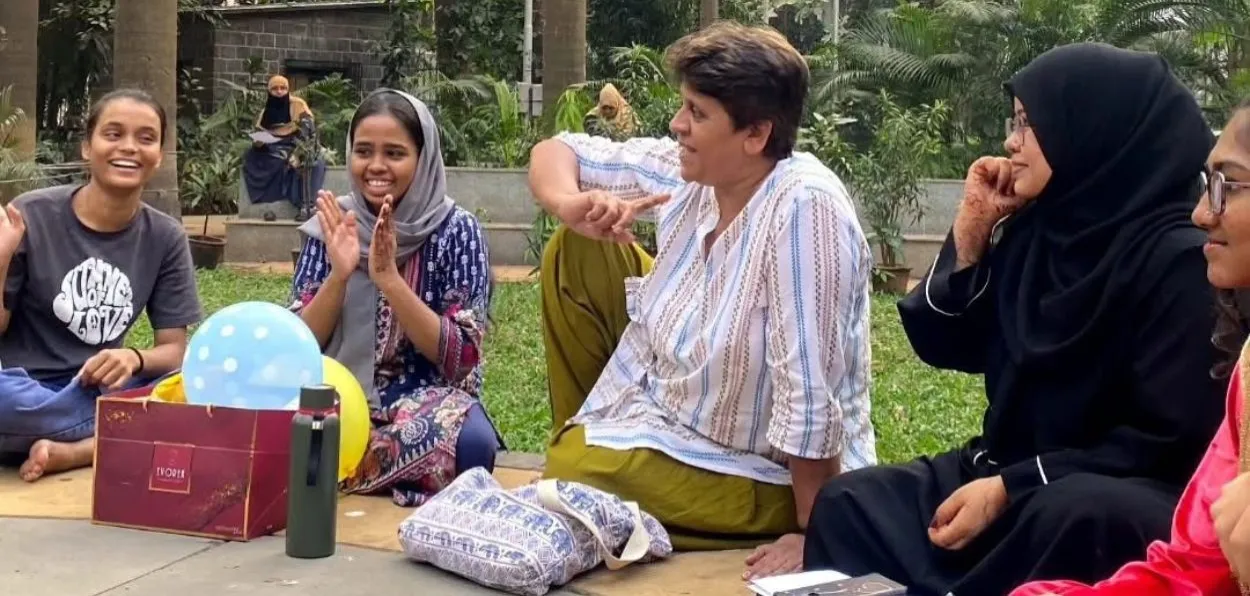
Bhakti Chalak/Pune
These Roza cards also have duas (prayers) written on them.
Hasina Khan, the founder of Bebaq Collective, explained the story behind this initiative. She said, “We have been working on women's rights for 15 years. During Ramzan, people often read the duas or messages on the Roza cards, and each reader derives a meaning from these.
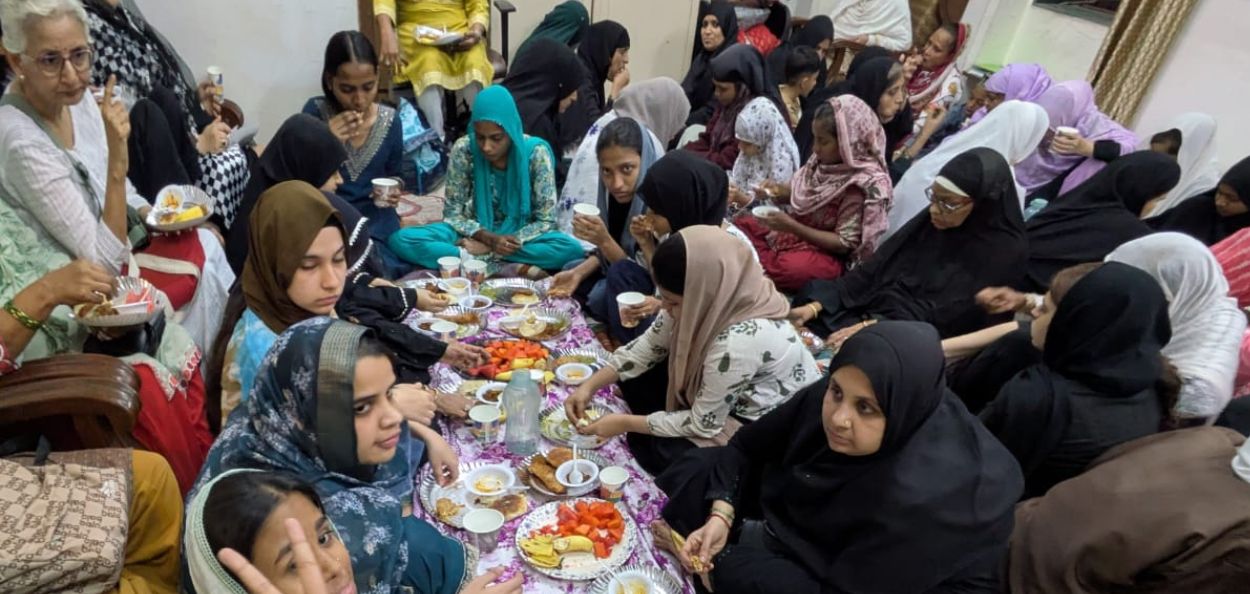 Interfaith Iftar hosted by Bebaq Collective
“In some places, they contain thoughts these Roza cards also contain ideas that Muslim women should only stay behind the veil. We are trying to change this limited perspective of those who print the cards. Through the Ramzan cards we prepared and distributed, we conveyed the thought that presents the rightful claims of women to the people.”
Hasina Khan adds, “To maintain peace in the country, we must begin from our homes. Real peace can be established only by stopping violence against women. We have given exactly this message through this card. We asked the readers of the Roza cards to stop atrocities on women and ensure all theirrights to live.
"A discrimination-free society and equal respect for all religions should be the feeling of every person who holds faith. We intended to convey that very feeling to the people through the card.”
Some of the messages on the Bebaq cards that the Collective distributed among Muslims have messages like: O Allah, grant women freedom from all kinds of oppression; O Allah, create ease for the poor, the oppressed, and the helpless in our country, etc.
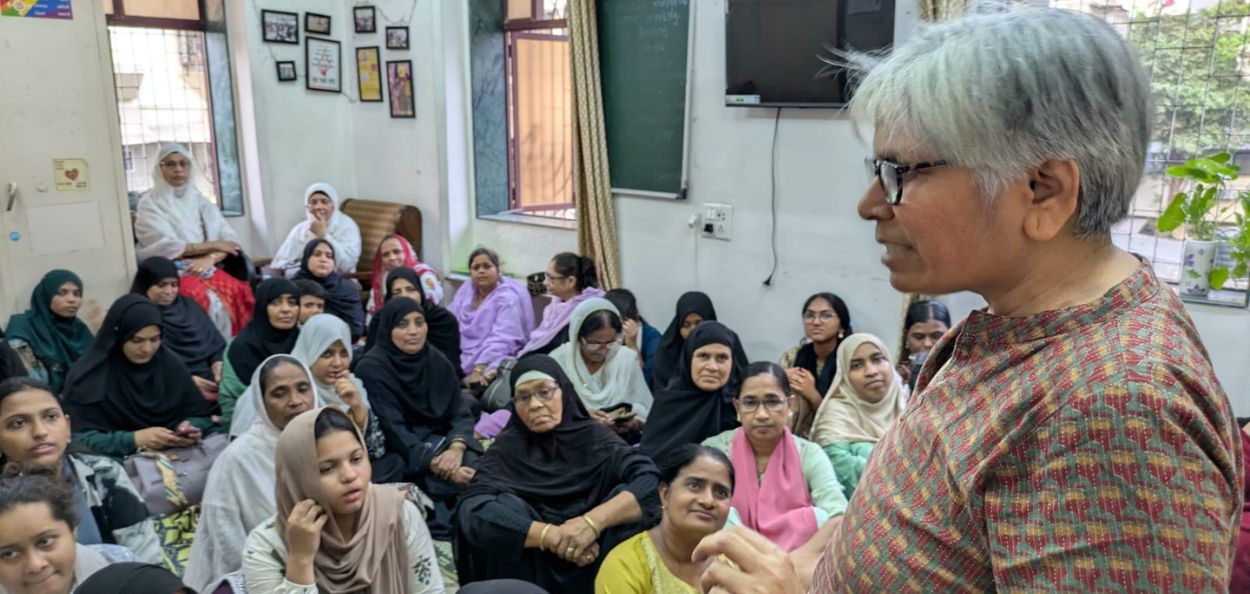 Hasina Khan addressing women
In the current political and social environment, the issues of Dalits, Muslims, tribals, and the labour class are often ignored. Through this card, attention has been drawn to the problems of these exploited sections. It clearly articulates that everyone should get dignified employment and that the backward classes should get work to increase their security.
Through many such initiatives, the Bebaak Organisation has tried to build a progressive society where women have freedom of respect, security, and decision-making. Every home and neighbourhood should be free from violence.
Hasina says that this is the core sentiment behind this.
Hasina expressed hope that humanity should get more importance than the politics of hate. She says, “Our organisation works for disabled persons, women, and young girls. We are fighting hard to ensure that the restrictions placed on girls as they grow older are removed.”
She further says, “Our organisation works especially for disabled persons, women, and young girls. Our future goal is to provide play areas for disabled children and proper facilities for the elderly to walk around. Along with this, our main intentions are that the deprived should get justice, children should get quality education, and a safe future. In the current political environment, the issues of Dalits, Muslims, tribals, and the labour class seem to be ignored. We are striving so that the backward classes get work to increase their security and everyone gets employment.”
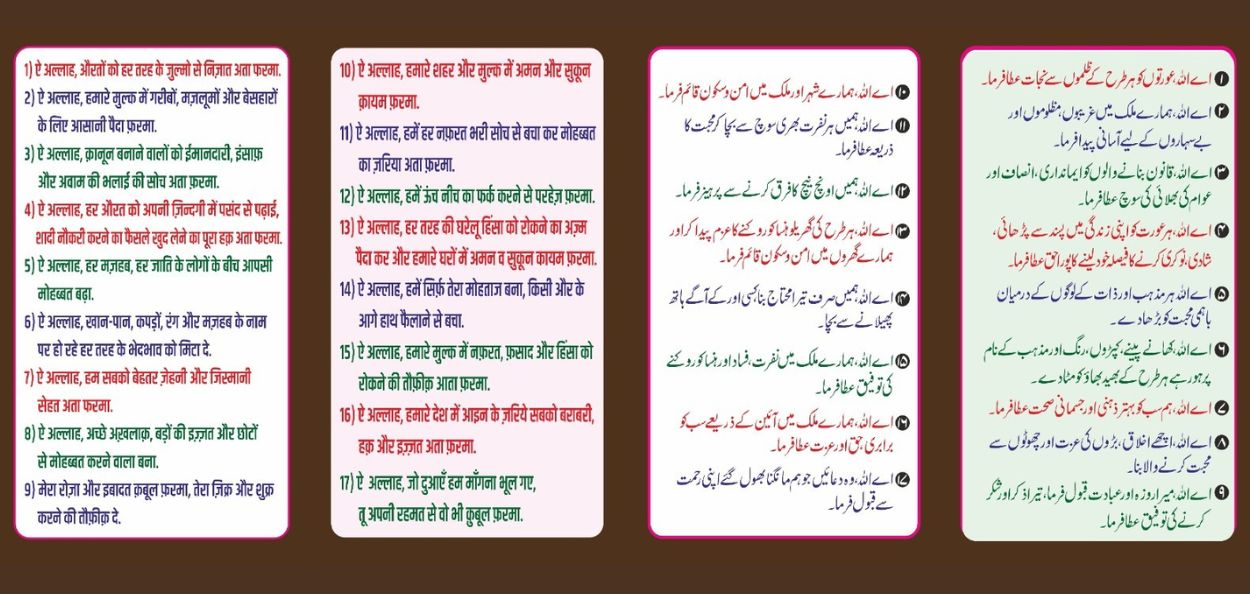 Bebaq Roza cards
During Ramzan, people of various castes and religions came together and recited all these duas at a special Iftar program organised by the organisation. Hundreds of people supported these thoughts in one voice. This Ramzan card, which advocates women's rights, justice and gender equality, is proving to be the beginning of a positive change in society.
The Bebaq Collective works for the constitutional rights of Muslim women and gender justice. This organisation of autonomous women is not limited to religious reforms, but is struggling from the streets to the Parliament for the citizenship rights of women.
In its session in Delhi in January which was attended by 500 representatives from 14 states, the Collective waged a campaign 'Muslim Aurton Ki Awaaz: Sadak Se Sansad Tak' (The Voice of Muslim Women: From the Streets to the Parliament). They raised a demand for social security and equal civil rights.
ALSO READ: Pilot Hana Mohsin Khan defies social and religious stereotypes
In its report Behind the Pixels, the organisation highlighted the vulnerability of Muslim women on social media. The organisation has documented how women's public presence is being restricted through death or rape threats received online.
The organisation has also taken up cases of Muslim women who were subjected to unjust Fatwas.
_(1)_(1).webp "Jagannath Rath Yatra")







.webp)
_(1).webp)
.webp)
