New Delhi
Emphasising the need for a collective approach to strengthen medicine safety and pharmacovigilance, WHO Representative to India Dr Yvan JF Hutin on Monday said that promoting a "culture of safety" involving all stakeholders is important to prevent medication-related risks.
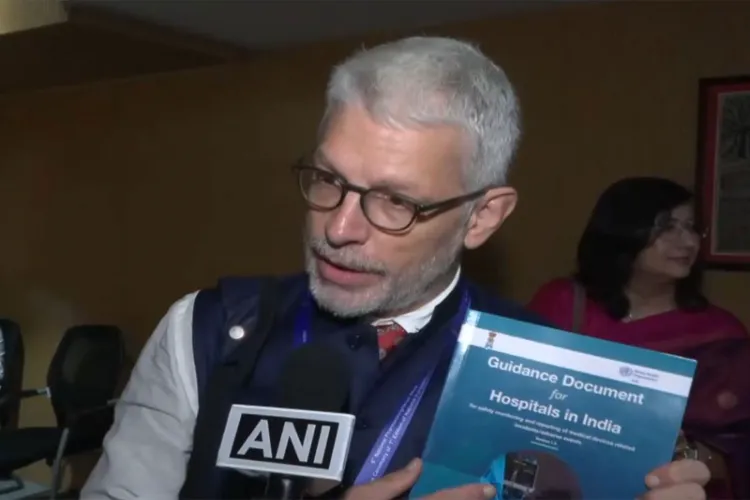
Speaking to ANI on the sidelines of the 7th Edition of the National Formulary of India (NFI), Hutin highlighted the World Health Organization's collaboration with the India Pharmacopoeia Commission (IPC), particularly on developing guidelines for monitoring the safety of medical devices.
"We work very closely with the India Pharmacopoeia Commission into all kind of activities including setting standards. For example, we're very proud that we've been working very closely on this manual which explains how we can ensure vigilance for things like medical devices because we've had more experience over time with vaccines and with medication. So devices – these are a bit of an emerging subject if you want. So we're very happy that, hand in hand with working with the IPC and the Government of India, we've been able to propose these guidelines to further assist in improving safety," Hutin said.
Asked about the steps needed to create greater awareness and prevent adverse circumstances related to medicines, Hutin said medicine safety requires participation from all stakeholders, including government authorities, regulators, patients, prescribers and healthcare workers.
"It's a collaborative effort between all the actors. So that includes the ministry, the IPC, the patients who also have a role because they should not be taking medicine without a prescription, the prescriber, and the healthcare workers. So it's a group effort. So I cannot single out a single intervention, but what's important is to continue to propose a culture of safety which involves all the actors," the WHO Representative to India said.
Hutin's remarks came as Union Minister of State for Health and Family Welfare Anupriya Patel launched the 7th Edition of the National Formulary of India, along with the Guidance Document for Hospitals in India for Safety Monitoring and Reporting of Medical Device-Related Adverse Events and the ADR-PvPI 2.0 Mobile App for iOS users.
The launches were held during the 6th National Pharmacovigilance Week programme organised by the Indian Pharmacopoeia Commission.
The 6th National Pharmacovigilance Week is being observed from September 17-23, 2026, under the theme “Promoting Rational Use of Medicines through Pharmacovigilance: A Step Towards Safer Healthcare.”
The programme brought together senior government officials, regulators, healthcare professionals, academicians, researchers and other stakeholders working to strengthen medicine safety and patient care.
Hutin underscored the importance of sustained collaboration among national and international stakeholders in strengthening medicine safety and pharmacovigilance systems.
READ MORE:After NASA recognition, Aarian Zeeshan Ahmed sets eyes on sun
The guidance document on medical device-related adverse events is aimed at supporting hospitals in safety monitoring and reporting, while the ADR-PvPI 2.0 mobile application provides an updated digital platform for pharmacovigilance-related activities.

.webp "Representational Image")