.webp "Representational image")
Hong Kong
China has navigated a turbulent global and domestic environment in recent years, particularly in the aftermath of the COVID-19 pandemic. However, 2025 proved to be relatively favourable for President Xi Jinping and the Chinese Communist Party (CCP), aided in part by widespread international instability and the disruptive global role played by US President Donald Trump.
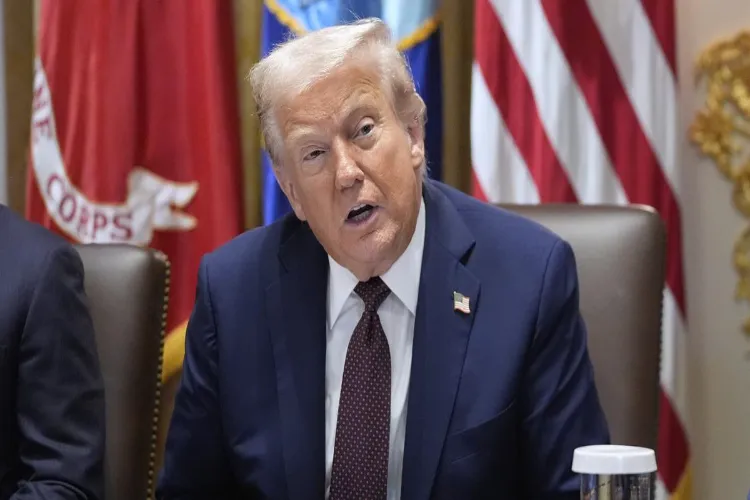
After returning to office on January 20, 2025, Trump quickly unsettled allies by imposing tariffs on a wide range of countries and sharply criticising European partners. His public rebukes of Ukrainian President Volodymyr Zelenskyy, coupled with perceived deference towards Russian President Vladimir Putin, drew criticism, especially as Russia’s war in Ukraine continued unabated. Trump’s approval of Nvidia’s sale of H200 artificial intelligence chips to China further fuelled perceptions that commercial interests outweighed strategic concerns.
As Washington grappled with erratic policymaking, Xi projected himself as a steady global actor, positioning China as a responsible power. Beijing intensified outreach to the Global South, accusing the US of undermining international order while portraying itself as a defender of free trade, development assistance and international law.
Despite this narrative, China continued assertive and destabilising actions, benefiting from global distraction caused by conflicts in Ukraine and Gaza. The US-China Economic and Security Review Commission, in its 2025 report to Congress, noted that Xi remained focused on challenging US leadership and elevating China’s global standing.
The report highlighted Beijing’s push to shape an alternative world order centred on China, symbolised by a high-profile military parade in Beijing marking the anniversary of China’s World War II victory. Leaders from Russia, North Korea, Iran and other authoritarian states attended the event, underscoring China’s expanding geopolitical alignment.
The September 3, 2025, Tiananmen Square parade showcased the growing strength of the People’s Liberation Army (PLA), featuring advanced weaponry, including multiple types of nuclear-capable intercontinental ballistic missiles, submarine-launched systems and air-launched nuclear weapons. Analysts noted a significant expansion of China’s nuclear arsenal.
Sam Roggeveen of Australia’s Lowy Institute described 2025 as an unprecedented year for observing PLA developments. Beyond revelations about sixth-generation fighter aircraft, he cited milestones such as the commissioning of China’s third aircraft carrier, the unveiling of new amphibious vessels, evidence of massive military infrastructure construction near Beijing, and signs of a fourth, possibly nuclear-powered, aircraft carrier under development.
While acknowledging remaining capability gaps, Roggeveen concluded that China had moved beyond imitation to become a leader in military technology. The PLA’s increasing assertiveness has been evident in regular military pressure on Taiwan, naval drills near Australia and intensified activity in the South and East China Seas.
The US commission warned that despite claims of promoting stability, China continued “grey-zone” activities, including provocative manoeuvres near Taiwan, cyberattacks, alleged sabotage of undersea cables, and aggressive maritime actions against neighbouring countries such as the Philippines and Japan.
The report also accused Beijing of indirectly supporting Russia’s war effort through dual-use supplies, backing Iran and its regional proxies, and shielding North Korea diplomatically while aiding its cyber and weapons programmes. Taiwan remained a major flashpoint, particularly after the US approved an USD 11.1 billion arms package for the island in December 2025.
Experts such as Lyle Morris of the Asia Society Policy Institute cautioned that 2026 would be critical for cross-strait stability, with leadership changes in Washington and Taipei adding complexity. While Xi continues to advocate “peaceful reunification,” growing impatience within China over non-military approaches has been noted.
Domestically, the CCP has tightened control through an intensified anti-corruption campaign, centralisation of authority and efforts to suppress dissent. While these measures strengthen Xi’s grip on power, analysts argue they have weakened governance capacity, contributing to economic slowdown, strained public confidence and diplomatic friction.
China’s economy faces mounting challenges, including high debt, weak consumption, a fragile property sector and declining workforce growth. Although priority sectors like advanced manufacturing continue to receive strong state support, broader economic momentum remains subdued.
Despite these pressures, Beijing has increased its focus on self-reliance and long-term planning ahead of the 15th Five-Year Plan (2026–2030) and the 21st Party Congress in 2027. Xi’s consolidation of power and confidence in managing US-China tensions were evident in 2025, including his use of rare-earth supply leverage during trade negotiations with Washington.
READ MORE: Nirmal, my Abba's most trusted son
While China’s assertive diplomacy has sometimes damaged its global image, Beijing continues to pursue a coordinated strategy aimed at reducing US influence and preparing for potential conflict. Central to Xi’s worldview is the belief that global power is shifting eastward, with China poised to eventually surpass the United States—a vision that, according to analysts, gained partial momentum in 2025.




.png)