Munich (Germany)
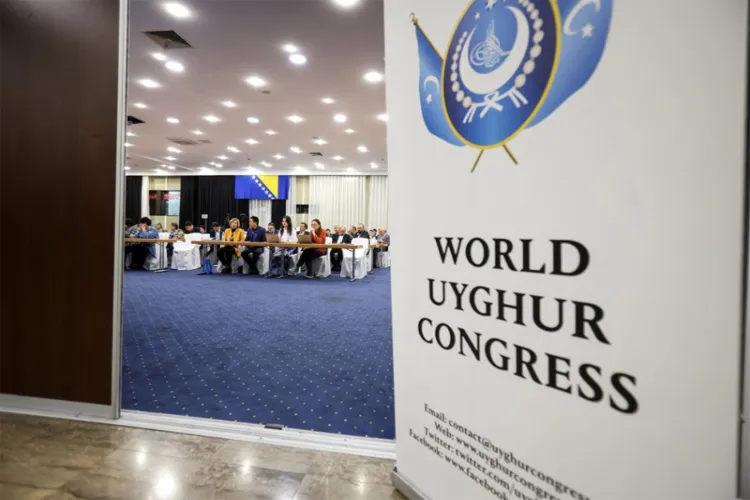
The World Uyghur Congress has released its monthly brief highlighting its international campaign against China's treatment of Uyghurs, carrying out a month-long advocacy drive across Europe and Canada that focused on alleged genocide, transnational repression, and forced labour linked to East Turkistan.
During a series of meetings in Belgium and Germany, WUC representatives engaged with European Union officials, Members of the European Parliament, and policymakers from EU member states, urging tougher and more coordinated action against China's policies targeting Uyghurs.
WUC called for stronger safeguards against products tied to forced labour entering international supply chains and pressed European governments to confront what it described as China's systematic persecution of Uyghur communities.
The advocacy campaign culminated in a European Parliament resolution condemning China's "Law on the Promotion of Ethnic Unity and Progress," which critics argue institutionalises forced assimilation and cultural erasure in Uyghur and Tibetan regions.
In Canada, the WUC Vice President appeared before the Canadian Subcommittee on International Human Rights to testify on China's alleged transnational repression tactics. The testimony highlighted intimidation, surveillance, and threats faced by Uyghur diaspora communities abroad, while urging Ottawa to strengthen protections and pursue accountability measures against Chinese authorities.
Senior WUC officials also met Canadian lawmakers to discuss legislation aimed at preventing goods produced through forced labour from entering Canadian markets. During a press conference on Bill C-251, WUC representatives stressed the need for stricter enforcement mechanisms to block imports connected to human rights abuses in East Turkistan.
READ MORE: West Bengal Polls: BJP makes dent in TMC stronghold of Muslim-majority districts
Meanwhile, former WUC President Dolkun Isa addressed the United Nations Forum in New York under the Human Rights Dialogue framework, where Chinese representatives reportedly denounced him as a "separatist" and "terrorist" after he raised concerns about the Uyghur issue.
Later in Berlin, Isa spoke at the Hertie School on China's controversial Ethnic Unity Law, warning that the legislation seeks to formalise longstanding repression and accelerate the forced assimilation of Uyghurs and Tibetans. The event brought together academics, legal experts, and rights advocates to examine the broader implications of Beijing's policies on human rights and international law.








_Amir_Baram_(1).webp "IMOD Director General Major General (Res.) Amir Baram")
.webp "xternal Affairs Minister S Jaishankar with Mongolian President Khurelsukh Ukhnaa")