




New Delhi
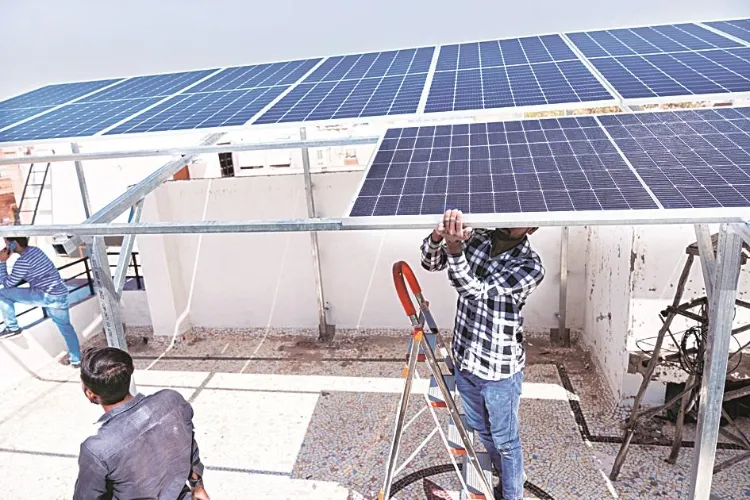
Ashish Khanna, Director General, International Solar Alliance (ISA) has underscored the urgent need for digital infrastructure to support the rapid expansion of decentralized renewable energy, particularly solar power, in India and other developing nations at AI Impact Summit 2026.
"Just out of 1,000 gigawatt or $1 trillion of solar energy that was invested in the last two years, 40% was decentralized, means either on the rooftop or with people. That figure is only 15% in India, which means as India wants to do a lot more solar because it is cheapest, more affordable, there will be a lot more decentralized renewable energy," he said.
According to the Khanna, decentralized renewable energy requires distribution companies to upgrade their digital capabilities to manage growing complexity on the grid.
"But as decentralized renewable energy goes, local distribution companies need to have foundational digital elements to understand what's really happening in the system, where more energy needs to come, how can efficiency happen and not have adverse financial implications. So this is a foundational element," he explained.
India's technology ecosystem, he noted, is already developing cost-effective digital tools. "Now India, IT startups are doing a lot of this at 10% of the cost of global giants. So we are taking this experience and we want to take it globally because the India energy stack that India is wanting to do can be India's gift to the world. So we want to work with at least 10 to 15 countries so that countries of Africa and others are not left behind on digital deep frogging."
Outlining a "global AI mission," he listed five priorities: adapting AI products for distributed renewable energy, encouraging startup innovation, establishing interoperable standards across countries, ensuring citizen benefits, and structuring sustainable financing models.
On costs, he was unequivocal: "So you see the cost of solar and storage is at least 40% cheaper than other fossil fuels in most countries, which is the reason it's doing a lot more. But if you don't do digitize, there are limits of how much of solar you can take."
He emphasized that digitization, through smart meters and intelligent grids, would enable low-income households to install rooftop panels and batteries, potentially generating income. "Have smart meters, have intelligent grids, and make sure a lot of poor people can have solar rooftops, can have batteries, and they can generate income. That's what Honorable Prime Minister Modi is saying in the AI summit. India should make AI for helping the poor."
A key solution under consideration is an AI-based "Digital Twin" platform. "What it does, it maps all the assets from meter, transformer, wire, on a digital site, and says what's really happening in your system," he said. The system would allow utilities to assess transformer loads, rooftop energy inflows, and future installation capacity--capabilities many distribution firms currently lack.
Looking ahead, he predicted a transformation in energy trading similar to the retail revolution led by Amazon. "We believe what happened in retail on Amazon will happen in energy in next five years," he said, envisioning a scenario where households with rooftop solar and battery storage trade surplus electricity when away on holiday.
READ MORE: Assam doctor gets national award for blood donation awareness
Despite global economic uncertainties, he stressed that solar and storage deployment is set to double within four years. "The world is going to double the solar and storage in next four years. And why they are doing? Because it's the cheapest," he said, adding that affordable and clean energy remains essential for growth across developing economies.










.webp "Sriram Krishnan, Senior White House Policy Advisor on Artificial Intelligence")







.webp)