Washington
India and the United States on Saturday announced that they have reached a framework for an interim trade agreement aimed at boosting bilateral commerce through reciprocal tariff reductions and enhanced market access.
Under the framework, the US will lower import duties on Indian goods to 18 per cent from the existing 50 per cent, while India will eliminate or reduce tariffs on all American industrial goods and a broad range of US agricultural and food products. These include dried distillers’ grains, red sorghum for animal feed, tree nuts, fresh and processed fruits, soybean oil, wine and spirits.
A joint statement said India has also conveyed its intention to purchase goods worth USD 500 billion from the US over the next five years, including energy products, aircraft and aircraft components, precious metals, technology products and coking coal.
“The US and India are pleased to announce that they have reached a framework for an Interim Agreement regarding reciprocal and mutually beneficial trade,” the statement said.
In a significant move, US President Donald Trump, through an executive order, removed the additional 25 per cent import duty imposed on Indian goods in August last year over New Delhi’s purchase of Russian oil. The order cited India’s “significant steps” and its commitment to halt direct or indirect imports of oil from Moscow.
The order stated that with effect from 12.01 am (EST) on February 7, 2026, Indian products entering the US market will no longer be subject to the additional 25 per cent ad valorem duty.
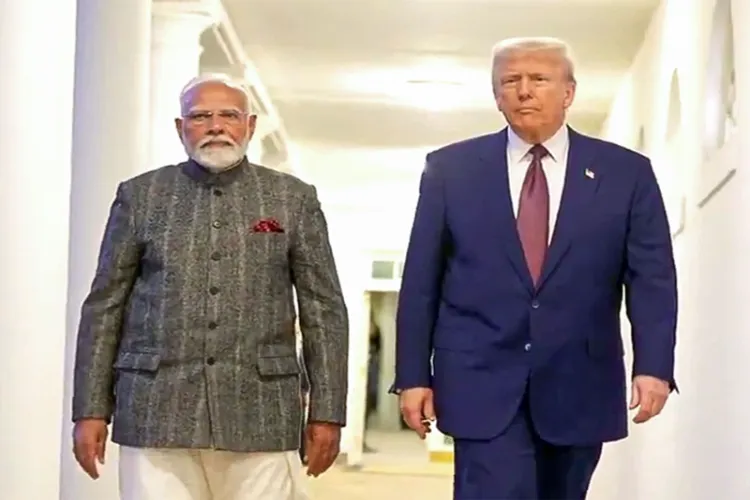
Prime Minister Narendra Modi welcomed the development, saying the interim trade pact would strengthen the ‘Make in India’ initiative by creating new opportunities for farmers and entrepreneurs and generating employment for women and youth.
Commerce and Industry Minister Piyush Goyal said the agreement would open access to a USD 30 trillion US market for Indian exporters, particularly MSMEs, farmers and fishermen, following the sharp reduction in American tariffs.
The tariff rollback is expected to provide a major boost to India’s labour-intensive sectors such as textiles and apparel, leather and footwear, plastic and rubber products, organic chemicals, home décor, handicrafts and select machinery.
In addition, duties will be reduced to zero on several items, including generic pharmaceuticals, gems and diamonds, and aircraft parts, significantly enhancing India’s export competitiveness. India will also receive exemptions under Section 232 on aircraft parts, tariff-rate quotas for auto components and negotiated outcomes on generic medicines.
“At the same time, the agreement fully safeguards India’s sensitive agricultural and dairy sectors, including maize, wheat, rice, soya, poultry, milk, cheese, ethanol, tobacco, vegetables and meat,” Goyal said.
India is expected to eliminate import duties on certain US goods immediately upon the agreement’s implementation, while others will be phased out over time. In some sectors, tariffs will be reduced, while in others, quota-based concessions will apply.
The Office of the US Trade Representative said the agreement expands American farmers’ and producers’ access to one of the world’s largest markets.
“India has committed to eliminate or lower tariffs on all US industrial goods and a wide range of agricultural products, address long-standing non-tariff barriers, and significantly increase purchases of American goods and services,” it said.
US Trade Representative Jamieson Greer said the deal underscores President Trump’s trade strategy of unlocking opportunities for American workers and producers.
Both countries said they would move swiftly to implement the framework and work towards finalising the interim agreement, with the objective of concluding a comprehensive Bilateral Trade Agreement (BTA). The legal text of the interim pact is expected to be finalised by mid-March.
India has also agreed to address long-standing market access issues related to US medical devices, simplify restrictive import licensing norms affecting ICT products, and resolve non-tariff barriers affecting American food and agricultural exports.
The agreement also seeks to expand bilateral trade in technology products, including graphics processing units and data-centre-related goods, while enhancing cooperation on technical standards and conformity assessments.
During 2021-25, the US remained India’s largest trading partner in goods. In 2024-25, bilateral trade stood at USD 186 billion, with India exporting goods worth USD 86.5 billion and importing USD 45.3 billion, resulting in a trade surplus of USD 41 billion.
READ MORE: Muslims must prioritise education for girls: Ex-Maha minister Anees Majeed Ahmed
Apparel Export Promotion Council Chairman A Sakthivel said the tariff cuts and expanded market access would significantly enhance the global competitiveness of India’s textile and apparel sector, positioning the country as a reliable sourcing destination.