Amir Suhail Wani
The question of salvation—who is saved, and by what path—has occupied the minds of theologians, mystics, and philosophers across religious traditions. Within popular religious discourse, Islam is often portrayed as exclusivist, asserting salvation only for those who formally identify as Muslims. Yet a deeper engagement with the Qur’an, Prophetic teachings, and the rich intellectual and mystical heritage of Islam reveals a far more expansive, subtle, and compassionate vision.
At its heart, Islam affirms the oneness of God (tawḥīd), but it does not confine God’s mercy to the sociological boundaries of a single religious community. Rather, salvation, in Islamic thought, is ultimately rooted in sincerity, moral responsibility, recognition of truth as one understands it, and Divine grace.
The Qur’an itself provides the foundation for this inclusive horizon. One of the most frequently cited verses in this regard declares: “Indeed, those who believe, those who are Jews, Christians, and Sabians—whoever believes in God and the Last Day and does righteousness—shall have their reward with their Lord; no fear shall come upon them, nor shall they grieve” (Qur’an 2:62; repeated with slight variation in 5:69).
These verses are striking not only for their explicit inclusion of non-Muslim religious communities but also for their emphasis on faith in God, ethical conduct, and accountability in the Hereafter rather than formal communal affiliation alone. The Qur’an further insists that God does not wrong anyone and that no soul is burdened beyond its capacity (2:286), suggesting that divine judgment takes into account one’s circumstances, access to truth, and inner intention.
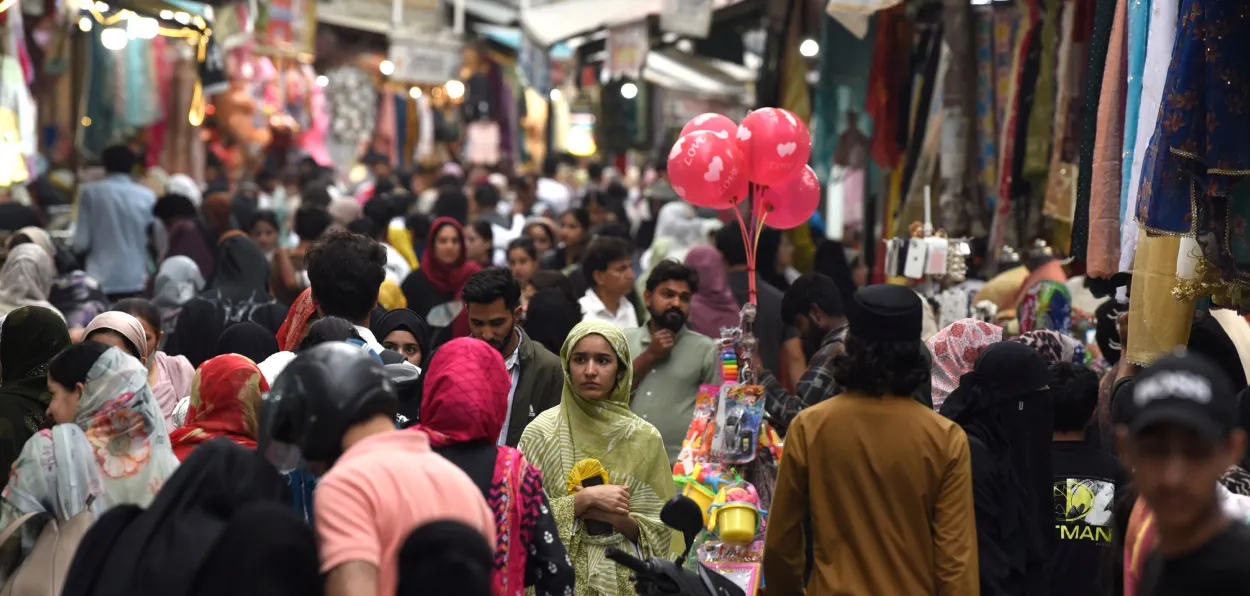
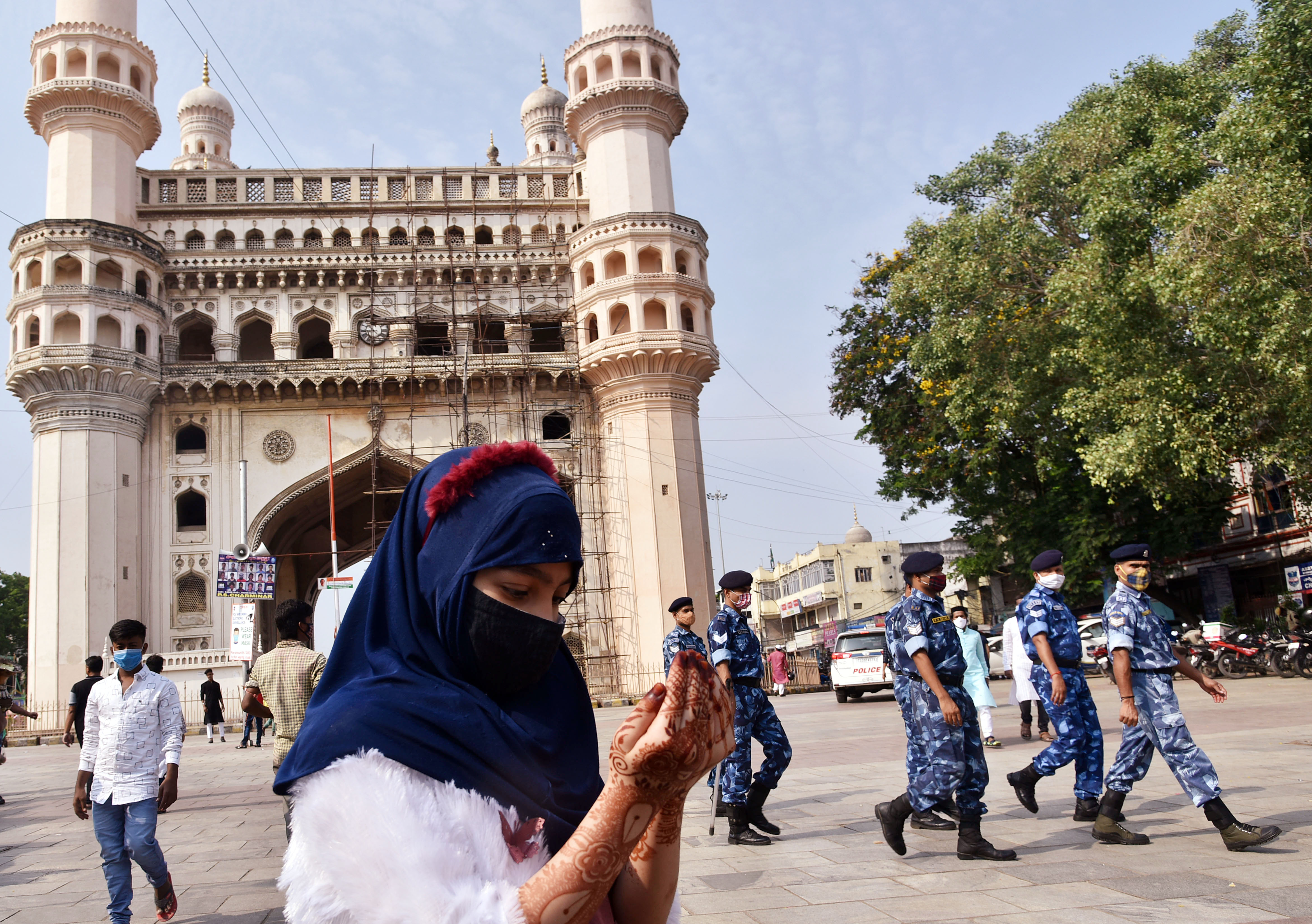 A Muslim woman in Hyderabad
Equally significant is the Qur’anic affirmation of religious plurality as part of the Divine will. “For each of you, we have appointed a law and a way. Had God willed, He would have made you one community, but He intended to test you in what He has given you. So compete with one another in good works” (5:48). Here, diversity of religious paths is not depicted as a tragic deviation but as a providential reality meant to foster ethical excellence. Another verse reinforces this metaphysical generosity: “We have never punished a people until We sent a messenger to them” (17:15). Salvation and damnation, therefore, are not arbitrary; they are inseparable from knowledge, moral responsibility, and divine justice.
Prophetic traditions further complicate any simplistic exclusivism. The Prophet Muhammad is reported to have said that God’s mercy surpasses His wrath, and in a well-known hadith qudsi, God declares, “My mercy prevails over My anger.” The Prophet also spoke of people who never formally encountered revelation yet acted with moral integrity and compassion, implying that such virtues are not spiritually insignificant. Particularly relevant is the concept of ahl al-fatrah—those who lived in periods or places where authentic revelation did not reach them. Classical scholars widely held that such individuals would not be condemned simply for their lack of formal belief, a principle that opens the door to a more universal understanding of salvation.
Among the most influential voices articulating this vision is Abū Ḥāmid al-Ghazālī. In his Fayṣal al-Tafriqa, al-Ghazālī categorises non-Muslims into groups, distinguishing between those who knowingly reject the truth after recognising it and those who never truly encountered Islam or only encountered a distorted version of it. The latter, he argues, are excused and may attain salvation through God’s mercy. For al-Ghazālī, culpability depends on conscious rejection, not mere ignorance or inherited belief. This nuanced position preserves the truth-claims of Islam while refusing to condemn vast segments of humanity to eternal damnation.
Even more expansive is the metaphysical vision of Ibn ʿArabī, the great Andalusian mystic. Grounded in the doctrine of the unity of being (waḥdat al-wujūd), Ibn ʿArabī saw religious forms as diverse manifestations of a single Divine Reality. His famous verse—“My heart has become capable of every form: it is a pasture for gazelles and a monastery for monks”—captures his conviction that God discloses Himself through multiple symbolic languages.
While Ibn ʿArabī never denied the finality of the Prophet Muhammad within Islam, he argued that sincere worship, even when directed through other religious forms, ultimately reaches God, who alone is the true object of all devotion. For him, salvation is inseparable from recognition of the Real, even if such recognition occurs through veiled or partial forms.
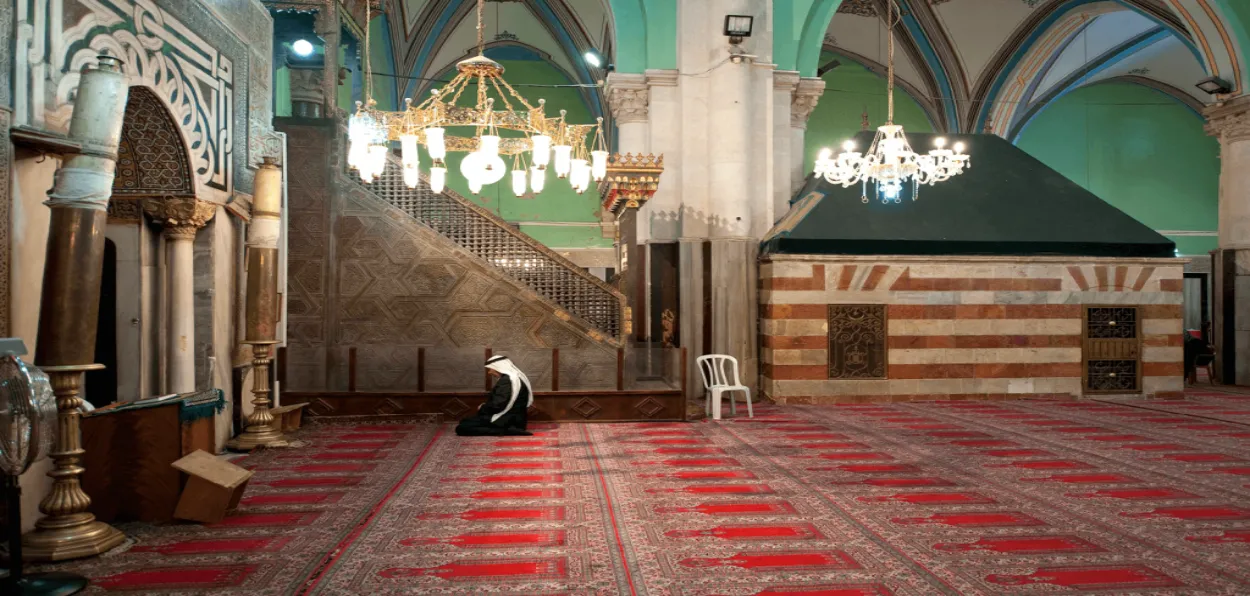
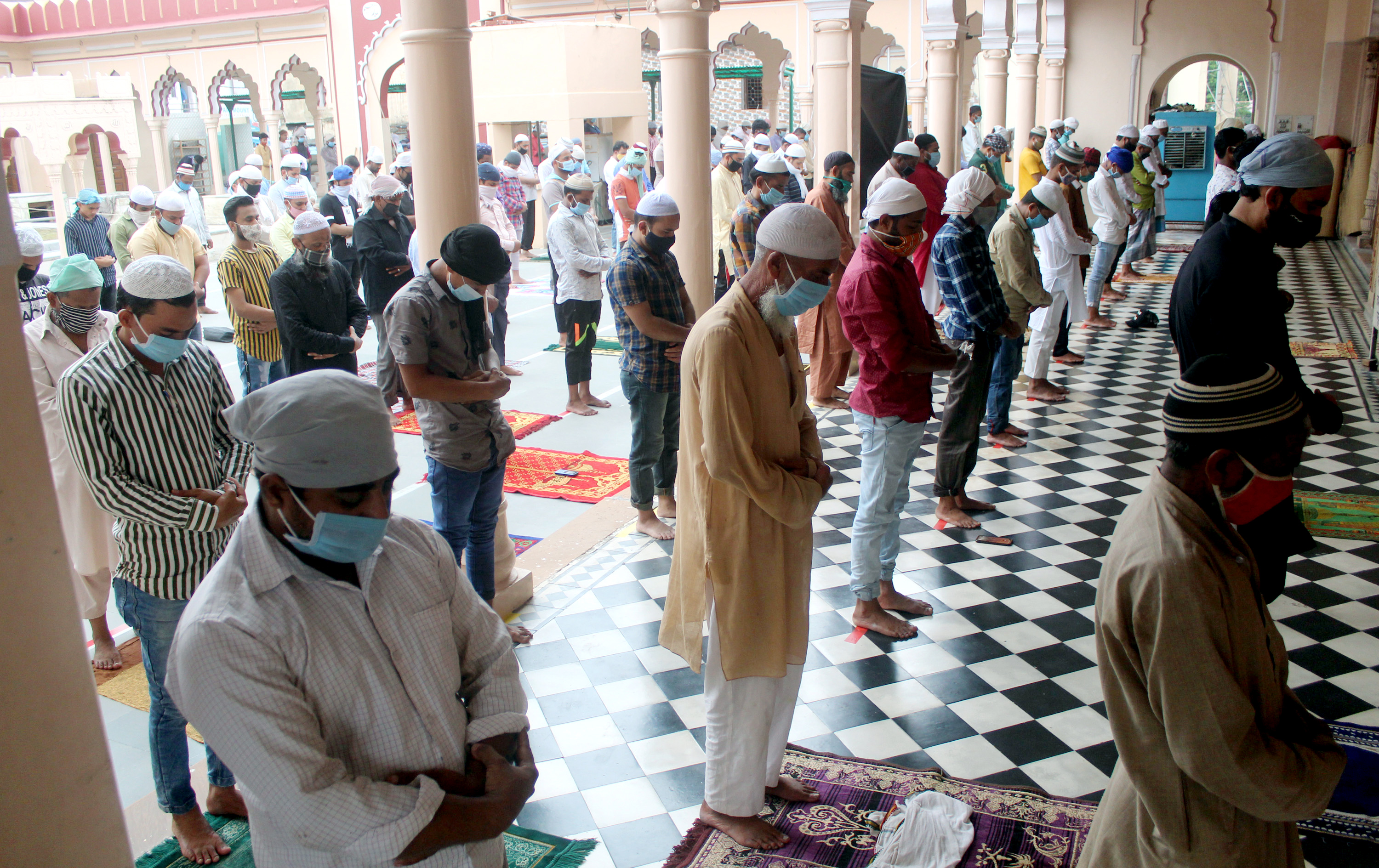 Muslims saying Namaz in Lucknow
Jalāl al-Dīn Rūmī, perhaps the most beloved of Islamic mystical poets, echoes this universalism in poetic rather than philosophical terms. Rūmī consistently emphasises inner transformation over outer labels, love over dogma, and the heart over the tongue. His oft-quoted invitation—“Come, whoever you are”—is not theological carelessness but a profound confidence in Divine compassion. For Rūmī, God looks not at the form of one’s belief but at the fire of longing within the soul. Salvation, in this view, is not a bureaucratic outcome but an existential awakening to love and truth.
This perennial wisdom finds articulate expression in modern thinkers such as Frithjof Schuon, René Guénon, and Seyyed Hossein Nasr. Writing from within the Islamic intellectual and spiritual tradition, these scholars argue that while each revealed religion is absolute within its own formal universe, the Divine Truth it expresses is universal. Schuon’s distinction between the exoteric and esoteric dimensions of religion is especially illuminating: exoterically, Islam affirms its own path as normative; esoterically, it recognises that all authentic revelations originate from the same transcendent Source.
Guénon likewise emphasised the unity of metaphysical truth beneath diverse religious symbols, while Nasr has repeatedly affirmed that Islamic theology, when properly understood, does not deny salvation to sincere adherents of other revealed traditions.
Importantly, this inclusive vision does not amount to relativism or the denial of Islamic truth. Rather, it reflects humility before the mystery of God and confidence in Divine justice. The Qur’an repeatedly insists that final judgment belongs to God alone: “Indeed, your Lord will judge between them on the Day of Resurrection concerning that over which they differed” (22:69). Human beings are called to witness to truth, not to arrogate God’s prerogative of judgment.
A serious engagement with the question of salvation in Islam would be incomplete without acknowledging and critically examining the puritanical and exclusivist strand that emerged most forcefully in the thought of Ibn Taymiyya and later crystallised in the Najdi movement of Muḥammad ibn ʿAbd al-Wahhāb. While both figures positioned themselves as defenders of tawḥīd and prophetic orthodoxy, their theological posture marked a significant narrowing of Islam’s earlier ethical, mystical, and epistemic pluralism.
Ibn Taymiyya’s thought, developed in a period of political collapse and sectarian anxiety, exhibits a deep suspicion of philosophy, mysticism, and interpretive plurality. Although he did not entirely deny God’s mercy to non-Muslims in abstract terms, his framework significantly lowered the trethresholdshold for takfir and elevated doctrinal conformity over inward sincerity and moral intention. His rejection of metaphorical theology (taʾwīl), hostility toward Sufi metaphysics—particularly Ibn ʿAinsistence instence on a rigid, literalist creed contributed to an atmosphere in which salvation became increasingly tied to correct propositional belief rather than existential orientation toward God. In doing so, Ibn Taymiyya departed from the ethical–epistemic caution exercised by earlier scholars like al-Ghazālī, who insisted that damnation requires conscious and informed rejection of truth, not mere difference or inherited belief.
This trajectory reached its most severe sociopolitical expression in the eighteenth-century Najdi reform movement led by Muḥammad ibn ʿAbd al-Wahhāb. Under the banner of purifying Islam, Wahhabism collapsed the rich spectrum of Islamic belief and practice into a stark binary of true monotheism and polytheism. Practices long accepted within Sunni Islam—such as saintly intercession, symbolic devotion, and metaphysical theology—were declared forms of shirk, and entire Muslim populations were rendered religiously suspect.
In this framework, salvation was no longer merely restricted to Muslims as a whole, but to a narrow sectarian definition of “true” Muslims, thereby excluding not only Jews and Christians but vast segments of the Islamic ummah itself.

From the perspective of Qur’anic theology, this puritanical reductionism is deeply problematic. It stands in tension with the Qur’an’s repeated insistence on Divine justice, epistemic fairness, and moral intentionality. The Qur’an does not authorise humans to police salvation, nor does it equate theological disagreement with willful rebellion against God. By foregrounding doctrinal literalism while marginalising mercy, inwardness, and ethical struggle, the Taymiyyan–Wahhabi paradigm effectively reverses the Qur’anic moral hierarchy, subordinating compassion to polemics and humility to certainty.
In contrast, the broader Islamic intellectual tradition—represented by al-Ghazālī, Ibn ʿArabī, Rūmī, and later perennialist thinkers—approaches salvation with epistemic humility and metaphysical depth. These thinkers recognise that God’s guidance unfolds through history, culture, and symbolic form, and that sincere seekers may respond faithfully to the Divine call even beyond the formal boundaries of Islam. Their theology does not dilute Islamic truth, but rather situates it within a vision of God whose mercy is not constrained by human anxieties over purity and control.
Thus, the puritanical insistence on exclusivist salvation represents not the culmination of Islamic theology, but one of its most contested and internally criticised departures. To equate Islam as such with this narrow outlook is to ignore the moral, mystical, and philosophical heart of the tradition. A Qur’an-centred Islam, read in the light of its greatest sages, affirms that while truth is one, access to God’s mercy is vast—and that final judgment belongs to God alone, not to self-appointed guardians of orthodoxy.
Islam presents salvation not as a narrow gate guarded by communal identity, but as a moral and spiritual journey governed by sincerity, justice, and mercy. The Qur’an’s God is Rabb al-ʿālamīn—the Lord of all worlds—not merely of one community.
ALSO READ: Iranians surely want change, but Reza Pahlavi may not be the panacea
The great sages of Islam, from al-Ghazālī to Ibn ʿArabī, from Rūmī to contemporary perennialists, remind us that Divine mercy exceeds human classifications. Salvation, then, is possible wherever hearts turn sincerely toward truth, goodness, and the One who transcends all names yet is present in every genuine act of faith.











_(2).webp)