




Washington
The United States on Tuesday cautioned Russia against intervening in the escalating conflict in West Asia involving Iran, as tensions continue to rise following joint military operations by the US and Israel.
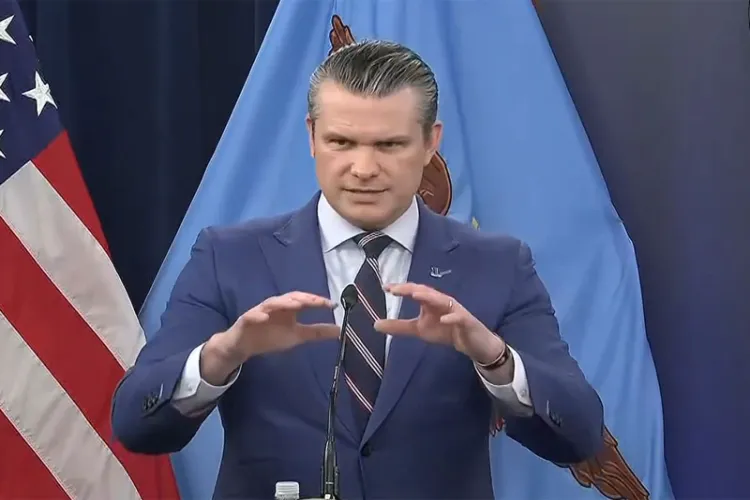
Speaking at a Pentagon briefing, US Secretary of War Pete Hegseth referred to a recent phone conversation between US President Donald Trump and Russian President Vladimir Putin, describing it as a “strong call”.
Hegseth said the conversation highlighted the potential for progress toward peace in the Russia–Ukraine war and also conveyed the message that Russia should avoid involvement in the ongoing Iran conflict.
“The president maintains strong relationships with world leaders, which creates opportunities and options for us in very dynamic ways,” Hegseth said, adding that the call reaffirmed hopes for peace between Russia and Ukraine.
Earlier, Putin’s aide Yuri Ushakov confirmed that the leaders spoke on March 9, describing the conversation as “businesslike, candid and constructive”. According to Ushakov, Putin discussed efforts to pursue a diplomatic settlement around the Iran conflict, while Trump shared his assessment of ongoing US-Israeli military operations.
During the briefing, Hegseth also addressed Iran’s newly appointed Supreme Leader Mojtaba Khamenei, urging him to heed Trump’s warning against pursuing nuclear weapons.
“He would be wise to heed the words of our president, which are to not pursue nuclear weapons,” Hegseth said.
The US war secretary also referred to reports of a missile strike on a primary school in the Iranian city of Minab that reportedly killed at least 168 children, saying the incident would be thoroughly investigated.
He defended US military operations, saying Washington takes extensive precautions to avoid civilian casualties while accusing Iran of targeting civilians.
Hegseth was joined at the briefing by Chairman of the Joint Chiefs of Staff Dan Caine, who said the US military is assessing options to escort vessels through the Strait of Hormuz, a vital global shipping route disrupted by the conflict.
“If tasked to escort, we’ll examine a range of options and present the required resources, command structure and risks to the secretary and the president,” Caine said.
The conflict in West Asia has now entered its 11th day. Hegseth indicated that US-led military operations against Iran are intensifying, with additional fighter jets, bombers and coordinated strikes planned.
“Today will be yet again our most intense day of strikes inside Iran,” he said.
He added that the United States would continue the campaign until its objectives are achieved, though he noted that Iran’s missile launches had declined over the past 24 hours.
The escalation follows the killing of Iran’s Supreme Leader Ali Khamenei in joint US-Israeli strikes on February 28. In response, Iran launched retaliatory attacks on US and Israeli targets across several Gulf countries.
READ MORE: Sofia Firdaus: an accidental politician who is here to stay
Following Khamenei’s death, the Assembly of Experts appointed his son Mojtaba Khamenei as Iran’s new Supreme Leader, marking a significant political transition in the country.









.webp "US President Donald Trump")
.webp "US President Donald Trump's son-in-law Jared Kushner")

_(1).jpg)
_(4).webp)