Sreelatha M
Sofia Firdaus is one of the handful of Muslim women MLAs in the country. She won the election from the Barabati Cuttack constituency as a new face, starting her campaign just a month before the 2024 polls. What is most impressive — and what should not surprise in a fair world — is that only three per cent of voters in the constituency are Muslims, who might otherwise have been considered her “vote bank” in a sectarian political climate.
Sofia’s rise to become that rare figure — a Muslim woman legislator — was almost accidental.
Less than two months before the 2024 Odisha Assembly elections, a case against the Congress candidate from Barabati Cuttack changed the course of events. The candidate, Mohammed Moquim — Sofia’s father — was barred from contesting the election until the case was settled. Party members in Barabati, who had already been working for his campaign, immediately turned to Sofia, who had been actively assisting him.
.webp) Sofia Firdaus
Sofia Firdaus
“They asked me to take over the campaign where my father had left it. I was asked to contest,” she says, talking from her constituency in Barabati.
Her participation in politics had until then been limited to supporting her father. “I was leading a very busy life, heading my real estate business and had no plans to join politics. But at that juncture, I could not refuse the organisation, as I had been connected with them all those days,” she says.
When the candidate was changed, only a month remained before the election. Yet such was Moquim’s standing in Barabati that his daughter won with a good majority, defeating the BJP candidate. Both Prime Minister Narendra Modi and party president Amit Shah campaigned for the BJP, she says, noting the scale of the contest. Her opponent, Purna Mahapatra, a well-known gynaecologist, made it a difficult fight.
Her father’s victory five years earlier had enabled the Congress to wrest Barabati from other parties after a long spell of 39 years. People had been tired of Cuttack's neglect, she says.
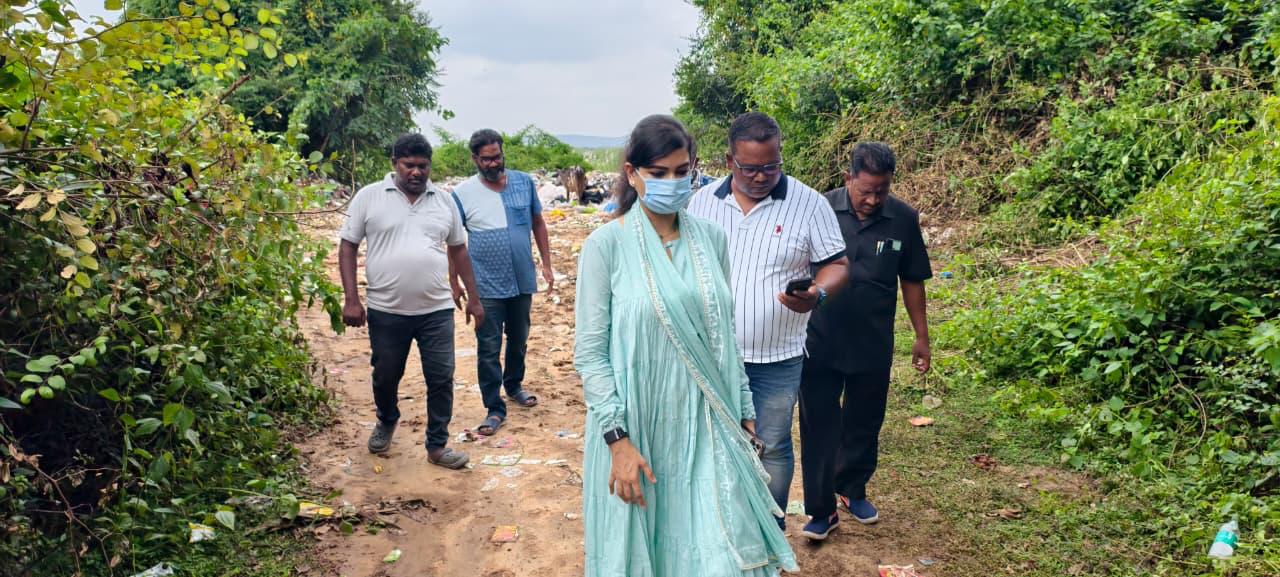 Sofia Firdaus touring her constituency
For Sofia, being a minority member has not been a disadvantage as a politician. Whenever Muslim candidates, including women, win elections, the electorate is often up to 60 per cent Muslim, she points out. But in her case, it was not so.
“We are well known across the constituency, and we are part of all cultural events here. When the Ratha Yatra takes place here, the first donations go from my father,” she says.
“I think people do not look at Muslims as different from them here. People are educated, progressive and believe in development and change,” she adds.
Sofia’s agenda as a politician becomes evident as she lists the glories of Barabati Cuttack.
Cuttack was the old capital and continues to house many administrative headquarters, she points out. The High Court is here. More importantly, Barabati is the birthplace of Subhas Chandra Bose, she says with pride. On Netaji’s birthday on January 23, even the Vice President visited the place. But do the rest of the Indians know this? She asks.
.jpeg) Sofia Firdaus addressing the media
Sofia Firdaus addressing the media
Her list does not end there. The Bali Yatra begins here. Barabati is home to the Barabati cricket stadium. It is also the centre for silver filigree, which recently received the GI tag. “Besides, our Durga Puja is older than the one in Bengal,” she goes on.
She is today one of the two Congress MLAs representing coastal Cuttack in the State Assembly.
Asked whether her young age makes people take her less seriously, she says she feels blessed to be a known name and face in the state. “I have raised the maximum number of questions in the Assembly, and I feel youth and women relate to me as a serious politician,” she says.
Many would dismiss her rise in politics as merely dynastic. Yet her work in the constituency is too profound to go unnoticed.
.jpeg) Sofia Firdaus campaigning against BJP
Sofia Firdaus campaigning against BJP
She has proved that she is not just a replacement for her father but a politician in her own right. She credits her father for giving her that space. “He has given me a free hand to do what I think should be done in the constituency. He has always been like that, even when I was not in politics. He did not believe in spoon-feeding me, even when I was running my real estate business,” she says.
Firdaus identifies three pressing concerns in her constituency.
The first is restoring Cuttack’s prominence through infrastructure and administrative engagement. Files, she says, have already moved through various departments for approval.
The second is strengthening the silver filigree sector as an economic hub — a demand she says was accepted within a year.
The third is employment. She speaks of skill development, semiconductor investment, IT parks, and the need for premier educational institutions. The National Law University exists in Cuttack, she points out, but other national institutes have chosen Bhubaneswar.
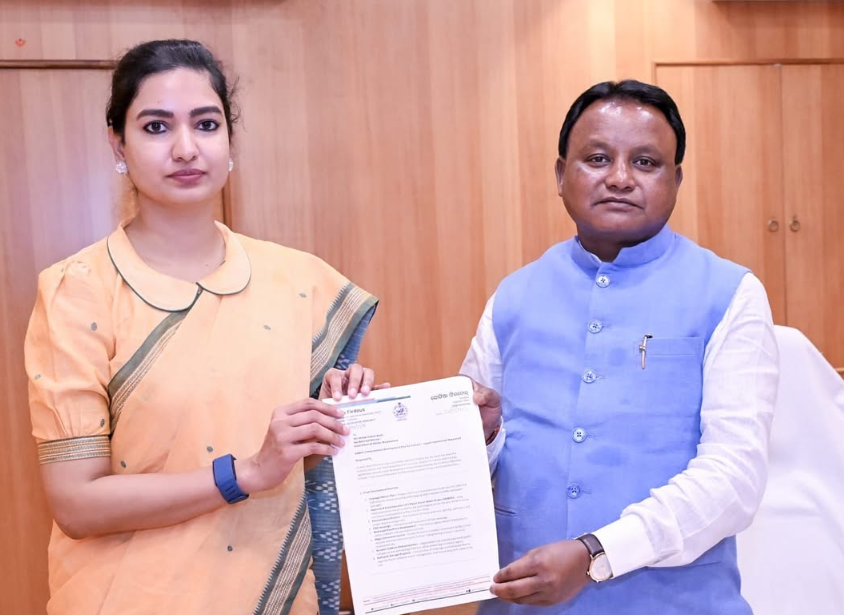 Sofia Firdaus getting her certificate of election
How has politics changed her life? “I have become very occupied. I am now a people person, totally, always available,” she says.
Her husband, a businessman, and his family, she says, fully support her work.
Asked whether she sees herself in Parliament a few years from now, she says she will leave it to the people. “If people like me think I can be elevated to that position, then it will happen.”
If there is one concern that she articulates for her community, it is education.
Among Muslims, especially women, she believes low enrolment in schools and colleges remains a serious barrier to social mobility and improved living standards.
ALSO READ: Shama Mohammad: Battling patriarchy and breaking barriers
Her own journey into politics may have been triggered by circumstance. But her continued presence in the Assembly and her enthusiasm signal something more deliberate: a Muslim woman legislator elected not by demographic concentration, but by a mandate across communities. Hence, it won’t be surprising if she continues to stay in politics despite the odds against Muslim women lawmakers.

.webp "Ganapati idols being hander over to activists for Kashmir")