Makwanpur (Nepal)
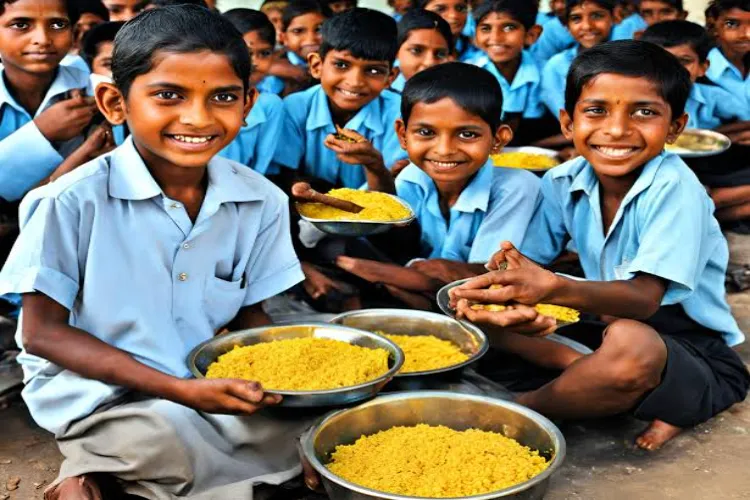
For Shishir Praja, a fifth-grade student in an impoverished pocket of Makwanpur, the school bell signalling the tiffin break is more than just a pause in lessons; it is a lifeline.
Standing in line with his plate, he is part of a generation of students for whom the government-sponsored "Diwa Khaja Karyakram" (Mid-Day Meal Program) has become the primary incentive for regular school attendance.
"Because the school provides tiffin, I attend regularly, which ultimately saves money for my home," said Shishir to ANI, whose community, the marginalised Chepang group, often faces the daily struggle of food insecurity.
What began six decades ago as a scattered, donor-supported feeding scheme in famine-prone hill districts has evolved into a near-universal national entitlement. Today, the program is a flagship government intervention that sits at the intersection of education, nutrition, poverty reduction, and gender equity, feeding basic-level students from early childhood education through grade five across Nepal's 29,000 community schools.
At the Shree Bal Jivan Jyoti Secondary School in Makwanpur, the daily menu is carefully curated to meet nutritional requirements. Students receive a variety of options throughout the five-day school week, including porridge, grams, beaten rice, chamre (sticky rice), and eggs, with meat served as a special treat once a month.
To sustain this, the Government of Nepal allocates approximately 0.13 USD per student per day. While this represents a significant increase from the previous 0.066 USD cap, local educators argue it falls short of the actual cost required to provide a nutritionally adequate meal, especially when accounting for infrastructure, kitchen space, and preparation staff.
To ensure the dietary requirements of the children, the school has developed a menu allotting dishes on the basis of the days, specially catered to fulfill the nutritional needs.
"We get halwa, porridge, grams and beaten rice, ghee/sticky rice- Chamre as well as eggs," Sony Praja, a third grader of the Shree Bal Jivan Jyoti Secondary School, told ANI.
The school also provide chicken/mutton meat to the students as a part of the meal, which indeed is the best day for the students here.
This midday meal program is designed to meet a meaningful share of a school-age child's daily caloric and protein needs (in-kind rations historically combined fortified corn-soya blend, flour, sugar, and oil to reach roughly 470 kilocalories per meal).
Locally, schools are increasingly encouraged to diversify menus with eggs, milk, pulses, and seasonal vegetables rather than relying on processed or packaged snacks.
At the Shree Bal Jivan Jyoti Secondary School, the mid-day meal is prepared in a makeshift kitchen, in a space under the stairs. Daily, a meal enough for about 130 students is prepared in this makeshift kitchen and then checked by the school nurse deployed by the local authority to ensure the quality.
To provide students with the mid-day meal, the government has been allocating 0.13 USD (noting 1 USD = 152.58 NPR) per student a day, with a higher rate in selected Far-Western/ remote districts.
"The amount being provided by the Government of Nepal is very low," noted Eakraj Gautam, Principal of the Shree Bal Jivan Jyoti Secondary School. "Amid this, here at the school, we have been preparing the meals by mobilising our own school staff," Gautam told ANI.
To bridge the gap, many schools rely on donor top-ups or internal resources. In some districts where funding constraints are acute, the lack of dedicated infrastructure has even led to reports of cash being distributed to guardians, though this practice carries risks of fund diversion.
Despite these challenges, the program's impact on education is undeniable. Pradeep Parajuli, an Education Officer at the Manahari Municipality, noted that the meal acts as a critical safety net. "In some schools, the attendance rate remains high because of it; teachers have reported that many students come to school on an empty stomach. This program ensures their access to education and improves their quality of learning," he told ANI.
The government's commitment is reflected in the budget: for the 2026/27 fiscal year, roughly 66.8 million USD has been earmarked for the program, accounting for about 10.3% of the total education and sports budget.
READ MORE: Chhattisgarh Waqf Board turns into a Nikah approval authority
As Nepal moves toward its "School Education Sector Plan" (SESP) 2032 target, which aims to extend coverage through grade eight and reach an estimated 5.3 million students, the focus is shifting toward diversifying menus with locally produced agricultural goods. For students like Shishir, the goal is simple: a consistent meal that fuels both his body and his future.




.webp "A Maulana with the ancient hand-written Quran")






.webp "Dhurandhar")