Berlin
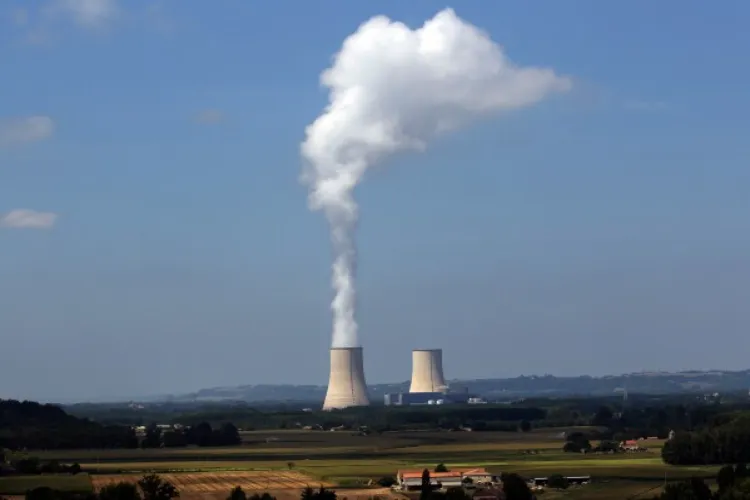
Forty years after the Chernobyl disaster triggered worldwide fears over atomic power, nuclear energy is experiencing a strong global resurgence. Governments are increasingly viewing it as a reliable, low-carbon source of electricity at a time of rising demand, geopolitical tensions and climate concerns.
More than 400 nuclear reactors are currently operating across 31 countries, while around 70 additional units are under construction. Nuclear power now generates roughly 10 per cent of the world’s electricity and about one-quarter of global low-carbon energy output.
Fatih Birol said the recent conflict in the Middle East has reinforced the importance of secure electricity supplies, accelerating nuclear energy’s return. According to him, expansion is expected across the Americas, Europe and Asia.
Major Global Players
The United States remains the world’s largest producer of nuclear energy, operating 94 reactors that account for nearly 30 per cent of global nuclear generation. Washington has set a goal of quadrupling nuclear capacity by 2050.
China currently runs 61 reactors and leads the world in new construction, with nearly 40 units being built. Beijing aims to surpass the US in total nuclear capacity.
Russia continues to dominate international nuclear exports, with 20 reactors under construction abroad and multiple agreements signed with other countries.
Europe Reassesses Nuclear Strategy
Europe, which reduced its reliance on nuclear power after Chernobyl and later after the Fukushima nuclear disaster, is now reconsidering the sector.
Ursula von der Leyen recently described Europe’s earlier retreat from nuclear energy as a “strategic mistake,” arguing that dependence on imported fossil fuels weakened the continent.
The European Union is now promoting nuclear energy alongside wind and solar to meet climate targets. It is also exploring Small Modular Reactors, which are expected in the early 2030s and seen as cheaper, quicker to build and more flexible than traditional plants.
Different Paths Within Europe
France remains Europe’s nuclear powerhouse, operating 57 reactors that provide nearly 70 per cent of its electricity. Emmanuel Macron has announced plans for six new reactors.
Belgium reversed a phase-out law last year and extended reactor lifespans.
Spain still plans to shut its seven reactors between 2027 and 2035.
Germany closed its last three reactors in 2023 after decades of anti-nuclear policy. Chancellor Friedrich Merz has said that decision is effectively irreversible, though some political voices support future SMR development.
Ukraine and Japan Still Depend on Nuclear Power
Ukraine continues to generate about half of its electricity from nuclear plants, which have become even more important since the Russian invasion in 2022. Russia controls the Zaporizhzhia Nuclear Power Plant, Europe’s largest nuclear station.
Japan has restarted 15 reactors since Fukushima, with 10 more seeking approval.
Africa’s Growing Interest
South Africa remains the only African nation with an operating nuclear plant, while Egypt is building one with Russian support. Several other African countries are exploring the technology.
Why the Revival Matters
Supporters argue nuclear power offers stable electricity without carbon emissions and can complement renewable sources. Critics continue to raise concerns over safety, waste disposal and high costs.
READ MORE: West Bengal Polls: In first phase, 152 seats outcome crucial for Mamata, BJP
Still, with energy security now a top priority and electricity demand rising because of industry and artificial intelligence, many nations are turning back to nuclear power—four decades after Chernobyl reshaped the global debate.









.webp "Representational Image")