




Cairo
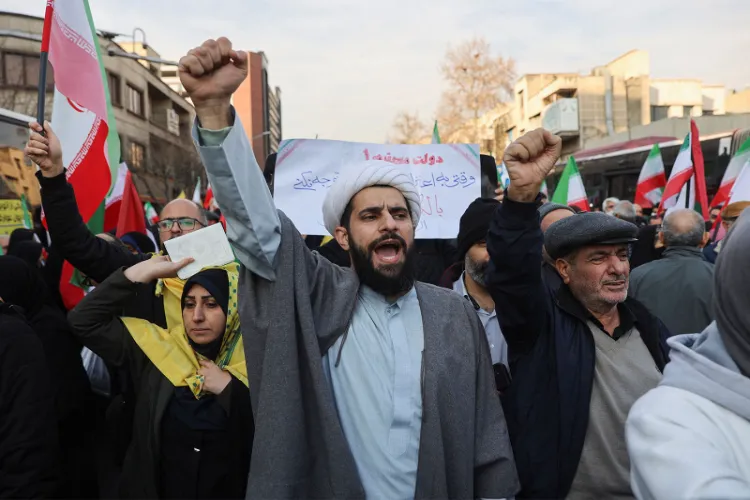
Iranian authorities have intensified their crackdown on dissent by targeting the families and assets of activists living abroad, according to several exiled Iranians who spoke about the situation amid the ongoing conflict involving Iran, the United States and Israel.
Exiled activists say security agencies are increasingly detaining relatives back home to pressure them into silence. These actions come alongside broader restrictions, including internet shutdowns imposed during earlier nationwide protests, which have made it harder to track developments on the ground.
Several activists described cases where their family members were detained despite having no political involvement. Former political prisoner Hossein Razzagh said his brother was taken into custody in Tehran in March and has since been largely unreachable. Authorities reportedly questioned him about his links to Razzagh, who fled to Europe last year.
Similarly, activist Behnam Chegini said his niece was detained briefly and later released under bail conditions, including a travel ban. He believes the action was intended to intimidate him.
Another activist, Sareh Sedighi, alleged that her mother was detained despite serious health concerns. She said the move was meant to pressure her into silence. Others, including Mahshid Nazemi, reported that acquaintances had been questioned about their connections to exiled critics.
Alongside detentions, authorities have also begun targeting the assets of outspoken Iranians abroad. Under a recently introduced anti-espionage framework, courts can confiscate property linked to individuals accused of supporting hostile entities.
A judiciary spokesperson recently indicated that over 200 such confiscation cases have been initiated. Among those affected is actor Borzou Arjmand, who said his assets in Iran were seized after he voiced support for anti-government protests.
Reports also suggest that other prominent figures, including footballer Sardar Azmoun and musician Mohsen Yeganeh, have faced similar action due to their public positions.
Human rights organisations warn that arrests have surged since the conflict escalated in late February. Norway-based group Iran Human Rights estimates that hundreds of people have been detained, though the real number may be significantly higher.
Among those reportedly arrested is prominent lawyer Nasrin Sotoudeh, who had previously been released on medical grounds. Her detention highlights the widening scope of the crackdown.
Legal processes have also been disrupted, with some court operations reportedly slowed or affected by airstrikes targeting infrastructure. Lawyers say judicial functioning is inconsistent, adding to uncertainty for detainees.
Conditions inside prisons are said to be worsening, with concerns heightened by the risk of facilities being caught in the conflict. Families of detainees describe an atmosphere of fear, with explosions and military activity reported near urban centres.
The mounting pressure has prompted renewed efforts among the Iranian diaspora to organise politically. Activists have initiated plans for international gatherings aimed at building a coordinated opposition platform.
One such effort is a proposed conference in London intended to bring together pro-democracy groups and explore pathways for political change. Supporters describe it as an initial step toward forming a broader coalition.
However, activists note that decades of repression have left opposition movements fragmented, and the current conflict has further complicated efforts to mobilise.
READ MORE: Two-time World Champ Nikhat Zareen's story begins with smashing stereotypes
Many in the diaspora argue that ordinary Iranians are caught between internal repression and external conflict, with little space to express dissent safely.








.webp "Representational Image")
.webp)

.webp)
_(1).webp)