




 Atir Khan
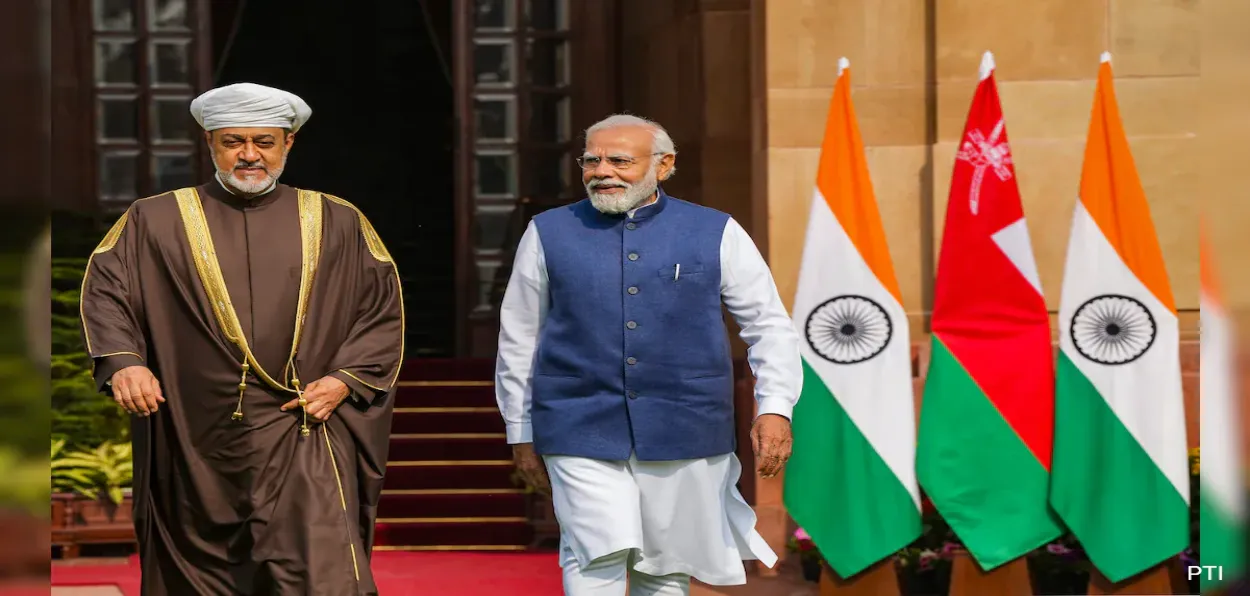
Prime Minister Narendra Modi’s visit to Oman marks a timely and much-needed diplomatic effort to revitalise one of India’s most enduring civilisational relationships. Long marked by warmth and mutual trust, ties between the two nations now have the potential to deepen further—transforming cordial handshakes into strategic embraces.
India’s historical engagement with Oman goes back decades. In the 1950s, the Sultan of Oman reportedly offered the strategically significant Gwadar Port to India as a gift. New Delhi declined, and with the intervention of Prince Aga Khan, Gwadar eventually passed to Pakistan and is now operated by China.
This missed opportunity underscores the importance of sustained engagement with trusted regional partners such as Oman. Oman’s reliability and strategic location make it a natural partner in advancing India’s long-term regional and strategic objectives.
During the visit, National Security Advisor Ajit Doval is also expected to play a key role in strengthening the bonds between the two countries.
Bound by ancient civilisational ties, Oman has long been a time-tested friend of India. A multi-pronged approach—encompassing economic, cultural, and military cooperation—is essential to harness this relationship.
Dr Waiel Awwad, a senior West Asia journalist, told Awaz–The Voice: “India, as a rising global power, must enhance its influence in the region. Ties with Oman are crucial not only for trade and access to the Red Sea but also for anti-piracy operations and oil security.”
Military cooperation with Oman offers India a distinct strategic advantage. Located near the Strait of Hormuz, Oman occupies a critical position in global energy and trade security. Nearly one-third of the world’s liquefied natural gas and around 25 per cent of global oil consumption pass through this narrow waterway, making it a geopolitical chokepoint of immense importance.
What makes Oman an especially suitable partner is its progressive outlook and the deep respect its people hold for Indians. Indians are often preferred for employment and business over other Asian nationalities. Former diplomat J K Tripathi observes, “We should try to keep Oman with us. It is comparatively easier for us.”
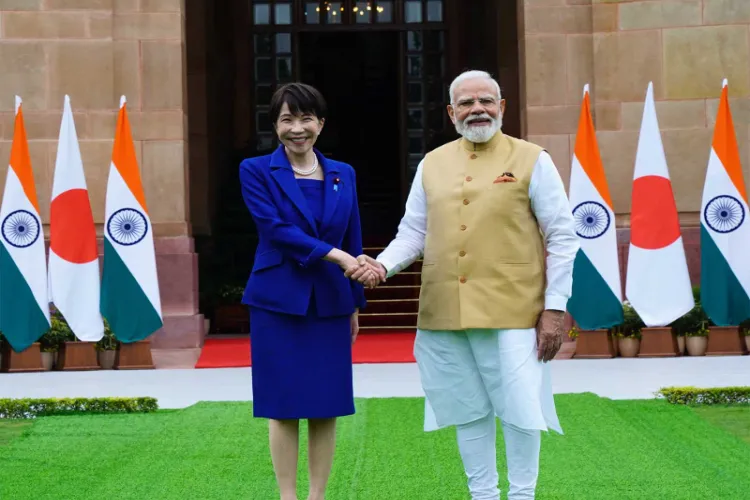
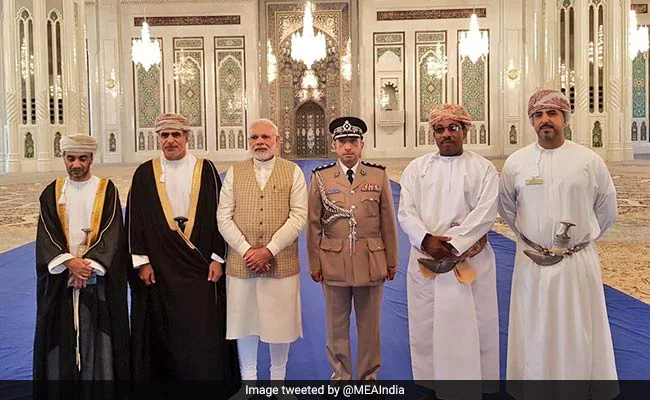 Prime Minister Narendra Modi during his Oman visit (File)
Oman is home to over eight lakh Indian expatriates. Gujarati traders have lived in Muscat for generations, some honoured with the title of Sheikh. It is often said that to survive in Muscat, knowledge of Malayalam and Hindi is as useful as Arabic. At the same time, Indians settled in Oman demonstrate deep respect for Omani culture and traditions.
India’s cultural footprint in Oman is unique in the Gulf. It is perhaps the only country in the region with three temples, three gurdwaras, and three churches—some more than a century old. At the Shiv Mandir, ritual items such as kalava, prasad, and idols are sold by local Omanis. Religious texts like the Ramcharitmanas are available in local bookstores, and a crematorium for Indians operates in Muscat. A large maidan is allocated for Garba and Dandiya celebrations during Navratri, while Indians run numerous restaurants and businesses across sectors.
Such trust extends to security practices as well. While Omani intelligence agencies closely monitor religious gatherings, Indian temples are treated with exceptional trust, with officials rarely entering the premises.
Geographical proximity further strengthens ties. Sea travel between Muscat and Gujarat takes little time, and the flight from Muscat to Mumbai is shorter than the flight from Mumbai to Delhi. State-run Oman Air reportedly earns more revenue from its India sector than from any other market, operating around 16 weekly flights connecting major Indian cities, including Delhi, Mumbai, Ahmedabad, Kochi, Hyderabad, Jaipur, Lucknow, and Kolkata.
The Omani royal family has historically shared a deep affection for India. British accounts once described Sultan Qaboos bin Said as the “Indian King.” Members of the royal family regularly spent monsoons in Mumbai, and Sultan Qaboos’ grandfather studied at Mayo College, Ajmer, where an “Oman House” still stands as a reminder of these bonds. Syed Naseeruddin Chishti, President of the All India Sajjadanashin Parishad, recalls family accounts of generous Omani royal donations to the Dargah of Khawaja Gharib Nawaz.
Former President Dr Shankar Dayal Sharma had taught Sultan Qaboos’ grandfather, a relationship that left a lasting impression. During Dr Sharma’s visit to Oman, Sultan Qaboos personally received him at the airport—an exceptional gesture.
Economically, Oman remains an attractive destination. There is no income tax, customs duties are low, and until the early 1960s, the Indian rupee was legal tender. Indian investments are substantial: Oman Oil Corporation operates a refinery in Madhya Pradesh, KRIBHCO runs a fertiliser plant in Oman, and the Bank of Muscat is among the shareholders of HDFC Bank. Indian educational institutions such as Indian School, DPS, and Amity are highly sought after.
Despite these strengths, several planned joint ventures—in power, railways, and fertilisers—were lost in the past due to bureaucratic oversight. Experts believe business opportunities remain underexplored. Brazil, for instance, uses Oman as its Asian hub for iron ore exports. India and Oman could similarly position each other as gateways to wider regional markets.
Nearly 160 CEOs of Omani companies are Indians, yet there has been little structured outreach to leverage this advantage. On the security front, the Indian Navy already cooperates closely with the Royal Navy of Oman, including joint training and maritime security initiatives. The Port of Salalah has been pivotal in this cooperation.
Former Ambassador Anil Wadhwa notes that while agreements exist, India has not moved beyond basic arrangements in areas such as ship repair facilities. He also suggests land leases for Indian farming to supply sugar and wheat, given Oman’s large landmass relative to other Gulf nations.
ALSO READ:Hoshiyar Khan brought transparency in the use of Waqf Properties
Training of Omani officials in Indian institutions—once robust—has declined in recent years, with Oman increasingly turning to Western countries. Reviving cooperation in civil services and military training could add a new dimension to bilateral ties.









_(1)_(1).webp)
_(1).webp)