




Kathmandu
Understanding the economics of environmental change and development is key to unlocking a sustainable future in the South Asian region that is going through a period of rapid economic growth, experts and officials said here.
Among the South Asian region, especially vulnerable are the Hindu Kush Himalayan countries recognised as one of the world’s most climate- and environment-vulnerable regions, the experts discussed at a conference, focussing on biodiversity finance, forest restoration, climate adaptation, and sustainable livelihoods, including agriculture.
Nepal Rastra Bank (NRB) Governor Biswo Nath Poudel warned that bank lending alone cannot resolve challenges in the agricultural sector, emphasising the need for revenue stability and price certainty to prevent credit from becoming a burden on farmers.
“Financing is not a single solution; revenue stability in agriculture is the real solution,” Governor Poudel said in his keynote address on ‘Bank Lending in the Agricultural Sector in Nepal: Issues and Opportunities’ on Saturday.
“Without price stability, credit becomes a burden rather than a support,” Poudel said and highlighted the importance of agricultural insurance for farmers' welfare facing a changing climate.
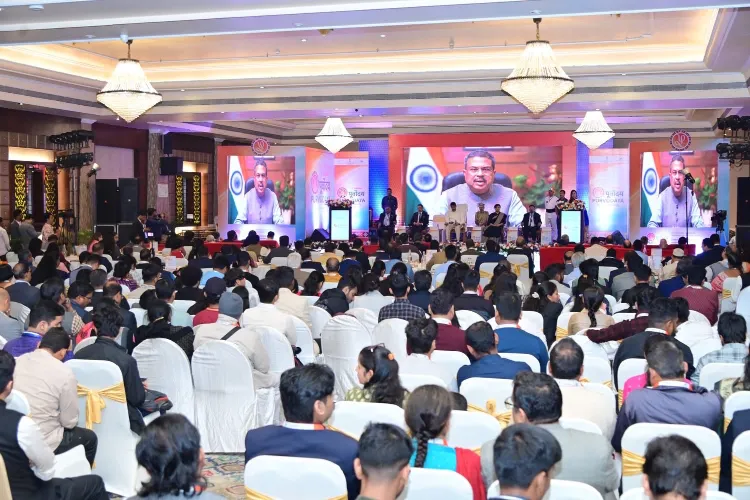
Poudel was speaking during the opening of a three-day international conference, themed ‘Development, Environment, and Mountains, in Kathmandu, marking the 25th anniversary of the South Asian Network for Development and Environmental Economics (SANDEE).
It was hosted by the International Centre for Integrated Mountain Development (ICIMOD), a regional intergovernmental organisation that represents eight Himalayan nations.
ICIMOD Director General Pema Gyamtsho said SANDEE “fundamentally advanced how we understand and respond” to the nexus of poverty, development, and environmental sustainability in South Asia.
Studies have shown that climatic shifts in the Himalayan countries exacerbate social and economic pressures, they disrupt agro-based livelihoods, damage infrastructure, and intensify the frequency and severity of extreme weather events.
Showcasing Nepal's push for clean energy, Navaraj Dhakal, executive director of Alternative Energy Promotion Centre (AEPC), a Nepal government institution, spoke about the distribution of electric cookers to replace traditional cooking systems in the Terai region of the country.
ALSO READ: Begum Sultan Amiruddin asked for banning polygamy and triple talaq in 1930s
“The Nepal government has set a target of providing clean energy solutions to one million households within five years by distributing electric stoves, bio-gas cookers and improved cookstoves by 2027,” he pointed out.













.webp)

.webp)



_(1).webp)