Ashhar Alam/New Delhi
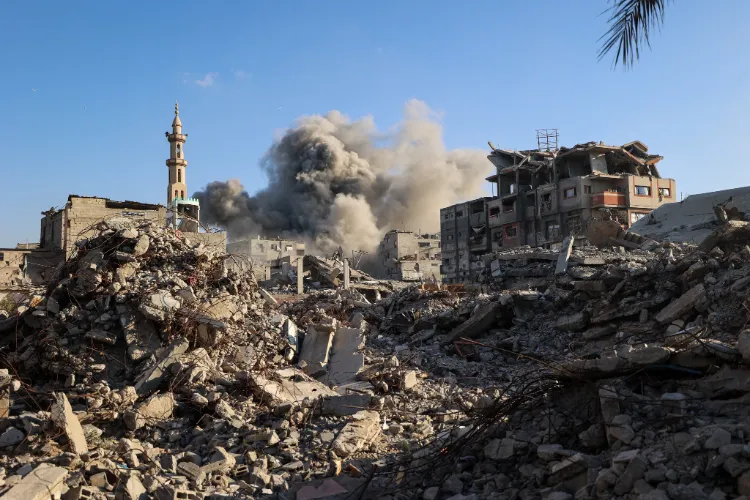
As bodies of Palestinians killed in fresh Israeli strikes reached Gaza hospitals this week, a haunting question resurfaced across the devastated enclave: Has the ceasefire truly arrived?
On Wednesday alone, 24 Palestinians were killed, according to Gaza’s Health Ministry, adding to a toll of at least 556 deaths since a US-brokered truce took effect in October. Shifa Hospital director Mohamed Abu Selmiya captured the growing anguish in a Facebook post: “Where is the ceasefire? Where are the mediators?”
Israeli forces have also suffered losses during the same period, with four soldiers killed and others wounded, including one critically injured near the ceasefire line in northern Gaza. Both sides insist the truce remains in force, yet violence continues to puncture daily life.
The October agreement, built around a 20-point plan proposed by US President Donald Trump, was meant to end the war triggered by Hamas’ October 7, 2023 attack on Israel. At the time, Trump described it as a pathway to a “strong, durable, and everlasting peace.”
While Hamas released all living hostages it held in exchange for thousands of Palestinian prisoners, several core elements of the deal stalled. Plans for an international security force, Hamas’ disarmament, and large-scale reconstruction of Gaza remain unresolved. Even the return of the remains of hostages exceeded agreed timelines, with Israel recovering the last body only last week amid mutual accusations of ceasefire violations.
Humanitarian aid, another cornerstone of the truce, has fallen short of expectations. The UN and aid agencies cite customs and logistical delays, while Israel’s military body overseeing aid deliveries rejects those claims, calling them false.
Israel accuses Hamas fighters of operating beyond agreed lines, threatening troops and occasionally opening fire. Hamas, in turn, alleges Israeli strikes and gunfire deep inside residential areas, far from the truce boundary. Palestinian officials say civilians continue to bear the brunt, including children, five of whom were killed on Wednesday, among them two infants.
Arab and Muslim nations have voiced concern, with eight countries issuing a joint statement urging restraint to preserve the ceasefire. Israel maintains it is responding to repeated violations while remaining committed to the agreement, warning that Hamas could exploit the lull to regroup and rearm.
Despite the violence, limited steps forward have emerged. The Rafah crossing briefly opened, allowing a small number of people to leave Gaza, and a Palestinian committee was named to oversee governance and reconstruction. US envoy Steve Witkoff recently said the moment had come to move from a ceasefire toward demilitarisation and rebuilding.
ALSO READ: Teacher Irfana Tabassum revives defunct schools in Kashmir
Yet for many Gazans, such diplomatic language feels distant. “We don’t know if we’re at war or at peace,” said Atallah Abu Hadaiyed, speaking from a displacement camp after explosions shattered his morning prayers and killed his cousins nearby.
As leaders continue to speak of a ceasefire, the reality on the ground tells a more uncertain story, one marked by fragile calm, recurring violence, and a population still waiting for peace to feel real.













_(1).webp)