Kampala
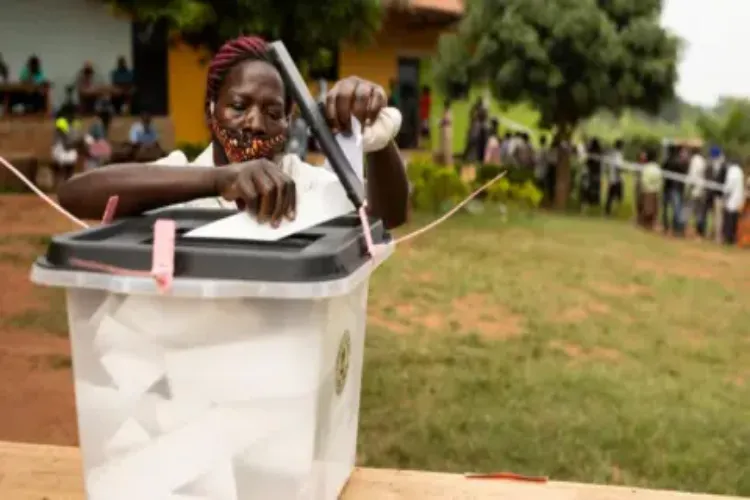
Voting has begun in Uganda’s presidential election despite a government-imposed internet shutdown and delays at several polling stations, raising concerns over transparency in a country where President Yoweri Museveni has been in power since 1986.
In the capital, crowds gathered at polling stations, with some voters waiting as election materials arrived late, well after the scheduled 7 a.m. opening. Biometric voter identification machines were reported to be malfunctioning in some locations, further contributing to long lines.
Museveni, 81, is competing against seven other candidates, including musician-turned-politician Robert Kyagulanyi, widely known as Bobi Wine, who has campaigned for political change and greater youth participation. Uganda has roughly 45 million people, with 21.6 million registered voters. Polling is expected to close at 4 p.m., and the electoral commission is constitutionally required to announce results within 48 hours.
Frustration was evident among voters facing delays. Umaru Mutyaba, a polling agent in Kampala, described the wait as “frustrating,” while opposition lawmaker Ssemujju Nganda, seeking reelection in Kira municipality, said he had been in line for three hours. Nganda warned that continued delays could suppress turnout in urban areas where opposition support is strong.
Uganda has never experienced a peaceful transfer of presidential power since gaining independence from Britain six decades ago. Museveni, seeking to extend his rule into a fifth decade, has one of the longest tenures among African leaders. Critics argue that removing him through elections remains challenging, particularly as his authority increasingly relies on the military, led by his son Muhoozi Kainerugaba.
Museveni and Wine are repeating their rivalry from the 2021 election, when Wine, appealing primarily to urban youth, garnered 35% of the vote to Museveni’s 58%—the smallest margin of victory for the president since his first campaign three decades ago.
Concerns ahead of Thursday’s vote have included potential military interference, allegations of vote manipulation, and fears of hereditary succession. The government shut down the internet on Tuesday, citing misinformation, electoral fraud, and incitement of violence, disrupting not only communications but critical sectors like banking.
Security has been heightened nationwide, with military units deployed in urban areas. Amnesty International described the pre-election period as a “brutal campaign of repression,” highlighting a November 28 opposition rally in eastern Uganda where security forces blocked exits and opened fire, killing one supporter.
Museveni urged citizens to vote in large numbers during his final rally on Tuesday, warning, “Anybody who tries to interfere with your freedom will be crushed. We are ready to put an end to this indiscipline.”
Electoral commission chair Simon Byabakama appealed for calm and civility among voters, saying, “Let us keep the peace that we have… Even if you know that this person does not support your candidate, please give him or her room to exercise his or her constitutional right.”
Authorities also suspended several civic groups during the campaign. That Group, a prominent media watchdog, closed its office Wednesday after the interior ministry accused it of activities “prejudicial to the security and laws of Uganda.”
READ MORE: Osama played Oud and stole the show at New Delhi World Book Fair
Meanwhile, veteran opposition leader Kizza Besigye, a four-time presidential candidate, remains in prison after being charged with treason in February 2025.











_(1).webp)