Saquib Salim
“The city’s (Amritsar’s) residents feel Gandhi (Mahatma) had no role in Amritsar (Jallianwala Bagh tragedy). Dr Saifuddin Kitchlew, the local Punjabi leader, remains the most significant personality for them.”
A Slice Of History
Historian Nonica Datta’s words bear a testament to the importance of Dr Saifuddin Kitchlew, a nationalist leader who led the people of Punjab against the British during the late 1910s. The rising of the people of Punjab after 1917-18 that resulted in one of the bloodiest massacres at Jallianwala Bagh on 13 April 1919, was a ‘watershed in the history of the national movement of India’.
 The massacre stirred the nation. According to Professor VN Datta, “It prepared the ground for new nationalist leadership and paved the way for Gandhi’s emergence as a major figure of the country, bringing him to the forefront of the anti-colonial movement. Jallianwala Bagh, thus, changed the idiom of Indian nationalism.”
Gandhi himself said that his participation in the Congress session after the massacre was his ‘real entrance’ into nationalist politics.
While the nation remembered Jallianwala Bagh and made Gandhi its leader through some distorted understanding, it failed to recognise the real leader of the movement, Saifuddin Kitchlew. The man who was called Shahanshah-e-Siyasat (the king of politics) by his followers, spent 17 years in prison for speaking against British rule, was awarded the Lenin Peace Prize, and donated almost all his wealth to the national cause, is no more than a passing remark in our history books.
Kitchlew was born on this day (January 15) 1888, in a wealthy family of Kashmiri traders living in Amritsar. After taking initial lessons at home, he studied at Aligarh, Cambridge and Berlin. He was one of the earliest Indians to get a PhD. At Cambridge, while pursuing a degree in Law, Kitchlew joined Majlis, a revolutionary organisation of Indian students in Europe. At the Majlis, members debated the methods to push English out of India.
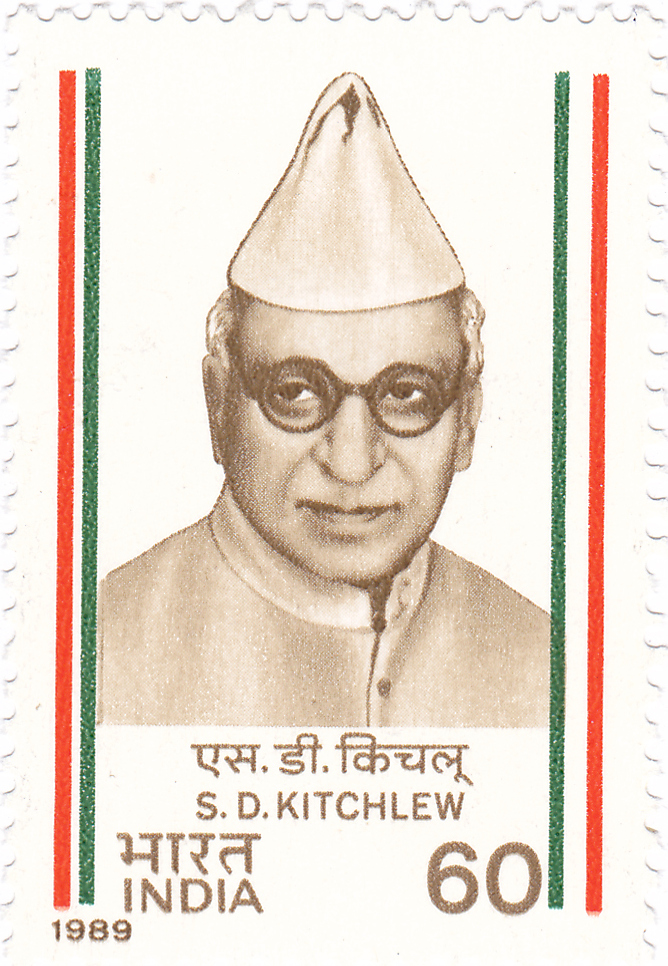
A postal Stamp to commemorate Siafuddin Kitchlew
At Cambridge, he came in contact with revolutionaries, including Madan Lal Dhingra, who assassinated Sir William Hutt Curzon Wyllie. When Dhingra shot Curzon dead, Kitchlew was present there.
In 1915, he returned to India, and soon he became a famous lawyer. He won cases for the Maharaja of Baroda and other significant clients. Soon, he realised that the nation was calling him for national duty.
The First World War was drawing to an end. The British had promised the Indians self-rule after the War, in return for cooperation during it. High on hopes, the Indians received a shock when, instead of autonomy to rule, they were slapped with the draconian Rowlatt Act, which further suppressed their freedom.
Indians, including the Gandhi-led Congress, decided to launch nationwide agitations. In Punjab, Kitchlew, along with Dr Styapal, Dr Hafiz Muhammad Bashir, Kotu Mal, and others, emerged as the leaders of this movement. A Satyagraha Sabha came into being with Kitchlew as its President.
Congress issued a call for a nationwide strike against the Rowlatt Act on 30 March 1919. Kitchlew toured different cities to make the movement successful. On 30 March, more than 30,000 people gathered at Jallianwala Bagh. The British were alarmed. Meanwhile, Congress announced another strike on 6 April. The British ordered that Kitchlew and Satyapal must not be allowed to speak in public. The British contacted some ‘senior leaders’ and asked them to withdraw the call. On 5 April, the Congress Reception Committee passed a resolution that no strike would be observed in Amritsar.
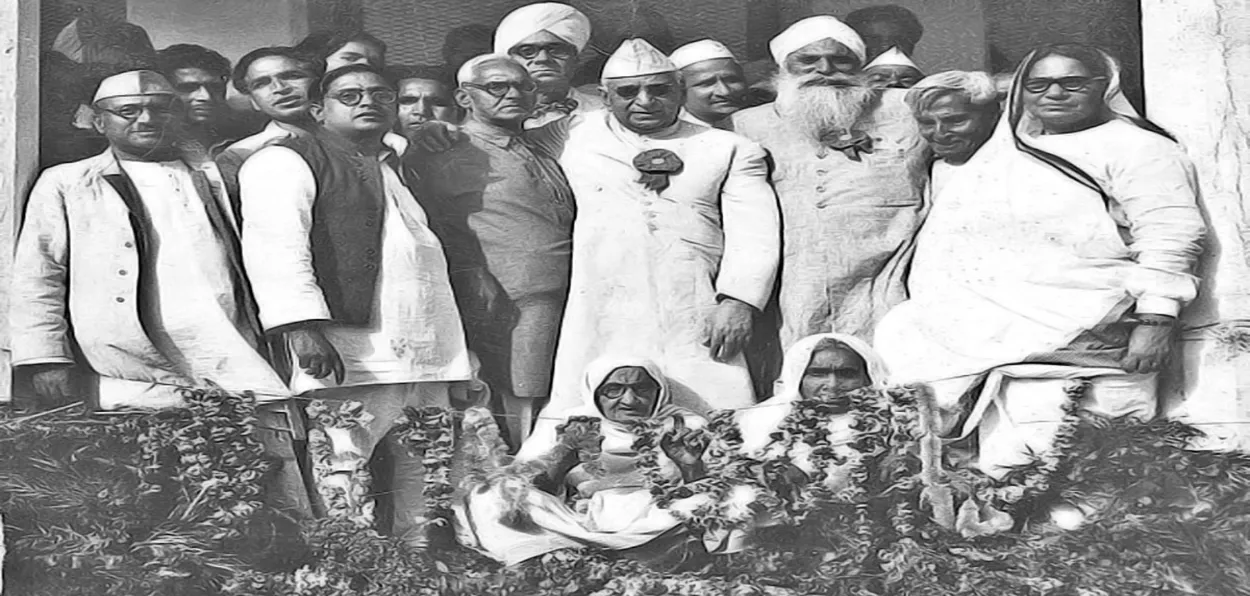
 Saifudin Kitchlew (Sitting) with Shankaracharya during the Khilafat movement
Kitchlew disagreed. He directed his followers to go ahead with the strike. The strike was more successful than the previous one. Posters with the message “as long as the name of the Rowlatt Bill does not disappear from India, Hindus and Muslims should have no rest. Be ready to die and to kill,” were pasted in public places and read out to people.
By now, the British realised that Kitchlew was the real threat. Miles Irving, the Deputy Commissioner of Amritsar, told the higher authorities that older ‘leadership’ had lost its control over the masses and only Kitchlew was leading the Indians in Amritsar.
He wrote, “I am trying to get in touch with the new leaders who have influence. I was wrong in thinking that I could influence Kitchlew—he is too deep in it. I may get hold of some of the outer circle.” Irving asked for troops and arms to counter any uprising from the Indians which he believed would take over the city from British control. On 6 April, looking at the success of the strike, Michael O’Dwyer, the Lieutenant Governor, told people that he would ‘deal with those scoundrels first’.
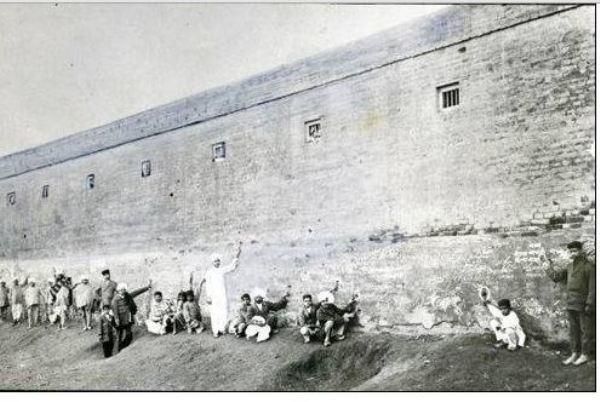
People showing bullet marks on the wall of Jalianwala Bagh after the massacre
Kitchlew was arrested. The people took to the roads, and the British people and infrastructure were targeted. The British were adamant on teaching Indians a lesson. A public meeting was called at Jallianwala Bagh on 13 April to protest the arrest of Kitchlew and Satyapal. Thousands of people gathered on the ground. Interestingly, one chair with Kitchlew's framed portrait was placed on the stage, symbolising his status as President in absentia of the meeting. General Dyer, with his troops, fired upon this gathering, killing hundreds of Indians, an act which became a symbol of British tyranny.
He later led India into Khilafat, Simon Commission protests, Civil Disobedience, and several other nationalist movements. Kitchlew, aligned with Hindu and Sikh leaders, vehemently opposed the partition of India. India, in his view, should belong to peasants and common people rather than a few elite rulers.
Kitchlew often stood against the popular opinion of Gandhi and publicly registered his protests. When Bhagat Singh was hanged, he declared, "The corpse of Bhagat Singh shall stand between us and England".
The partition and the slaughter that accompanied it devastated him completely. He stopped from active politics but spearheaded the people’s movement against the government for not looking after the refugees. Kitchlew convened a peace conference and represented India at the World Peace Conference. He worked tirelessly to form an international public opinion against the invasion of Kashmir. On 9 October 1963, he suffered a heart attack and died.
ALSO READ: What do Quran, Hadith, and Caliphs mandate about Illegal religious structures?
He was buried at the graveyard of Jamia Millia Islamia, New Delhi, as several world leaders, including the premiers of the USSR, China, and England, paid their tributes to this great son of the soil. Prime Minister Jawaharlal Nehru said, "I have lost a very dear friend who was a brave and steadfast Captain in the struggle for India's freedom".







.webp)