Vidushi Gaur/ New Delhi
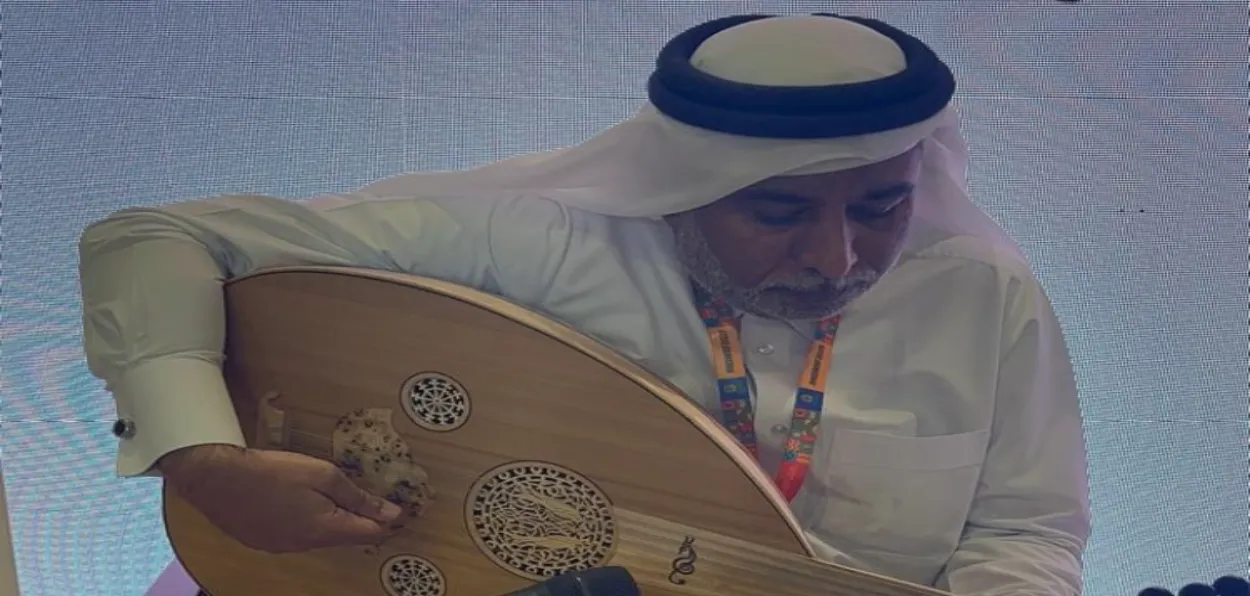
This sense of shared listening was palpable at the World Book Fair 2026 in New Delhi. Amid rows of books, debates on ideas, and the low murmur of readers turning pages, a circle slowly formed not around a bestselling author, but around a musician. Osama from Qatar sat quietly with the oud that rested against his chest. When he began to play, the fair seemed to pause.
His fingers moved with unhurried confidence, drawing out melodies that felt at once ancient and immediate.
The oud arrived in the world long before borders hardened and before music learned to stay still. In Saudi Arabia, the oud is not merely an instrument; it is a companion to memory, a keeper of stories whispered in majlis gatherings, and a bridge between the sacred calm of the past and the restless pulse of the present.
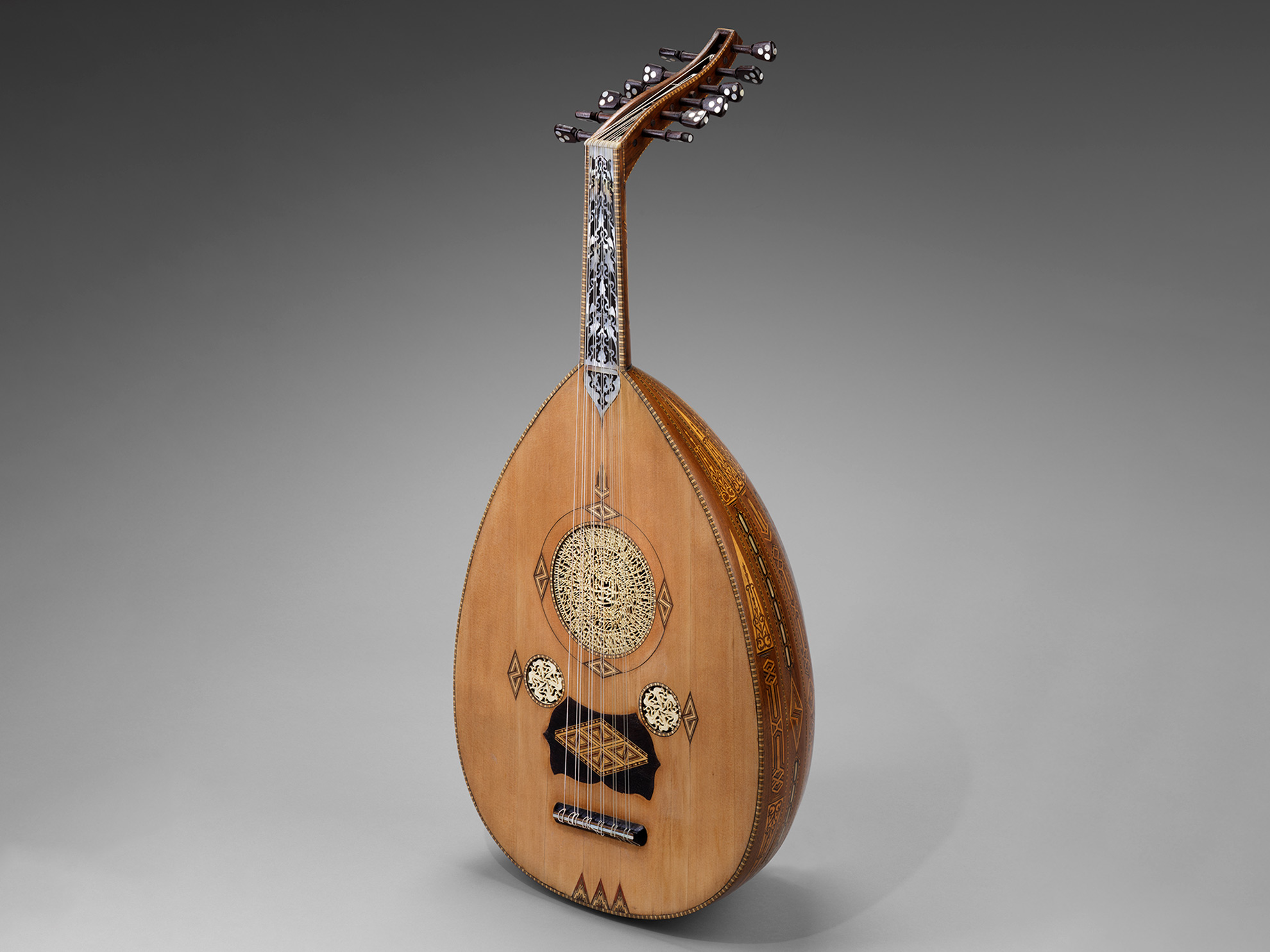 Oud, a Middle Eastern Instrument
Osama’s playing carried echoes of the Arabian Peninsula, but it also travelled farther. For listeners familiar with Southeast Asian sounds, there was something reminiscent of the way a Javanese gamelan ensemble unfolds patiently, cyclically, allowing emotion to surface gradually. Like the kendang setting the pace of a gamelan performance, Osama’s oud guided the mood of the gathering, leading listeners through sorrow, reflection, and gentle joy.
Carved into a pear-shaped body, the oud begins its life as wood chosen with care and patience. Luthiers often prefer walnut, rosewood, or mahogany for the rounded back, assembling thin ribs one by one. Each rib is bent with heat and moisture, coaxed into shape by hand, a process that requires experience and intuition rather than haste. The soundboard, usually made from spruce or cedar, is shaved until it reaches a precise thinness light enough to vibrate freely, strong enough to endure decades of touch.
Listen to Osama playing Oud at World Book Fair 2026, New Delhi Here:
At the centre of the soundboard sit the rosettes, intricate wooden carvings that resemble lace frozen in motion. These are not merely decorative. They control how air moves in and out of the instrument, shaping its voice. In Saudi tradition, these patterns often echo geometric motifs found in Islamic art endless, balanced, and contemplative. TThe neck of the oud is short and fretless, allowing the player to slide between notes, to linger in the spaces that Western notation often ignores. This fret lessness is what gives the oud its emotional elasticity, its ability to sigh, plead, and rejoice in a single phrase.
The strings traditionally made of gut, now more commonly nylon and metal are tuned in pairs, producing a deep, warm resonance. When plucked with a risha, a thin plectrum often made from horn or plastic, the sound emerges rounded and intimate, as if spoken rather than shouted. In Saudi Arabia, the oud has accompanied poetry, religious reflection, and everyday storytelling, much like how the rebab or gambus resonates within Malay and Indonesian musical traditions, where sound, too, is woven into communal life rather than isolated on a stage.
The crowd was diverse students, diplomats, publishers, families but the oud erased distinctions. A child sat cross-legged near the front. An elderly man closed his eyes. Some recorded the moment on their phones, others simply listened, understanding instinctively that not everything needs to be captured to be remembered. In that space, the oud became a book without pages, telling a story that needed no translation
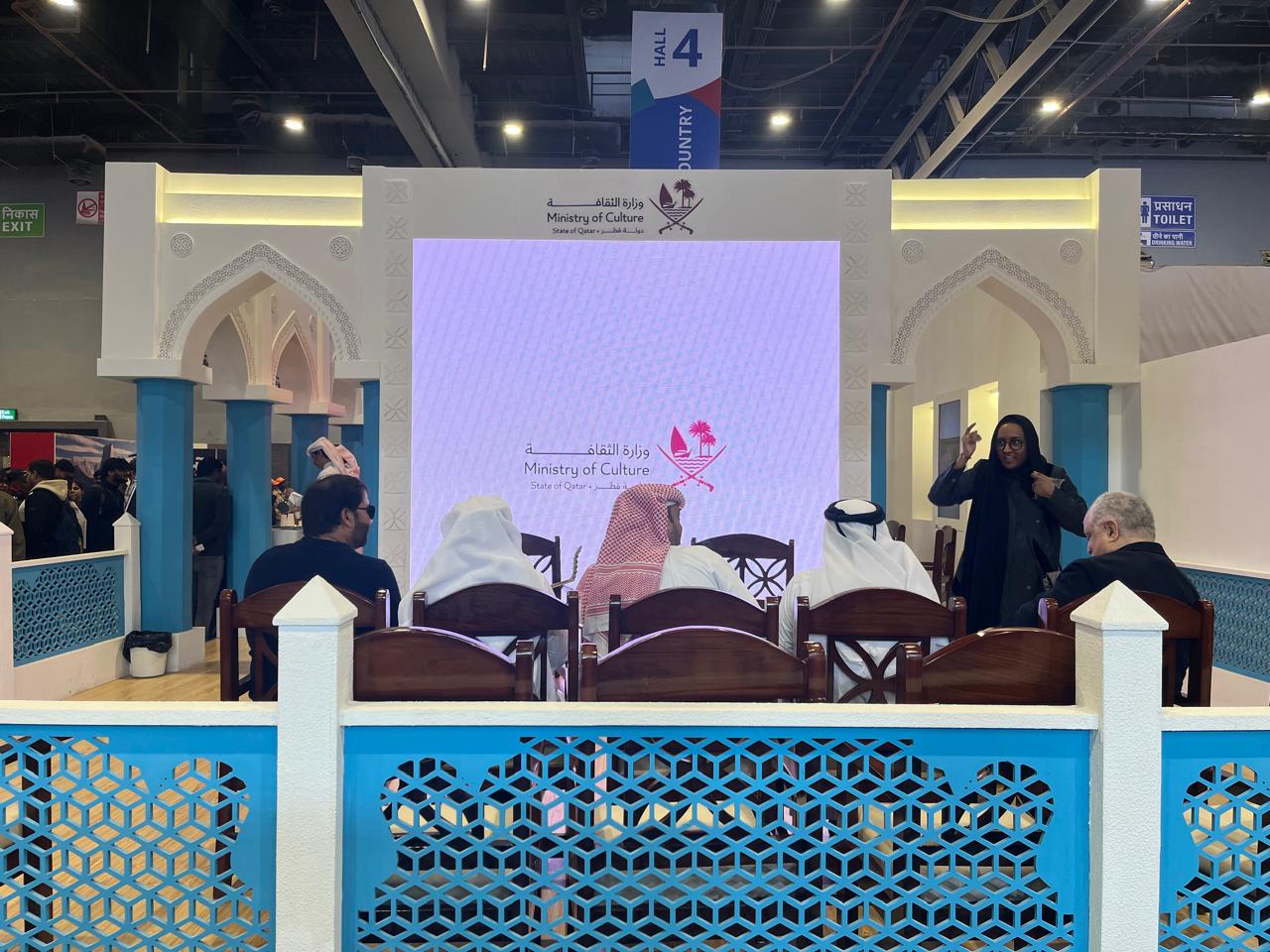 The stall of the Ministry of Culture of Qatar at World Book Fair 2026, New Delhi
When the final note faded, there was a brief silence before applause rose, warm and unforced. Osama smiled modestly. That humility is central to the oud’s tradition. The instrument does not dominate; it converses. It invites the listener in, much like oral storytelling traditions across cultures from the deserts of Arabia to the villages of Indonesia where meaning is shared, not performed.
The oud continues to evolve. Modern makers experiment with new woods, carbon-reinforced necks, and amplified designs, yet the soul of the instrument remains unchanged. It is still built by hands that respect grain and sound, still played by musicians who understand that silence is as important as tone.
ALSO READ: What do Quran, Hadith, and Caliphs mandate about Illegal religious structures?
At the World Book Fair, surrounded by words printed in ink, the oud reminded everyone that some stories are carved, strung, and plucked into being. And as Osama from Qatar played, beautifully and without excess, the ancient Saudi instrument proved once again that music, like the finest books, travels far and stays with you long after the last note is heard.






.webp "Union Home Minister Amit Shah")
.webp "Ganapati idols being hander over to activists for Kashmir")