Bangkok
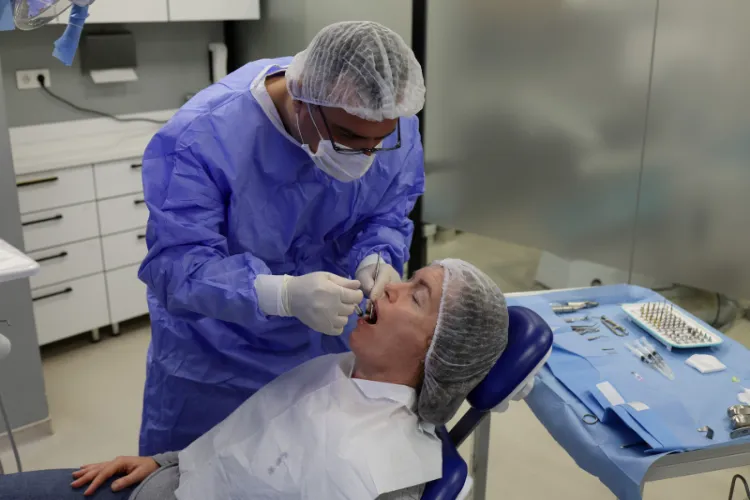
Health and environment policymakers and experts from across WHO South-East Asia today came together to strengthen collaboration to protect people and the environment by accelerating phase-out of mercury-containing dental fillings and advancing safer, more sustainable oral health care, an official statement said.
"Phasing out dental amalgam offers countries a unique opportunity to protect people's health and the environment while accelerating the transition to prevention-oriented, minimally invasive and more sustainable oral health care. By working together across the health and environment sectors, we can expand access to safe, effective and people-centred oral health services while building more resilient and environmentally sustainable health systems," said Dr Catharina Boehme, Officer-in-Charge, WHO Regional Office for South-East Asia, in her address to the two-day Workshop for Strengthening Collaboration on Phasing Out Dental Amalgam in the WHO South-East Asia Region.
The workshop follows a landmark decision adopted at the Sixth Conference of the Parties to the Minamata Convention on Mercury in 2025 to phase out dental amalgam, a mercury-containing material used for dental fillings, by 2034. The decision marks a shift from phasing down to phasing out dental amalgam, with countries now working to translate that commitment into national action.
Mercury is recognized by WHO as one of the ten chemicals of major public health concern. Throughout the life cycle of dental amalgam - from manufacture and placement to removal and disposal - it can be released into the environment, contaminating air, water and soil. UNEP estimates that between 3,000 and 5,000 metric tonnes of mercury are currently stored in dental fillings worldwide, making the transition to mercury-free alternatives, alongside the environmentally sound management of existing amalgam waste, a global priority, as per the statement.
The transition away from dental amalgam is part of a broader transformation of oral health care. WHO's Global Oral Health Action Plan 2023-2030 and the WHO South-East Asia Regional Action Plan on Oral Health 2022-2030 promote prevention-oriented, minimally invasive and people-centred oral health care integrated into primary health care and universal health coverage, while expanding access to safe, effective mercury-free alternatives. The workshop also builds on the Bangkok Declaration on Oral Health - No Health Without Oral Health, which calls for environmentally sustainable oral health care practices, as per the statement.
Among the targets of WHO's Global Oral Health Action Plan, 90% of countries are expected to have implemented measures to phase down dental amalgam or have phased it out by 2030. As of the 2024 baseline, only 19% of countries in the WHO South-East Asia Region had achieved this target, compared with 31% globally, underscoring the need for accelerated action.
"Partnerships between the health and environment sectors are critical to achieving the Minamata Convention's objectives, not only by accelerating the transition to mercury-free oral health care but also by strengthening the environmentally sound management of mercury-containing waste. By working together, countries can reduce mercury releases, protect ecosystems and communities, and advance more sustainable and resilient health systems," said Sudhir, Regional Coordinator Chemicals and Pollution, UNEP.
The workshop is the second of three regional meetings under the GEF-7 Phasing Down Dental Amalgam Project, funded by the Global Environment Facility, implemented by the United Nations Environment Programme (UNEP) and executed by WHO with technical assistance from the UNEP Global Mercury Partnership. Running from 2023 to 2026, the project supports countries in implementing the dental amalgam provisions of the Minamata Convention while strengthening capacity for the environmentally sound management of associated waste.
Thailand, one of the project's three pilot countries, is demonstrating that the transition is both feasible and practical. Early results show a measurable decline in dental amalgam use through prevention-oriented oral health policies, wider adoption of mercury-free restorative materials and stronger systems for managing dental amalgam waste. The country has also piloted dental amalgam separators to further reduce mercury releases into the environment, as per the statement.
"The project has helped reduce the use of dental amalgam while strengthening prevention-oriented oral health policies, promoting mercury-free alternatives and improving the management of dental amalgam waste in Thailand. These experiences demonstrate that the transition is achievable and offer valuable lessons for other countries in the Region," said Damrong Thamronglaohaphan, Director, Bureau of Dental Health, Department of Health, Ministry of Public Health, Thailand, the statement said.
The two-day workshop brings together policymakers, technical experts, international organizations, academia, civil society, the private sector and development partners to exchange experiences and identify practical pathways for transitioning to mercury-free oral health care and improving the environmentally sound management of dental amalgam waste.
READ MORE: Assam: Badruddin Ajmal lends his support to anti-drug campaign
Participants will explore how policy reforms, universal health coverage, prevention-focused oral health care, financing, supply chains, workforce development and waste management systems can help countries accelerate the transition away from dental amalgam. Member states will present priority national actions, identify common implementation challenges and explore opportunities for stronger regional collaboration and mutual support.












.webp "Ukrainian President Zelenskyy")


_(2).webp)