Aasha Khosa/New Delhi
Scientists at the Indian Institute of Technology Delhi have developed a bio-patch that can reverse the damage caused by a heart attack in humans. The patch can be planted on the heart and it would regrow the damaged tissue and restore health.
The patch made of biomaterials has already been tested on animals and is awaiting human trials before it can be manufactured.
This key medical project is led by the Kashmir-born scientist Dr Sheikh Ahmed Parvaiz at the Sheikh lab for BioMaterial Advances in Regeneration and Therapeutics (SMART), Centre for Biomedical Engineering at the IITD.
“After the attack, a patient's heart usually work only 40 per cent of its capacity. Such people usually do not live long and are allso not energetic and healthy,” Dr Parvaiz said.
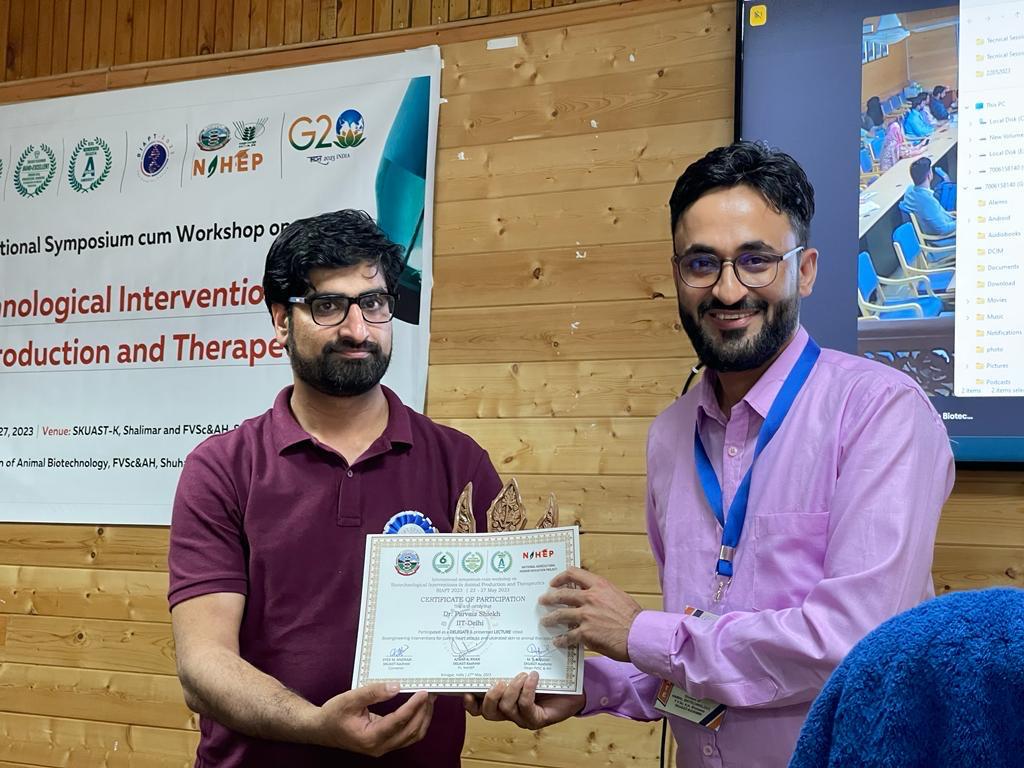 Parvaiz A Sheikh with a student
He said the patch can regenerate tissues damaged during a heart attack, and a person can live a normal and good life. The cost of the bio patch would be nominal compared to the costly and invasive surgeries.
According to the IIT website, where Dr Parvaiz is a faculty, "He establishes a research area that explores immunomodulatory materials and nanomaterials to develop therapeutic interventions for various biomedical & translational applications. His interests also lie in developing oxygen-based biomaterials and nano-therapeutics to cure cardiovascular diseases, diabetic complications and lung diseases.”
This, in a nutshell, means Parvaiz and his team are working on developing biomaterials that can become easy and inexpensive cure for heart and cardiovascular conditions in humans. He is working on regenerative medicine, where biomaterials and nanotechnology can be used for repairing body parts.
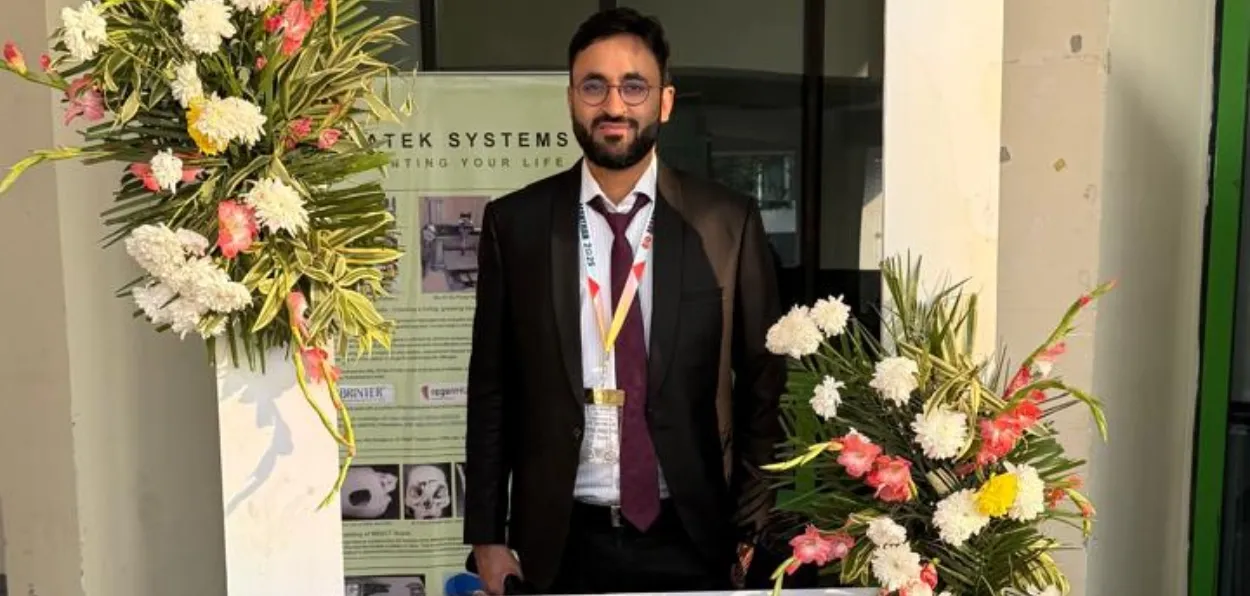 Dr Parvaiz A Sheikh
“We are also developing a bio-patch to cure the diabetic foot,” he told Awaz-the Voice. During his doctoral studies, Parvaiz has developed an oxygen-releasing wound dressing for diabetic foot.
The diabetic foot is a major health issue, and there is a lot of ignorance about it. “In India, many women are diabetic, and they don’t know. Many a time, such women go on pilgrimages barefoot and trek a long distance for faith. Many women develop sores that never heal due to their diabetic condition.”
This patch to regenerate the in a diabetic foot will cost around Rs 2 and save them the pain of gangrene, which leads to amputation of the foot.
Who is Parvaiz A Sheikh?
Parvaiz Sheikh was born in Villgam village in the Kupwara district of north Kashmir, about 30 km from the Line of Control in Northern Kashmir.
He earned his PhD in Bioengineering from IIT Kanpur and “developed functionalized biomaterials and scaffolds to attenuate oxidative stress and hypoxia in diseased conditions with remarkable translational application.”
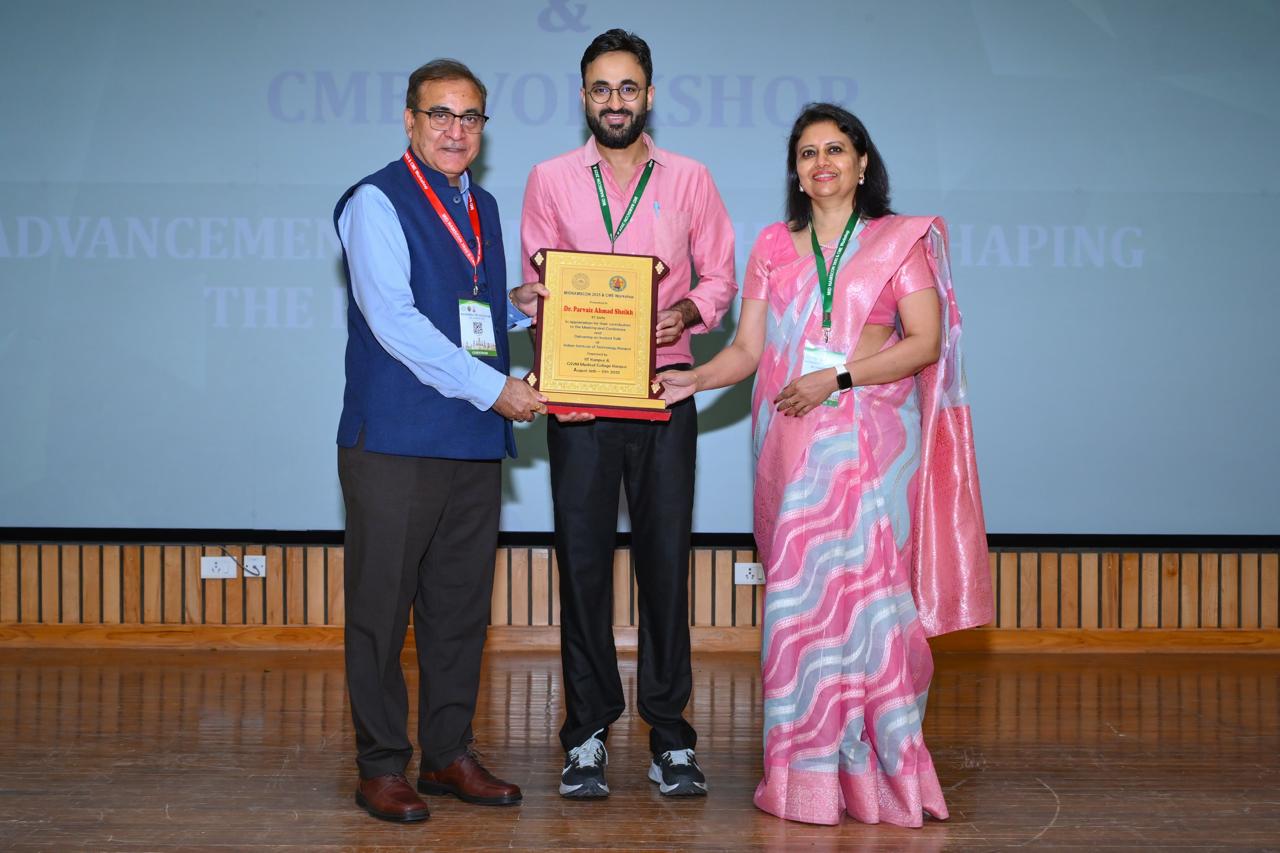 Dr Parvaiz A Sheikh receiving an honour
“He also explored using stem cell-derived nanovesicles (exosomes) to repair and regenerate diseases like diabetic foot ulcers, myocardial infarction, and diabetic neuropathy. Most notably, he developed an oxygen-releasing wound dressing “OxOBand” for diabetic foot ulcers and a nanofibrous oxygen-releasing cardiac patch for myocardial infarction.”
Having completed his graduation in biosciences from Sri Pratap College, Srinagar, Parvaiz A. Shiekh joined the Central University of South Bihar, Gaya, Bihar, for the Master’s course in Bioengineering, and this was not only a turning point in his career but life too.
Tracing his journey from Kupwara to the Hi-tech labs of India and abroad, Parvaiz Ahmed, who is in his mid-thirties, said that while growing up, he had not even heard of the IIT, let alone studying and working there.
He loved football and also played cricket. He had no particular idea of a carrer and would follow what elders told him.
However, some life-changing and heartwarming interactions with strangers at a young age led him to get admission into the Central University of South Bihar for a Bioengineering degree.
.jpeg) Dr Parvaiz A Sheikh delivering a talk
Dr Parvaiz A Sheikh delivering a talk
At the Delhi Railway Station and later in Bihar, he met strangers who helped him not only join the University but also live comfortably away from his home for the first time.
“I was crying while speaking with my brother on the phone when a travel agent spotted me. He bought me an air ticket to Patna and also paid my autorickshaw fare to reach the Airport.”
Those were the days of no mobile phones or ATM cards; people communicated on landlines and withdrew money from bank by visiting them.
Next, he realised that a contact of a local banker in Kupwara had travelled 100 km to receive him at the railway station, while he had landed at the Airport. The administrative staff at the University supported him in submitting the bank draft in time.
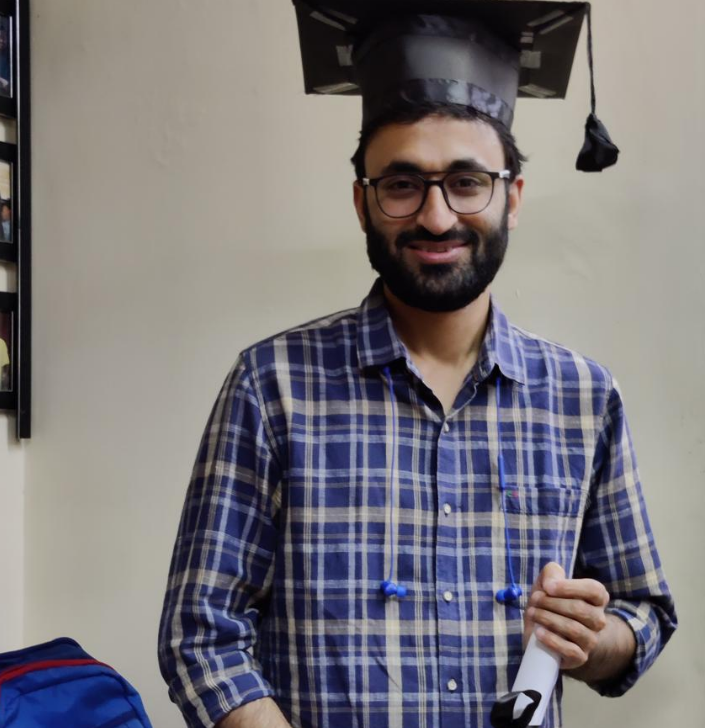 Dr Parvaiz A Sheikh with his doctoral degree
After securing his admission, the Buxur family insisted that he stay with them till the classes started. “They told me why should I travel home and return after 15 days, and waste money. They looked after me like their own,” he says.
Later, he received his PhD in biological sciences and bioengineering from IIT Kanpur (IITK) under the supervision of Prof. Ashok Kumar. There, he designed and evaluated bioactive, oxygen-releasing, and antioxidant polymeric biomaterials for therapeutics and translational medicine.
Today, as head of the Sheikh lab for BioMaterial Advances in Regeneration and Therapeutics (SMART) at the IIRT Delhi, his job involves taking cues from biology to create products based on engineering concepts, and possibly using them in different fields.
ALSO READ: I received my wages for hard work of decades: Ghafruddin on Padma Shri
Speaking about his background, he said, “When you come from a background where you don't have much exposure to things, every step becomes a learning experience for you."
A Podcast with Dr Parvaiz A Sheikh:













.webp)