New Delhi
The government should be flexible with its Ethanol Blended Petrol programme, maintaining the E20 target as a long-term goal while allowing for a temporary reduction to E15 when domestic ethanol availability is insufficient, according to a research paper from ICRIER.
The paper, titled Food vs Fuel: Recalibrating India’s Ethanol Blending Strategy, said the choice between maintaining E20, importing ethanol and temporarily reducing blending should ultimately depend on their relative economic costs under prevailing conditions.
"Such a mechanism would allow the programme to respond to temporary agricultural shocks without compromising the longer-term objective, the paper co-authored by agricultural economist Ashok Gulati said.
India has rapidly expanded its Ethanol Blended Petrol (EBP) Programme. Ethanol is produced from agricultural commodities such as sugarcane, maize and surplus rice.
"The final safeguard should be flexibility in the blending rate itself.
"The 20 per cent target can remain the long-term objective, while a temporary reduction to E15 could be considered in years when domestic ethanol availability becomes insufficient, or the cost of maintaining E20 becomes disproportionately high in terms of food and/or feed prices," the paper noted.
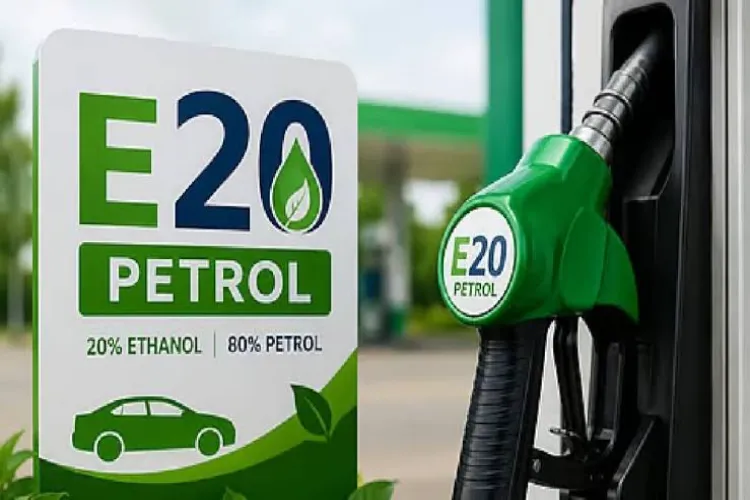
The programme aims to reduce dependence on imported fossil fuels and increase the use of domestically produced renewable fuel. The government has set a target for E20 -- petrol should contain up to 20 per cent ethanol by volume. India achieved this target in the Ethanol Supply Year (ESY) (November to October) 2025–26, five years ahead of the original schedule.
Taken together, the paper said these measures point towards a more adaptive EBP framework.
"Sugar-based ethanol can remain important when sugar supplies are abundant, but sugar diversion should be moderated when stocks become tight," it said, adding that maize should absorb a larger share of ethanol demand as its productivity and market supply improve, while FCI rice should remain largely a residual outlet for genuine surplus stocks, but the pricing of rice should be raised to at least its acquisition costs.
The paper emphasised that what is needed is a flexible feedstock strategy that can maintain E20 without placing excessive pressure on food markets when agricultural supplies tighten.
The ethanol market has already reached considerable scale: OMCs procured 6.79 billion litres (679.04 crore litres) in ESY 2023–24, 10.33 billion litres (1,033.31 crore litres) in 2024–25 and 7.05 billion litres (705.43 crore litres) up to June 2026, with corresponding expenditure of about Rs 48,757 crore, Rs 73,996 crore and Rs 49,577 crore, respectively, including GST and transportation.
During 2019–20 to 2025–26, ethanol supplied to oil marketing companies increased from 1.73 billion litres (173.03 crore litres) to a projected 12 billion litres (1,200 crore litres). This represents a CAGR of about 38 per cent over six years.
In contrast, the paper explained that production of agricultural commodities like sugarcane, maize and rice, used to produce ethanol grew much more slowly.
"During the same period, maize production grew at 11.4 per cent CAGR, rice at 4.4 and sugarcane at 5.1 per cent. This widening gap in growth of ethanol demand for blending and the supply of feedstock to meet that demand is creating a growing food-versus-fuel trade-off.
"The trade-off is already evident in the sugar market. Where low opening stocks and lower production have coincided with a 44 per cent rise in modal retail sugar prices, from Rs 45 per kg in July to Rs 65 per kg by 29 August," it pointed out.
The paper argued for a more adaptive and market-oriented approach to the ethanol blending policy.
READ MORE:Dr Syed Abdullah and his team save nine newborns from NICU fire
It recommended using sugar imports as an immediate buffer during shortages; limiting FCI rice largely to genuine surplus stocks while moving its pricing closer to at least the acquisition cost; making feedstock allocation responsive to agricultural conditions; and greater openness to feedstock and ethanol imports.











.webp "Representational Image")