Bhakti Chalak
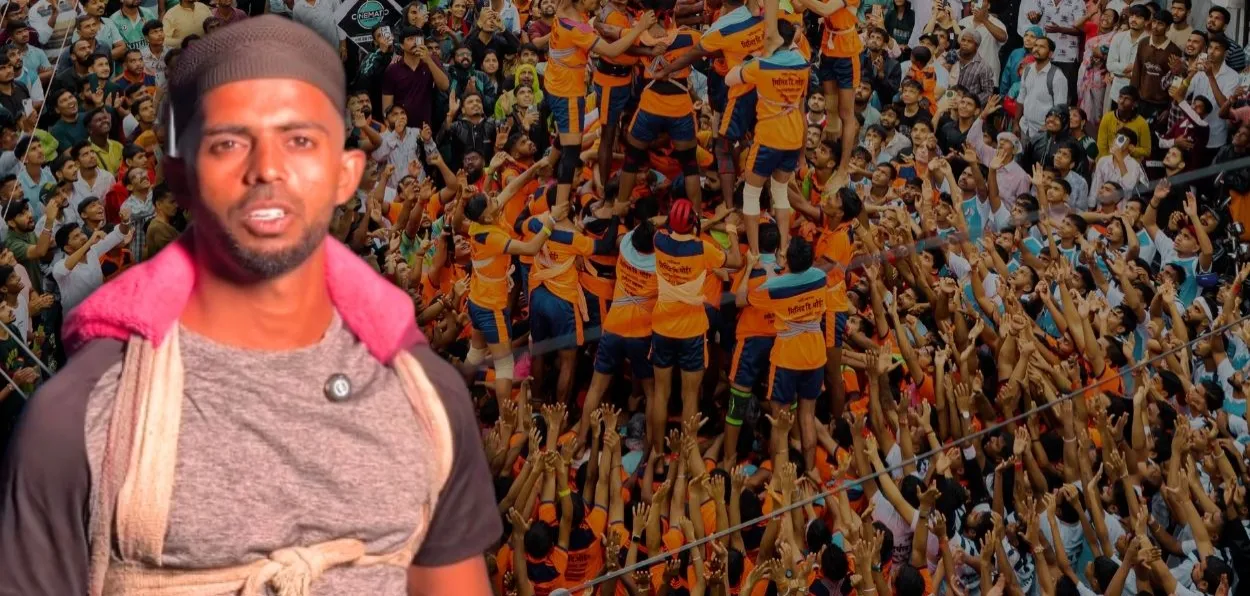
As Maharashtra prepares for the 12-day Ganesh Utsav, beginning September 14, the festive spirit is already taking hold across the state. Among the most eagerly anticipated traditions is Dahi Handi, a popular celebration in which teams of young men and women form human pyramids to reach and break a clay pot filled with curd, butter or other festive offerings suspended high above the ground.
In Thane, the sound of drums and chants of Govinda Ala Re have already begun filling the air as young people from different faiths and communities gather to practise for the competitions.
Among them is 28-year-old Faisal Suleman Sheikh, a Muslim youth from the small village of Dhasai in Shahapur taluka. Faisal has been participating in Dahi Handi celebrations for the past decade and has been a member of the Jai Maharashtra Govinda Pathak for the last 10 years.
A Govinda Pathak is a team of participants who train together to form human pyramids during Dahi Handi. The word Govinda is traditionally associated with Lord Krishna, while a pathak refers to a group or team.
Faisal works as a bouncer at a warehouse and also serves as a gym instructor. After completing his daily duties, he usually heads to the gym in the evening. During the Dahi Handi season, however, he goes directly to Govinda Pathak’s practice camp to train with his teammates.
A sports enthusiast since childhood, Faisal has competed at the national level in kabaddi. His sporting interests extend beyond kabaddi to cricket, wrestling, bodybuilding and bullock-cart racing. He has also tried his hand at sports commentary.
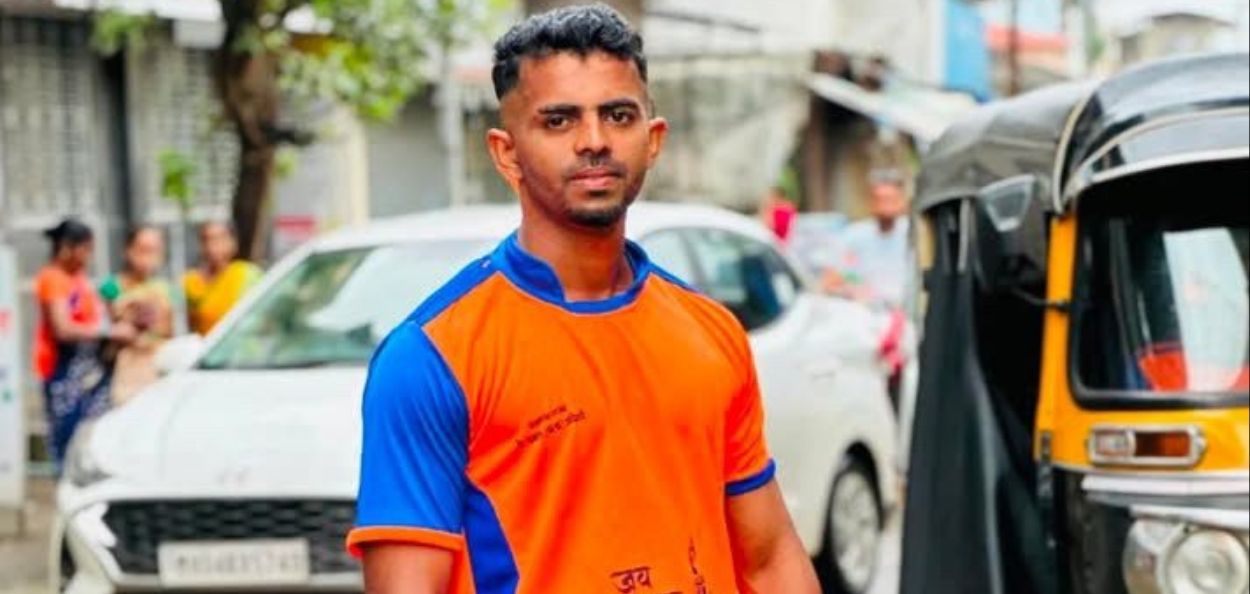 Faisal Suleman Sheikh
Faisal says, "I have been very fond of field sports since childhood. I love competing and competing fiercely on the field. No one should be ahead of me in sports. My tenacity has paid me and that is why I enthusiastically participate in kabaddi, wrestling, cricket, bodybuilding and bullock cart races."
Faisal's passion for sport was not initially welcomed by his family. His parents were concerned about the possibility of serious injuries, particularly in physically demanding sports such as kabaddi and Dahi Handi.
Faisal said, "Initially, my family used to forbid me from playing kabaddi. They were afraid that I might get injured or break my arms and legs. But I firmly told them that I have a strong physique and this sport is very good for the body. So, you guys don't worry. I had full faith in my body and my strength, and I convinced my family about this as well."
From watching tribal children to joining a Govinda Pathak
Faisal's interest in Dahi Handi grew after he watched children from tribal communities climb trees with remarkable ease. Their physical agility inspired him to take up the challenge of forming human pyramids.
He initially joined a local Govinda Pathak through a friend. When that group later stopped functioning, Akshay Adhikari, head of the Jai Maharashtra Govinda Pathak, came to his aid. Adhikari recognised Faisal's physical strength and fitness, as well as those of his kabaddi-playing friends, and invited them to join his team.
For Faisal, the first sight of a completed human pyramid left a lasting impression. He remembers seeing a small child standing fearlessly at the very top while his father and other participants supported him from below.
That moment awakened his competitive spirit.
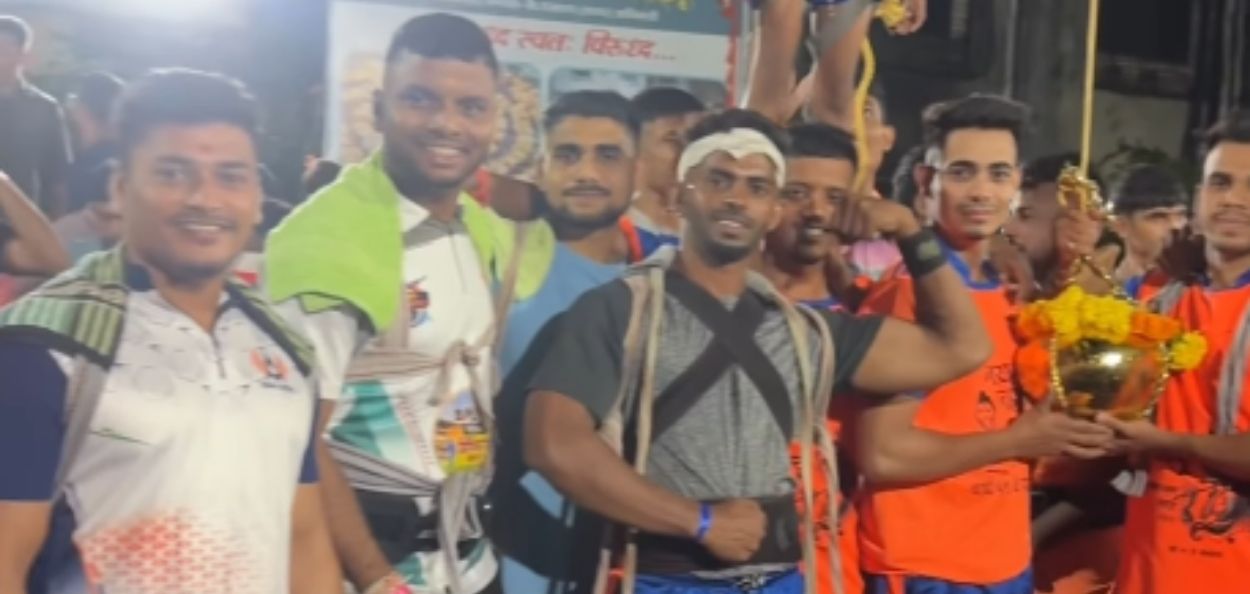 Faisal Suleman Sheikh participating in Hadi Handi competition
A team sport that goes beyond religion
Dahi Handi is not an individual sport. Participants train and compete as a team, with every member playing a specific role in building the human pyramid. The mandal—a local community or organising group—usually manages the team's activities, competitions and celebrations.
For Faisal, however, the biggest attraction is the camaraderie the festival creates.
The Jai Maharashtra Govinda Pathak organises the Maharaja of Shahapur event every year during Ganesh Utsav. Govindas—or Dahi Handi participants—from across the area are brought together, honoured and presented with trophies.
The group also maintains a fund from the money it receives through Dahi Handi-related activities. According to Faisal, this money can be used to support a member of the Pathak who suddenly faces a financial difficulty.
Faisal says, "This game is not for one person but for everyone. The prize and money received from Dahi Hundi is kept with our mandal. The best thing about our pathak is that if any Govinda of our pathak suddenly faces any difficulty or financial need, our coach and mandal immediately reach out to help him."
Faisal is the only Muslim member of his Pathak, but says he has never felt isolated or discriminated against during his decade with the group. He credits his teammates and coaches—including Akshay Adhikari, Ganesh Chauhan and Shri Patil—with treating him like a younger brother.
Speaking about the sense of unity created by the festival, Faisal says, “Gopal Kala is a festival in which boys from every village and every area come together. Because of this festival, we have great unity, and friendship grows. I am the only Muslim boy in my school, but I never feel different. I also give my 100 per cent contribution.”
For Faisal, participation in a Hindu festival has never been a barrier to belonging. Instead, Dahi Handi has become an important part of his sporting journey and his friendships.
"Dahi Handi is a Hindu festival, but despite this, Faisal participates in it with full enthusiasm. He is the only Muslim in this pathak, but he never feels separated here. This is the special thing about Maharashtra and our culture."
ALSO READ: Iqbal saw Gautama Buddha as a saint, seeker and voice of humanity
His decade-long association with the festival offers a glimpse of how sporting traditions and community celebrations can bring people from different backgrounds together—not merely as spectators, but as teammates working towards the same goal.

_(1).jpg "Visitors gather at the Santosh Mitra Square Durga Puja pandal, themed on the 150th anniversary of Vande Mataram and its historic role in India's freedom movement, ahead of the festival, in Kolkata")
.jpg "Gujarat’s women entrepreneurs bring their craftsmanship to life during Navratri")





.webp)