Ghaus Sivani
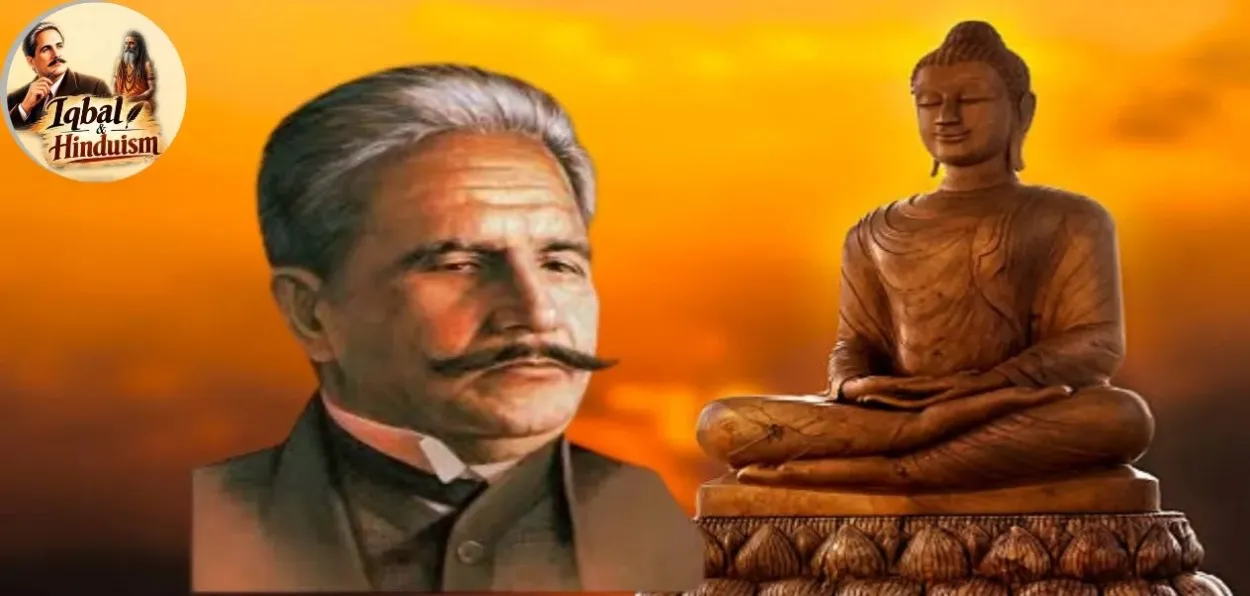
Muhammad Allama Iqbal, one of the great philosophers and poets of his time, wrote about Gautama Buddha with profound respect. For Iqbal, Buddha was not merely a religious teacher but a towering figure who embodied humanity, compassion, self-restraint and moral transformation. His influence extended far beyond religion, shaping society, culture, politics and intellectual thought across large parts of Asia.
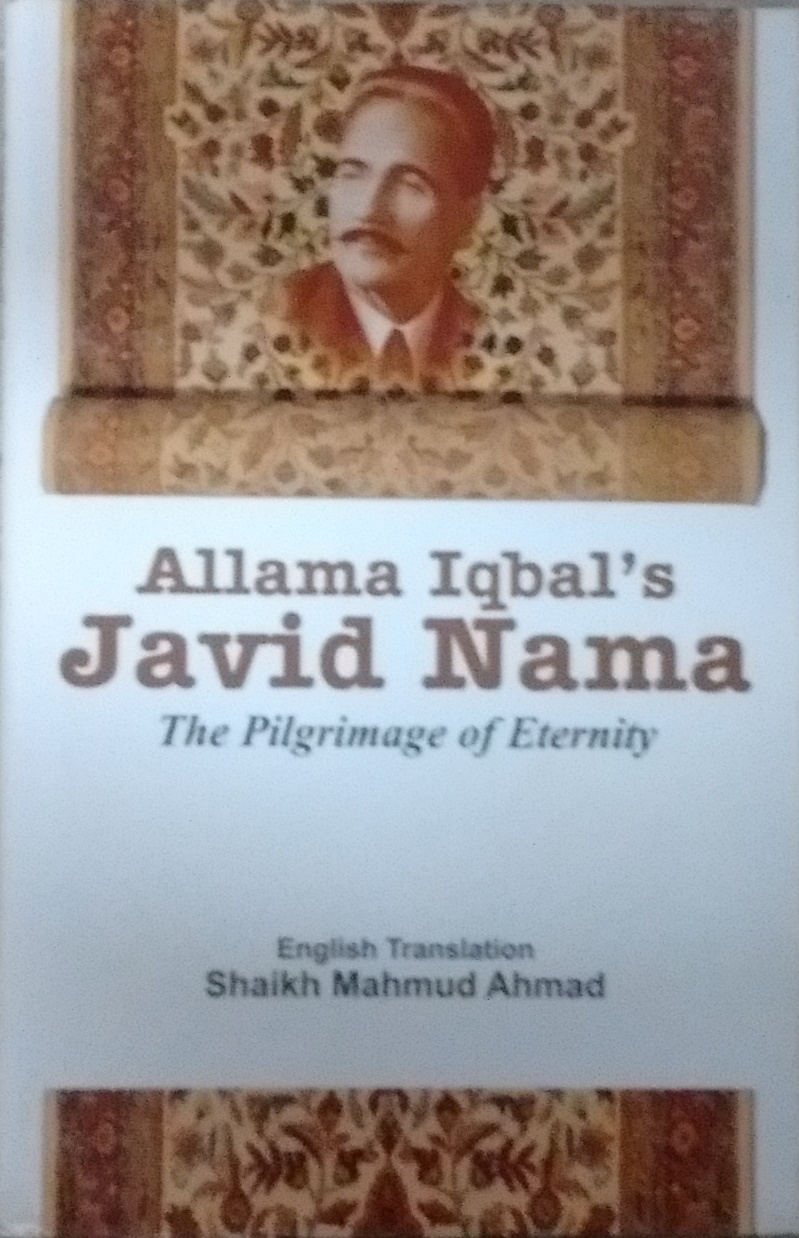
Buddha's message spread across vast regions, inspiring millions with his philosophy. Many thinkers and philosophers have written about him, and Iqbal was among those who reflected deeply on his life and teachings. He referred to Buddha at several places in his poetry and wrote about him with particular reverence in his Persian masterpiece Javid Nama.
At one time, Buddhism flourished across a vast territory stretching from China to Iran. The faith founded by Buddha had a strong presence in India, Afghanistan and Central Asia. The archaeological remains of Buddhist stupas and monasteries across these regions bear testimony to this history.
Bihar and Uttar Pradesh emerged as major centres of Buddhism, with its legacy extending from Patna and Nalanda to places such as Ayodhya. Kashmir was also an important centre of Buddhist learning and culture. Present-day Pakistan and Afghanistan formed part of the ancient Gandhara region, where Buddhism flourished for centuries. Buddhist influence also extended into territories that are now Tajikistan, Uzbekistan, Turkmenistan, Azerbaijan and Iran.
Historical accounts also suggest that Buddhist monks were known in Arab lands during the time of Prophet Muhammad. Because of their red robes, they were referred to as Muhammara, or wearers of red robes. Arab societies were also reportedly familiar with representations of Gautama Buddha.
Today, large Buddhist populations are found in China, Japan, Tibet, Cambodia, Myanmar, Bhutan, Sri Lanka, Thailand, Laos, Vietnam, South Korea and Mongolia. Although India, the birthplace of Buddhism, has a Buddhist population of less than one per cent, the faith remains one of the world's major religions.
Who Was Gautama Buddha?
Gautama Buddha was born as Prince Siddhartha between the sixth and fourth centuries BCE in Lumbini, in present-day Nepal, near Kapilavastu. He attained enlightenment after years of spiritual quest and died at Kushinagar in present-day Uttar Pradesh.
According to Britannica, the word "Buddha" refers to an awakened or enlightened person who has overcome ignorance and been liberated from sorrow and suffering.
Buddha's family name was Gautama. Much of what is known about his life comes from Buddhist religious texts that were written centuries after his death. According to Buddhist tradition, he lived for about 80 years, although scholars differ over the precise dates of his life and Mahaparinirvana, or final passing.
Life and Teachings of Buddha
Buddhist philosophy holds that the universe operates according to the law of karma. Good actions bring beneficial consequences, while harmful actions lead to suffering.
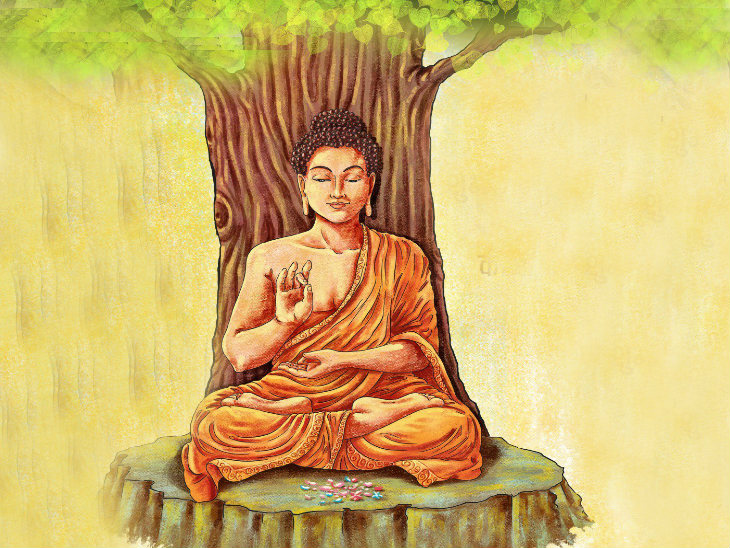
At the same time, Iqbal did not agree with certain philosophical interpretations of Buddhism. His disagreement centred largely on the question of man's relationship with the world. Iqbal believed that the purpose of life was not to withdraw from the world but to transform it.
According to Buddhist thought, all living beings are caught in a continuous cycle of birth, death and rebirth known as samsara. This cycle is characterised by suffering, and the ultimate goal of Buddhism is liberation from it.
Ancient Buddhist texts, including the sutras, recount significant episodes from Buddha's life, particularly his decision to renounce his princely existence and his eventual attainment of enlightenment following years of intense spiritual discipline. These texts, however, provide relatively little information about his early childhood.
For Iqbal, Gautama Buddha represented an important and luminous chapter in India's spiritual history. He admired Buddha's effort to liberate humanity from hatred, injustice and social discrimination and respected his emphasis on compassion, non-violence, love and human dignity.
At a time when Indian society was marked by rigid social hierarchies and caste distinctions, Buddha's message stressed the moral equality of human beings. These values resonated strongly with Iqbal's own emphasis on human dignity, self-respect and moral elevation.Through his concept of Khudi, or Selfhood, Iqbal encouraged individuals to become active, courageous and creative. He was critical of interpretations of Buddhism that he believed placed excessive emphasis on renunciation of the world and suppression of desire.
For Iqbal, the purpose of religion extended beyond the inner reform of an individual to the moral transformation of society. He therefore advocated a form of spirituality that did not separate human beings from worldly problems but inspired them to confront injustice, exploitation and oppression.
From this perspective, Iqbal could deeply respect the personality and moral stature of Gautama Buddha while still regarding Islam as a more comprehensive and balanced way of life.
In his doctoral thesis The Development of Metaphysics in Persia, Iqbal examined the influence of Buddhist thought on Iranian philosophy. He writes:
"The evolution of this thought was likely influenced by Indian travellers who, passing through Iran, used to visit the Buddhist temples present in Baku at that time. Husain Mansur fully transformed this ideology into the concept of Wahdat-ul-Wujud (Unity of Being) and, much like a true Hindu Vedanta, proclaimed 'Ana-al-Haq' ('I am the Truth'/Aham Brahmasmi)."
In the same work, Iqbal writes: "With the Buddha, salvation can be achieved only when man has given up his desires and completely suppressed the passions of the soul."
These observations indicate that Iqbal had studied the influence of Buddhist thought on Iranian philosophy and understood its emphasis on overcoming desire and attaining liberation.
Gautama Buddha in Iqbal's Poetry
Iqbal referred to Gautama Buddha at several places in his poetry. He praised him in his poem Nanak and presented an imaginative encounter with him in his celebrated Persian work Javid Nama.
In Nanak, Iqbal laments that India's people failed to appreciate the extraordinary figure who had emerged from their own land:
The nation paid little heed to Gautam’s message,
Failing to value its own peerless gem.
Iqbal compares Buddha to a Gauhar-e-Yak-dana, a priceless pearl without equal. His lament is that India failed to recognise the greatness of one of its own most remarkable spiritual figures.
He continues: Alas, the unfortunate remained heedless of the call of Truth;
A tree remains unaware of the sweetness of its own fruit.
The metaphor is striking: just as a tree cannot experience the sweetness of the fruit it produces, a society may sometimes fail to recognise the greatness of its own spiritual and intellectual figures, while others come to appreciate them.
Iqbal further suggests that Buddha attempted to reveal the deeper mysteries of existence and illuminate the path of morality, self-restraint and spiritual purity. Yet, in his view, India's intellectual and religious establishment was too immersed in abstract speculation to fully appreciate the practical dimension of Buddha's message.
It was not a gathering illuminated by the Lamp of Truth;
Though the rain of mercy fell, the soil was not receptive.
The Lamp of Truth (Shama-e-Haq) symbolises Buddha's spiritual message. Iqbal compares Indian society to soil that was unable to absorb the rain of wisdom. The message may be profound, he suggests, but it cannot bear fruit unless society is receptive to it.
He then turns his attention to the traditional religious establishment:
The Brahmin remains intoxicated by the wine of arrogance;
Gautama’s lamp burns bright in the assemblies of strangers.
Here, Iqbal contrasts the pride of the religious establishment with the acceptance Buddha's teachings received beyond India. By assemblies of strangers (Mahfil-e-Aghyar), he refers broadly to the lands where Buddhism took root, including China, Japan, Sri Lanka, Thailand, Myanmar and Tibet.
Buddha in Javid Nama
Iqbal's admiration for Buddha becomes particularly striking in Javid Nama, his long Persian philosophical poem. In the poem, Iqbal undertakes an imaginative celestial journey accompanied by his spiritual guide, Maulana Jalaluddin Rumi. During this journey, he encounters Gautama Buddha at a place called Taseen.
Reflecting on Buddha's spiritual stature and his renunciation of worldly pleasures, Iqbal writes:
Maye-deerina wa mashooq-e-jawan cheeze neest
Pesh-e-sahib-nazran hoor-e-jinan cheeze neest
The couplet suggests that old wine, a youthful beloved and even the celestial beauties of Paradise hold little attraction for those endowed with genuine spiritual insight. For such people, worldly pleasures pale before the search for Divine truth and spiritual elevation.
The verse also evokes Buddha's renunciation of his kingdom, palace and family in pursuit of Truth.
Iqbal continues:
Har chi az muhkam o payanda shinasi guzrad
Koh o sahra o bar o bahar o karan cheeze neest
For one who has recognised the Truth, mountains, forests, land and oceans—all the vast manifestations of the material world—are ultimately impermanent. Everything passes; only the Divine is eternal.
He then turns to knowledge and philosophy:
Danish-e-maghribiyan falsafa-e-mashrikiyan
Hama butkhana o dar tawaf-e-butan cheeze neest
Iqbal suggests that Western learning and Eastern philosophy, when divorced from spiritual insight, can become little more than an intellectual "temple of idols". Knowledge and philosophical argument alone, he implies, cannot lead a person to ultimate truth.
This idea also resonates with Buddha's own quest. His search was not merely intellectual. Traditional accounts describe how encounters with sickness, old age and death compelled him to reflect on the nature of existence and seek a way beyond suffering. While such experiences are universal, Buddha drew a profound spiritual lesson from them and embarked on a lifelong quest for Truth.
Another couplet reads:
Az khud-andeshi-o-az-in-badiya tarsan maguzar
Ki tu hasti-o-wujud-o-jahan cheeze neest
Iqbal urges the individual to know the self and not be overwhelmed by adversity. Once a person discovers inner strength, worldly power loses much of its hold. In this sense, Buddha's renunciation of worldly wealth and privilege becomes an example of spiritual strength triumphing over material possession.
This idea also echoes Iqbal's philosophy of Khudi, which places great emphasis on self-realisation, courage and inner strength.
Iqbal further writes:
Dar tariqe ki ba-nok-e-muzhgan kavidam man
Manzil-o-qafila-o-reg-e-rawan cheeze neest
The verse describes a spiritual journey undertaken through immense hardship, where even the destination, companions and shifting sands of the road lose their importance. What matters is the courage to continue the journey. The imagery recalls the arduous discipline traditionally associated with Buddha's quest for enlightenment.
Iqbal then shifts from personal salvation to compassion for others:
Seeking solace for one's own soul is of little consequence;
Shedding tears for the sorrows of kindred spirits is what truly matters.
The message is clear: seeking one's own comfort is not the highest achievement. True greatness lies in sharing the suffering of others and responding to their pain.
He makes a similar distinction between physical and moral beauty:
Languid eyes, a captivating gaze, and melodious songs—
All these are beautiful, yet there is something even more exquisite.
And then:
The beauty of the face lasts but a fleeting moment;
The beauty of character is something truly sublime.
For Iqbal, physical beauty is temporary, while noble character, virtuous deeds and moral courage endure. The true measure of a person lies not in appearance but in the quality of his or her character.
Through his portrayal of Gautama Buddha, Iqbal therefore conveys a larger philosophical message: worldly wealth, beauty, pleasure and fame are transient. True richness lies in self-realisation, love, compassion, virtuous action, service to humanity and noble character.
Iqbal ultimately regarded Gautama Buddha as a powerful symbol of Eastern wisdom and spiritual insight. He admired the way Buddha awakened compassion, love and benevolence in human beings and respected his opposition to social discrimination and injustice.
ALSO READ: Allama Iqbal admired Krishna as a leader and awakener
While Iqbal did not accept every philosophical premise associated with Buddhism, his poetry reveals a deep appreciation of Buddha's moral courage, compassion and spiritual quest. In his eyes, Gautama Buddha was not simply a figure of India's religious past but a universal symbol of the human search for truth, moral renewal and liberation from suffering.

_(1).jpg "Visitors gather at the Santosh Mitra Square Durga Puja pandal, themed on the 150th anniversary of Vande Mataram and its historic role in India's freedom movement, ahead of the festival, in Kolkata")

.jpg "Gujarat’s women entrepreneurs bring their craftsmanship to life during Navratri")











.webp)