.webp "Representational Image")
Ghaus Sivani
Shri Krishna held a special place in the thought and poetry of Muhammad Allama Iqbal. The poet who gave powerful expression to Islamic philosophy was also deeply influenced by Krishna Kanhaiya, whose spiritual and philosophical legacy found a place in his writings.
Indeed, just as Iqbal famously described Lord Ram as Imam-e-Hind (Leader of India), he referred to Krishna’s flute as Sarood-e-Rabbani (Divine Music).
Although Iqbal is widely regarded as a “Poet of Islam”, his intellectual horizons extended far beyond the boundaries of a single faith or community. He studied different religions, cultures and philosophical traditions and acknowledged the spiritual and moral wisdom he encountered in them. Wherever he found ideas reflecting humanity, spirituality, morality and truth, he was willing to engage with and honour them.
It was within this broad intellectual framework that Shri Krishna emerged as one of the Hindu figures whom Iqbal regarded with particular respect.
Who is Shri Krishna?
Shri Krishna is regarded as the eighth among the ten avataras of Vishnu, who descends to earth in different cosmic ages to destroy evil and restore dharma. He is among the most revered figures in Hinduism, and his life, teachings and personality have profoundly influenced Indian literature, music, art, culture and philosophy.
Millions regard Krishna as a symbol of love, wisdom, spirituality and righteousness. According to Hindu tradition, he was born in Mathura to Vasudeva and Devaki.
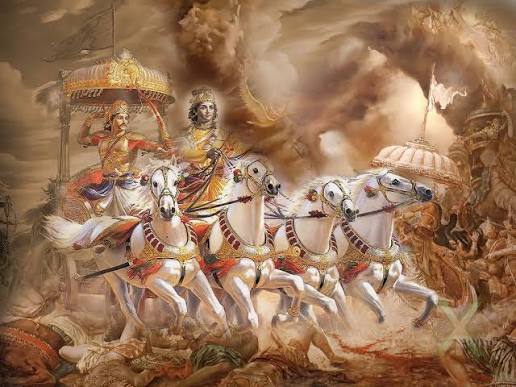 Lord Krishna as Arjuna's Charioteer
The stories of Krishna’s childhood occupy an important place in Indian religious and cultural traditions. The melody of his flute, his relationship with the Gopis and his bond with Radha have inspired generations of poets, musicians and artists. These traditions have also acquired deeper spiritual interpretations, with the love between Krishna and Radha often understood as a metaphor for the relationship between the individual soul and the Supreme Soul.
Krishna’s most significant philosophical role is associated with the Mahabharata. Although he supported the Pandavas in the great war, he did not himself take up arms. Instead, he became Arjuna’s charioteer and imparted teachings on duty, morality, life and spirituality. These teachings form the Bhagavad Gita, one of Hinduism’s most revered scriptures.
Krishna’s influence extends well beyond religious texts. Countless books, poems, plays, songs and works of art have been inspired by him, while Janmashtami is celebrated across India and in many other parts of the world.
Iqbal’s Reverence for Shri Krishna
Iqbal viewed Shri Krishna not merely as a religious figure but as a spiritual guide, teacher and thinker whose influence had shaped India’s spiritual heritage. His writings reveal a deep appreciation of Krishna’s teachings and their relevance to human life.
One of the clearest expressions of Iqbal’s admiration appears in Sarguzasht-e-Adam, from his collection Bang-e-Dara. Here, Iqbal refers to Krishna’s flute as Sarood-e-Rabbani—divine music—and associates it with a spiritual message reaching the land of Hind.
Iqbal writes: “Upon coming to Hind, [he] played the Sarod-e-Rabbani.” (Translated from Urdu)
The phrase is significant. By describing Krishna’s flute as Sarood-e-Rabbani, Iqbal presents its music as a vehicle for a divine message. The flute thus becomes a metaphor for Krishna’s spiritual teachings, while its music evokes ideas of guidance, truth, love and humanity.
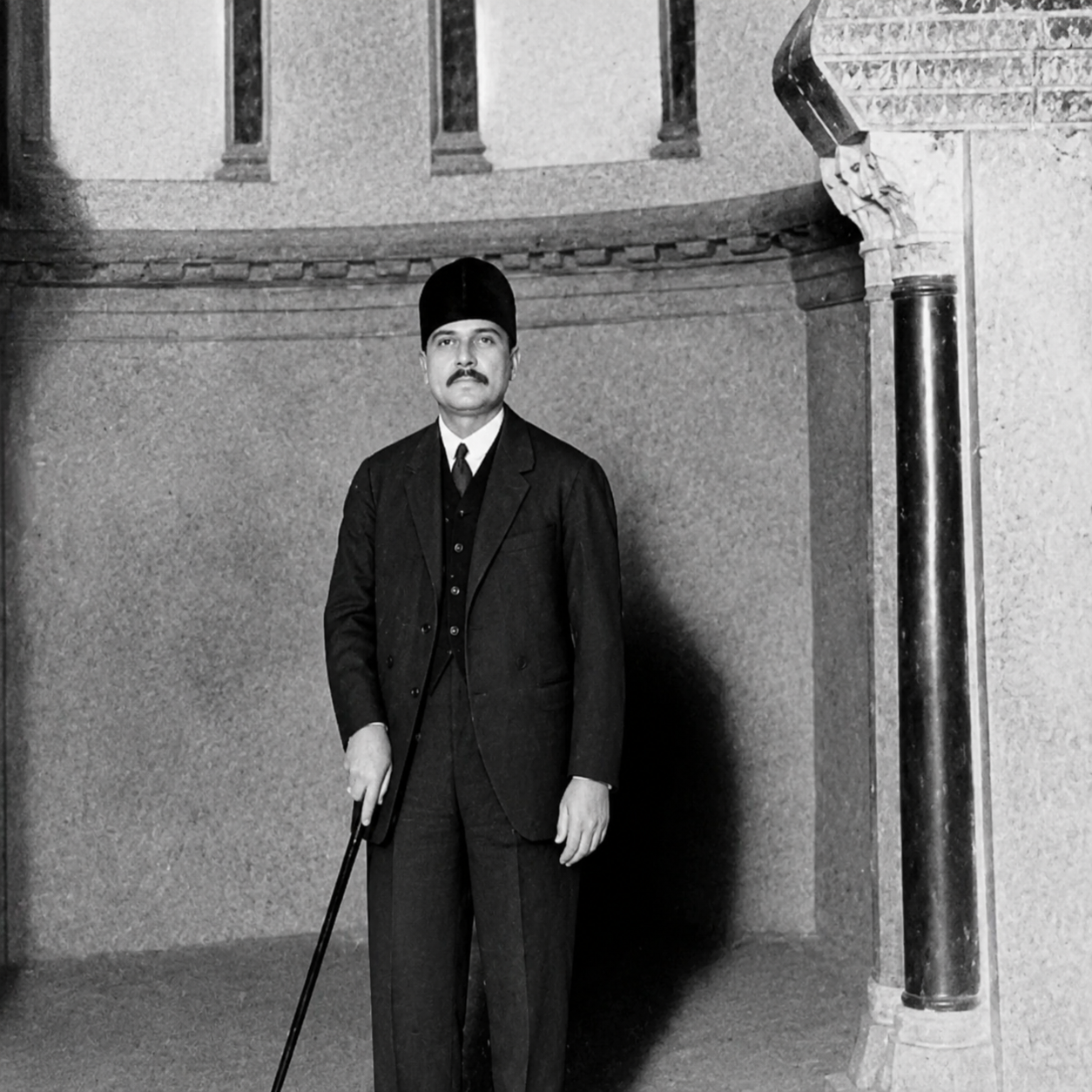 AI-generated image of Muhammad Allama Iqbal
It also reflects Iqbal’s understanding of India as a land with a deep spiritual and intellectual heritage, where the teachings of saints, prophets, Sufis and reformers had long contributed to humanity’s moral and spiritual development.
In a single poetic expression, Iqbal thus compresses a much larger historical and spiritual narrative.
Iqbal’s other writings provide further evidence of his engagement with Krishna’s philosophy. In the preface to Asrar-e-Khudi, he writes: “Asrar-e-khudi —which Sri Krishna, Sri Ram, and Ramanuja sought to unveil—was veiled once more by the logical enchantments of Sri Shankar; consequently, the followers of Sri Krishna were deprived of the fruits of that renewal.”
This passage reflects Iqbal’s engagement with Indian religious and philosophical traditions. He presents Krishna, Rama and Ramanuja as figures who sought to reveal a living spiritual truth centred on action, love and the relationship between human beings and the Divine.
Iqbal’s criticism is directed at what he regarded as an excessive emphasis on abstract intellectualism. In his view, spiritual truth loses its transformative power when it becomes detached from life, action and moral responsibility.
This idea closely resonates with his own philosophy of Khudi—selfhood—which places emphasis on vitality, action, moral courage and the active development of the human personality rather than passive intellectual contemplation.
Dr Muhammad Nafees Hasan, writing on Iqbal’s views of Krishna, highlights the same aspect of his thought. He notes that the teachings of Krishna, particularly those embodied in the Gita, deal with wisdom, morality and action.
In the preface to Asrar-e-Khudi, Iqbal writes: “Shri Krishna's name will always be invoked with reverence and respect. This great figure critiqued the philosophical traditions of his country and society in a compelling manner, clarifying the truth that the renunciation of action is not true renunciation; for action is a demand of nature, and upon it rests the stability of life. Rather, the renunciation of action signifies a state of complete detachment from both the action itself and its consequences.”
Hasan also cites Iqbal’s description of Krishna’s flute in Sarguzasht-e-Adam: “Upon arriving in Hind, he played the divine melody (Sarod-e-Rabbani).” The reference appears in Dr Muhammad Nafees Hasan’s Fikr-e-Iqbal ke Mashriqi Masadir (Eastern Sources of Iqbal's Thought), p. 142.
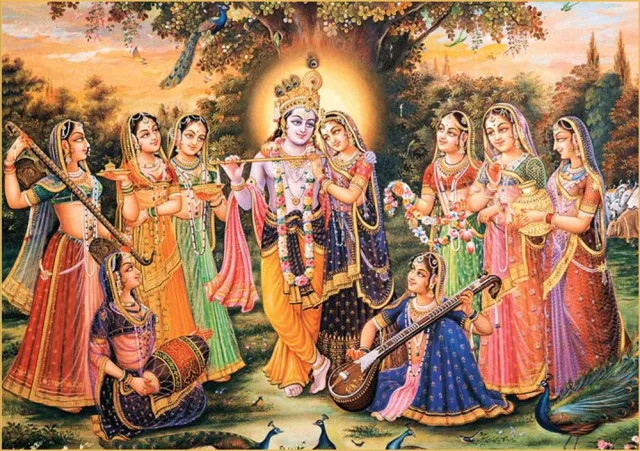 A Pahari miniature art on Krishna and Gopis
Another indication of Iqbal’s interest in Krishna’s teachings is found in a letter dated October 11, 1921, to Maharaja Kishan Prasad Shad, in which Iqbal expressed a desire to translate the Bhagavad Gita into Urdu.
For Iqbal, Krishna’s significance extended beyond religious identity. He associated him with love, brotherhood and spiritual connection. Love, in Iqbal’s philosophy, is a force that brings human beings closer to God while overcoming hatred and division.
It was therefore possible for Iqbal to see Krishna as a universal spiritual figure without diminishing his own Islamic identity.
Krishna as a Leader
Social awakening and self-identity are recurring themes in Iqbal’s poetry. He admired figures, who revived societies in times of decline and inspire them towards moral and intellectual renewal. Within this framework, Iqbal viewed Krishna as a figure who had endowed Indian society with spiritual and intellectual strength.
Any examination of Iqbal’s engagement with Krishna inevitably leads to the Bhagavad Gita, which embodies Krishna’s teachings to Arjuna. Iqbal referred to the Gita and its commentaries in the preface to Asrar-e-Khudi. He saw in its emphasis on action, responsibility and inner discipline ideas that could contribute to the development of human character.
While Iqbal’s philosophy of Khudi was rooted in Islamic thought, he recognised that Indian philosophical traditions also contained ideas capable of contributing to spiritual and moral development.
Iqbal and Religious Tolerance
Iqbal’s writings on Krishna form part of a wider engagement with India’s religious and spiritual heritage. He wrote respectfully about figures such as Lord Rama, Guru Nanak, Swami Ram Tirath, Gautama Buddha and Adi Shankaracharya, while also acknowledging Krishna as one of India’s great spiritual figures.
His approach was not one of indiscriminate acceptance. Rather, he examined ideas through his own intellectual and philosophical framework while recognising wisdom wherever he encountered it.
At a time when religious and social differences frequently become sources of tension, Iqbal’s engagement with Krishna offers an important lesson in intellectual openness.
His writings demonstrate that respect for another religious tradition does not necessarily require abandoning one’s own beliefs. One can remain rooted in one’s faith while engaging seriously and respectfully with the spiritual and philosophical traditions of others.
For Iqbal, Shri Krishna was not simply a figure of India’s religious past. He represented love, knowledge, spirituality and the possibility of national and moral awakening.
ALSO READ: Allama Iqbal was fascinated by Vishvamitra's character and life
His tribute to Krishna’s flute as Sarood-e-Rabbani is perhaps the most evocative expression of that admiration. It also reveals one of the most compelling aspects of Iqbal’s intellectual legacy: the ability to look beyond religious boundaries in search of truth, spiritual insight and the shared values that connect humanity.

_(1).jpg "Visitors gather at the Santosh Mitra Square Durga Puja pandal, themed on the 150th anniversary of Vande Mataram and its historic role in India's freedom movement, ahead of the festival, in Kolkata")
.jpg "Gujarat’s women entrepreneurs bring their craftsmanship to life during Navratri")











.webp)