




Ehsan Fazili/Srinagar
For the first time in the history of Jammu and Kashmir, a common Friday sermon (khutba) was delivered across most mosques and Imambarghas (shrines) in Jammu and Kashmir and Ladakh, with Imaan (Faith) chosen as the first common theme.
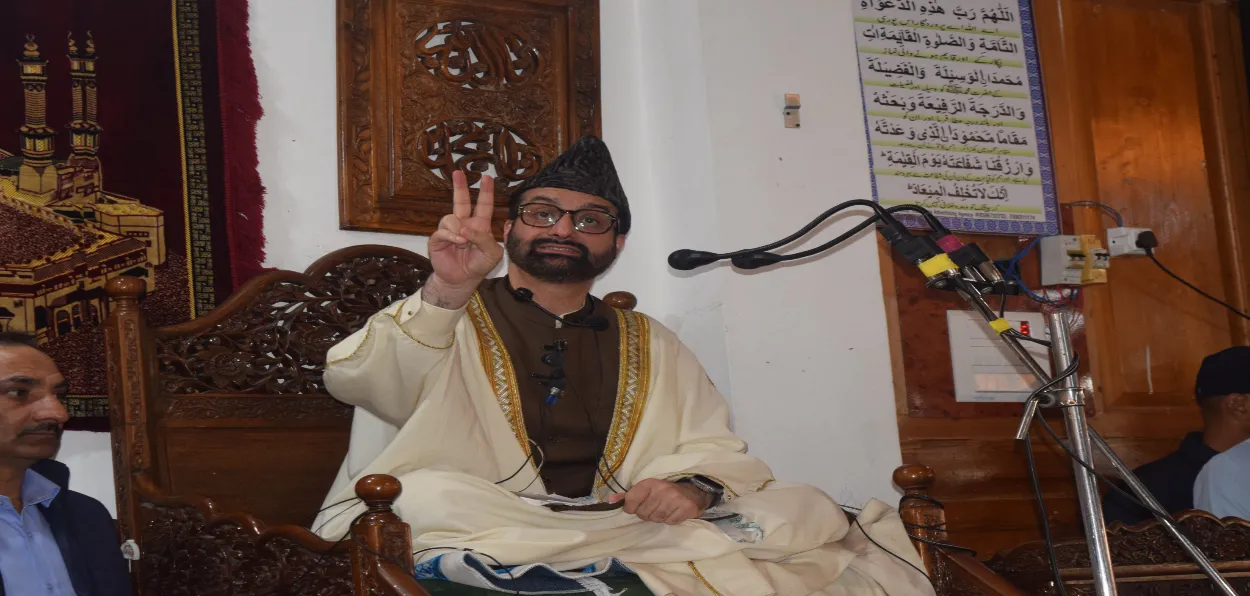
Mirwaiz Moulvi Umar Farooq led with his sermon from the historic shrine of Sheikh Noor-ud-Din Noorani, commonly called Nund Rishi at Chrar-e-Sharief, in central Kashmir. In his sermon, Mirwaiz, emphasised the importance of safeguarding Imaan and remaining steadfast in one’s faith and principles, particularly in the face of worldly temptations, pressures and challenges.
This likens J&K, India’s only Muslim-majority region, to Islamic and Muslim countries where Khutba is centralised for its impact on the Muslims and society. However, the difference is that while in most Islamic countries - Saudi Arabia, the United Arab Emirates, Morocco, and Egypt – the Friday sermon is dictated by the government, in J&K its self-regulated by a body of clerics and Imams.
In secular Turkey, the common Friday sermon for the Imams is drafted by the Presidency of Religious Affairs, also called Diyanet.
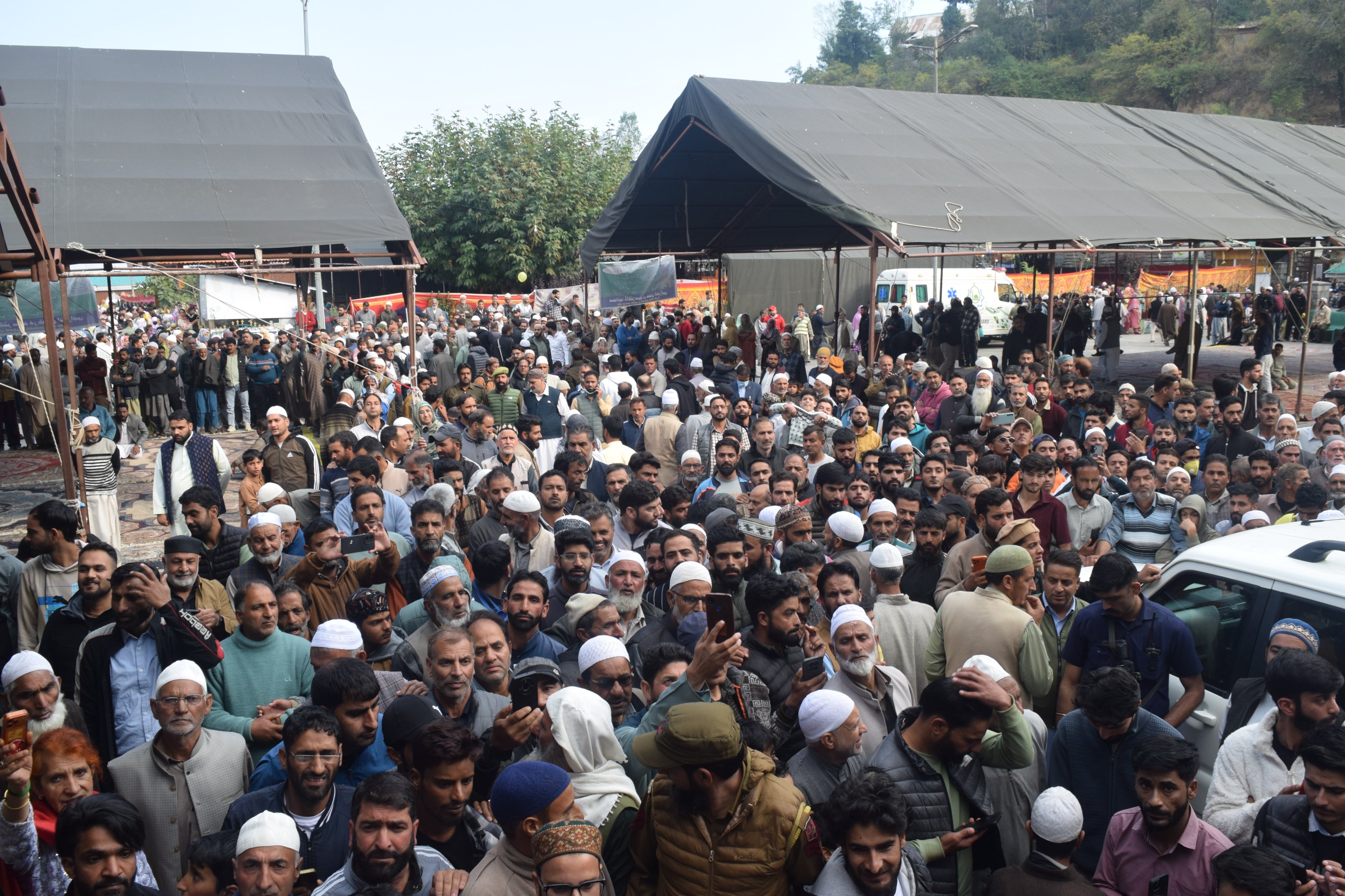 People at Chrar-er-Sharif shrine to have a glimpse of Mirwaiz Moulvi Umer Farooq
In J&K and Ladakh - which were a State before its vivisection, the decision for a common Friday sermon was taken at the conference of Mutahida Majlis-e-Ulema Jammu & Kashmir (MMU) – an association of Islamic clerics and scholars led by Mirwaiz Umar Farooq on September 15. The Ulema and representatives of various schools of thought agreed to collectively address important religious and social issues through designated Friday sermons, district-level engagements and sustained community awareness and action plans.
Other issues identified at the MMU conference, including unity of the Ummah, drug abuse, suicide and mental-health concerns, youth challenges, misuse of social media, family concerns and environmental responsibility would be taken up one by one on subsequent Fridays as part of the coordinated programme, he had announced.
Interestingly, the J&K Waqf Board has also taken steps to have a common sermon by announcing to set up a Core Committee of Muftis, Imams and Khateebs to identify and finalise topics for the Friday sermon across shrines and mosques under its control.
Waqf Board chairperson Darakshan Andrabi said it was decided at a meeting of Maulanas, Muftis, Imams and Khateebs held at its office. “The proposed Core Committee would finalise sermon topics in advance and communicate them to the concerned religious scholars for implementation. The themes would focus on promoting religious awareness, moral values, social harmony, unity and other matters of public and community interest in accordance with Islamic teachings.”
 Mirwaiz Moulvi Umer Farooq delivering sermon inside Chrara-e-sharif shrine
However, the Waqf Board’s decision has been frowned upon by political and religious leaders as interference in religious affairs. Even Mirwaiz Umar Farooq and J&K’s Grand Mufti, Mufti Nasir-ul-Islam, also criticised the move.
Andrabi, however, clarified that it was not any “directive or order” while appreciating the move initiated by the Mirwaiz.
In his sermon today, referring to the Quranic injunction to believe in Allah, His Messenger and the divine light revealed through the Holy Quran, Mirwaiz said these constitute the essential foundations of faith. Belief in Allah creates a sense of accountability, following the Prophet provides moral and practical guidance, while the Quran illuminates the path of truth and righteousness.
The Mirwaiz particularly stressed that faith is the most precious trust bestowed upon a believer and must never be compromised for worldly interests. Pointing to the Quranic warning against exchanging divine guidance for a paltry price, he said that no amount of wealth, position, influence, personal gain or worldly favour could justify compromising one’s faith, conscience or principles.
READ MORE:Muslim organisations: Overly politicised and unexplored creative spaces of religion
“A believer may live in this world and pursue its legitimate opportunities, but must never make worldly interests the price of his faith”, the Mirwaiz said, adding that the real test of Imaan comes when truth and personal interest, principle and expediency, or conscience and pressure come into conflict.


.jpg "Gujarat’s women entrepreneurs bring their craftsmanship to life during Navratri")










_(2).webp)
.webp)