




New Delhi
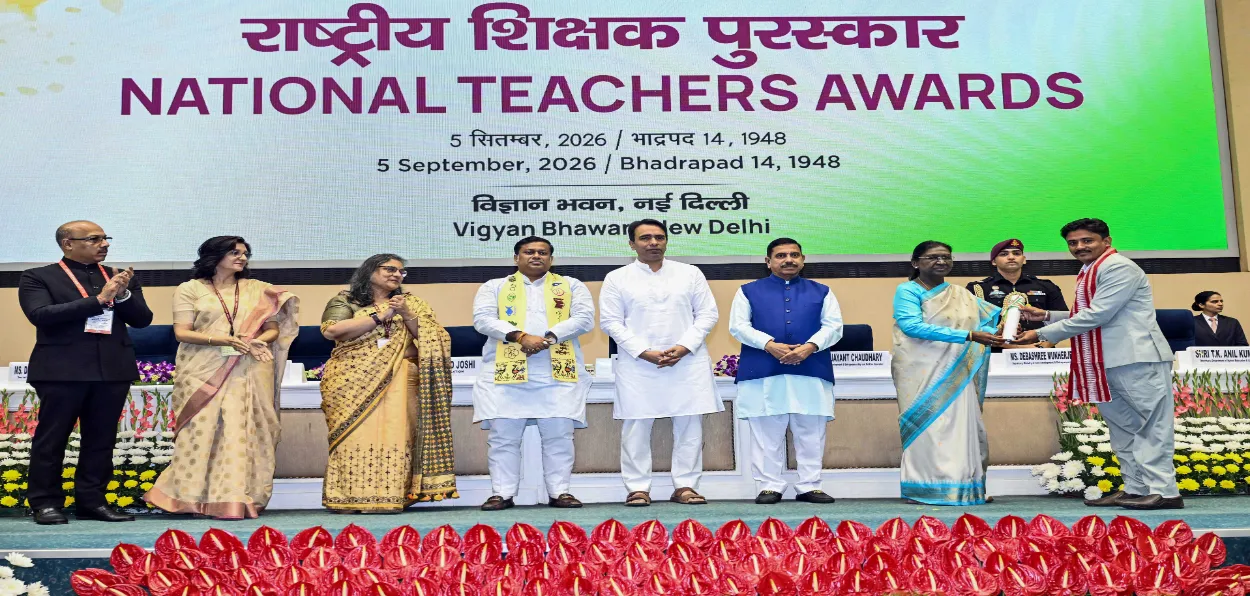
When President Droupadi Murmu conferred the National Teachers Awards, 2026, on 48 teachers from across India, on Saturday, the recipients included four Muslims, who had instilled values and teachings in the minds of their pupils beyond the classroom.
The recipients of the award included Mohammad Zafar Alam from Odisha, who is credited with transforming the lives of the tribal children in a state where hunger and deprivation was once identified with the life of the indigenous people.
The other awardees are Dr Iftikhar Khan, from Ballia, Uttar Pradesh; Mohammad Ayaz Raina, from Rajouri, (J&K); and Mohammad Mustafa Kamal, from Kargil, Ladakh.
The awardees were selected from 27 states, seven Union Territories and six institutions under the Central Government. The list comprises 26 men and 22 women. The award is presented annually to teachers who have made outstanding contributions to school education and brought positive changes to the lives of students.
Mohammad Zafar Alam
Mohammad Zafar Alam, Principal of Eklavya Model Residential School Karanjia in Mayurbhanj district of Odisha, has been honoured for his contribution to providing quality education to tribal children in remote areas.
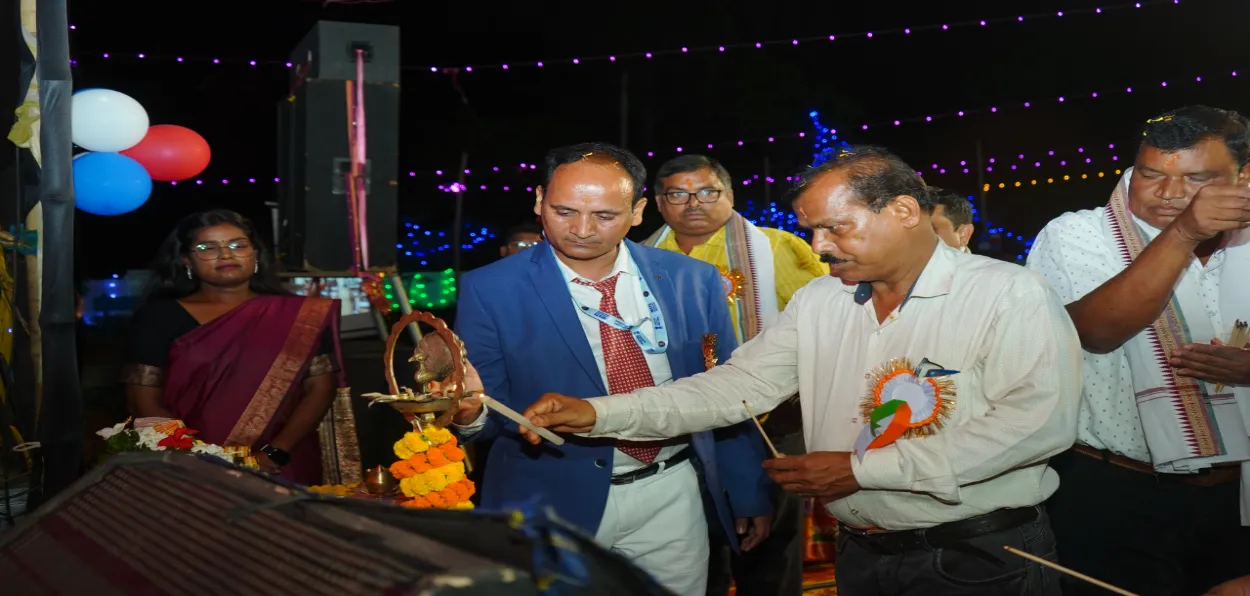 Mohammad Zafar Alam (In blue jacket) at the annual day function of school
The school, located at Banuria (Tato), operates under the Ministry of Tribal Affairs. The residential and co-educational school was established in 2017-18 for Classes 6 to 12. It has around 410 students and an overall capacity of approximately 480.
Under Alam’s leadership, the institution seeks to prepare Scheduled Tribe students not only for school examinations but also for admission to higher and professional educational institutions and future employment opportunities.
Eklavya Model Residential Schools were established to address the shortage of quality educational opportunities in remote tribal areas. They have been developed broadly along the lines of Jawahar Navodaya Vidyalayas, with an emphasis on educational standards, residential facilities and competitive opportunities for tribal students.
The National Teachers Award to Alam therefore also draws attention to the important role of educators working in remote tribal regions, where access to quality education can have a transformative impact on the lives of young people.
Dr Iftikhar Khan
For 25 years, Dr Iftikhar Khan, an art teacher at Government Inter College, Ballia, has been providing free art education to poor and underprivileged children at his home.
The initiative began in 2000, when Dr Iftikhar recognised that talented children from economically weaker families in Ballia had limited opportunities to receive formal training in fine arts or prepare for entrance examinations to leading institutions.
Alongside his regular teaching responsibilities, he began conducting free classes at home every Sunday. His students have come not only from Ballia but also from Gorakhpur, Mau and neighbouring Bihar.
He also organises special painting workshops during the summer holidays, providing children with regular practice and individual guidance. His training goes beyond basic painting: he prepares students for admission to higher educational institutions in the field of fine arts.
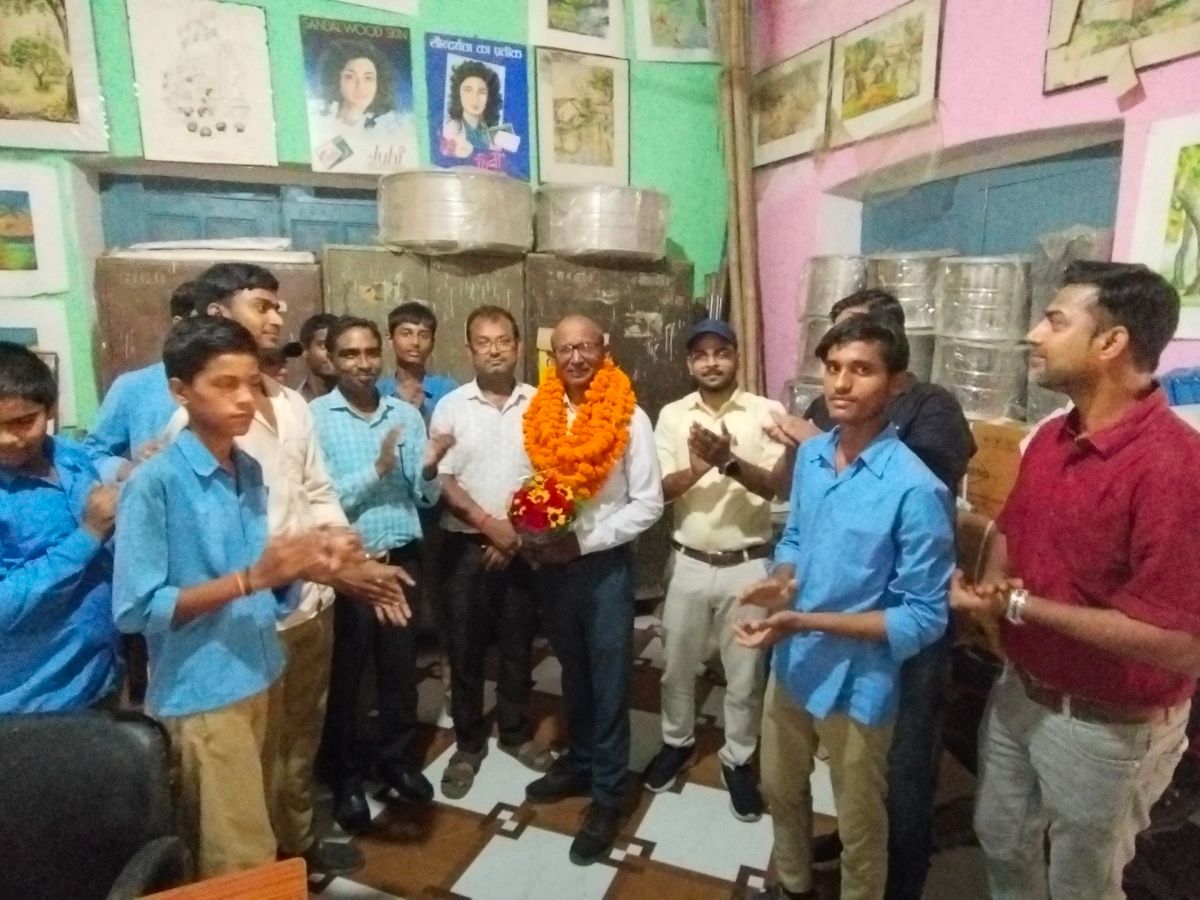 Dr Iftikhar Khan with his students
More than 200 students have progressed to higher education and careers in fine arts under his guidance. Some are now working with leading companies in India, while others are promoting Indian art abroad.
One of them is Ballia's Neeraj Singh, who developed an interest in painting after seeing an exhibition by Dr Iftikhar at the Dadri fair in 2007. When Neeraj expressed his desire to learn, Dr Iftikhar trained him without charging a fee.
Neeraj subsequently secured admission to the Faculty of Visual Arts at Banaras Hindu University on his first attempt and completed a Bachelor of Fine Arts degree. He later obtained a diploma in Production Design from the Film and Television Institute of India, Pune, and went on to work as a production designer on several films.
According to Neeraj, Dr Iftikhar’s guidance changed the course of his life. Had he not encountered the teacher at the exhibition, he believes he might never have pursued fine arts.
Dr Iftikhar’s philosophy is simple: talent should not be limited by a person’s financial circumstances. What matters is recognising that talent and giving it the right direction.
His commitment to this principle is reflected in an unusual practice. When the parents of one of his students insisted on giving him guru dakshina, he declined money and instead asked them to plant a tree.
Since then, he has encouraged students who wish to offer him a gift to plant a tree in a public place and care for it until it grows. For him, a student’s contribution to society is the finest gift a teacher can receive.
हम सभी देशवासी, विकसित भारत के निर्माण के लक्ष्य की ओर आगे बढ़ रहे हैं। विश्व-स्तरीय शिक्षा व्यवस्था के बल पर ही, विकसित राष्ट्र का निर्माण संभव है। pic.twitter.com/z6x6mEHp52
— President of India (@rashtrapatibhvn) September 5, 2026
Mohammad Ayaz Raina
Mohammad Ayaz Raina, a Botany lecturer at Government Higher Secondary School Dalhori in Rajouri district on the Line of control in J&K, has spent 13 years in the education sector, combining classroom teaching with student guidance, educational activities and innovative methods, including the use of technology.
His contribution is particularly significant given the geographical challenges of Rajouri, a border district where many schools are located in hilly and remote areas. Limited infrastructure, connectivity and transportation can make teaching more difficult, yet Raina has remained committed to improving educational opportunities for his students.
His efforts have previously earned him several honours. He received the National Information and Communication Technology Award in 2017 and the Best Teacher Award of the Union Territory of Jammu and Kashmir in 2021. He has also received the Global Teacher Award 2021 and the Global Best Educational Poster Award 2020.
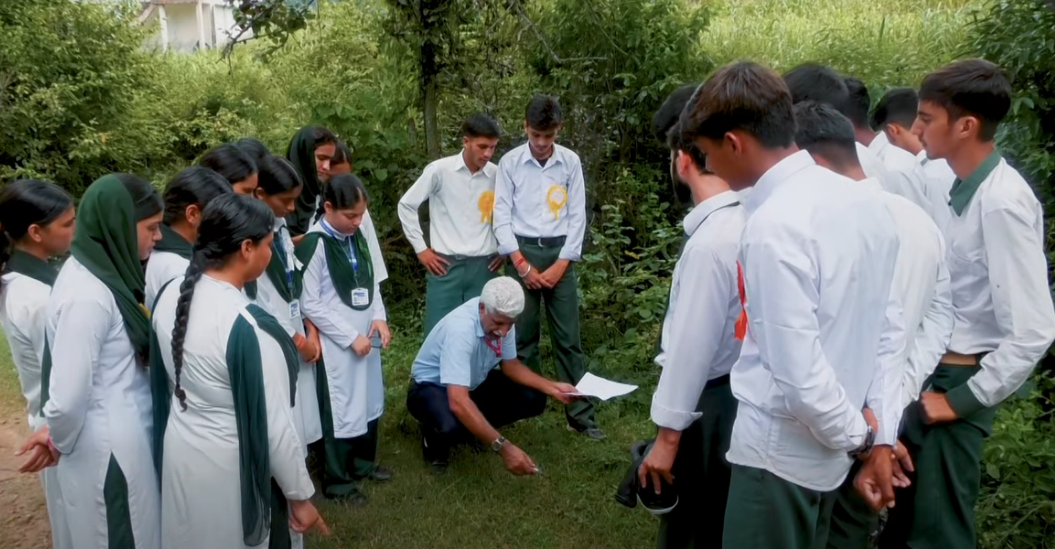 Mohammad Ayaz Raina with his students
These recognitions reflect his interest in combining conventional teaching with educational technology and creative approaches.
Raina described the National Teachers Award as a collective achievement rather than a personal accomplishment. He credited his students, fellow teachers, educational institutions, family members and others who supported him throughout his journey.
He said a teacher’s success is never the result of individual effort alone, but also reflects the hard work of students, the cooperation of colleagues and the support of family.
Mohammad Mustafa Kamal
Mohammad Mustafa Kamal, a resident of Wakha village in Kargil district, Ladakh, has been recognised for his contribution to education in one of the country’s most challenging geographical regions.
Kamal is posted at Middle School Lanakrchy Thang Sankoo. He also serves as District President of the General Line Teachers Forum, Kargil Ladakh.
In this capacity, he has played a role in popularising the Model School initiative through the teachers’ organisation.
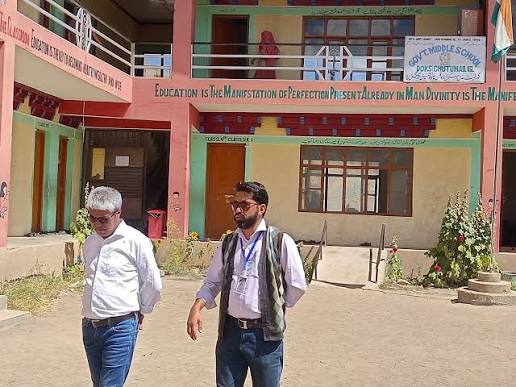 Mohammad Mustafa Kamal (Right) in his school
His commitment to students became particularly visible during the Covid-19 pandemic, when conventional classroom teaching was disrupted. Kamal continued to support students through video and radio classes.
He currently serves as the Nodal Officer for Class 9 and Class 10 Tele and Radio Classes in the School Education Department, Kargil, in addition to his teaching responsibilities.
His educational services have previously been recognised with the Asian Education Award in 2020. He was also among three teachers from Kargil district nominated by the District Selection Committee for the National Award in 2020.
ALSO READ: Kashmir's Urfana Amin can make children learn math with a piece of cardboard
The school’s approach extends beyond academics. Sports, skill development and the preservation of local arts and culture form part of its educational programme, with the aim of developing students’ creative, physical and practical abilities alongside their academic skills.






_(1).jpg)
_(4).webp)