New Delhi
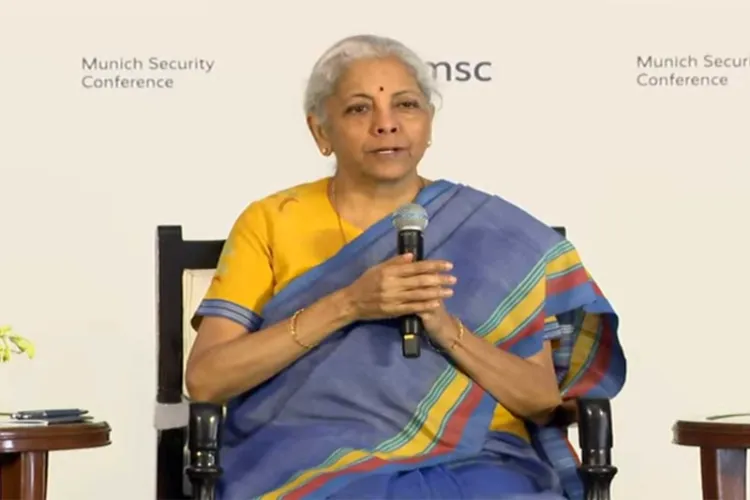
There is no “Lindsay Graham bill” in Europe that could determine India’s trade negotiations with the European Union, Union Finance Minister Nirmala Sitharaman said while speaking at the Munich Leaders meeting, asserting that discussions over India’s strategic autonomy and its procurement of Russian oil were not a deciding factor in the trade talks.
“In Europe, as much as I understand till today, there is no Lindsey Graham bill,” Sitharaman said when asked whether India’s procurement of Russian oil had emerged as a problem area during negotiations with European partners. “I don't think there was a card on the table saying hey this is going to determine what we do next in the negotiation.”
Sitharaman said several issues are discussed formally and informally before and after trade negotiations, but indicated that the issue of Russian oil was not a determining condition in the discussions with Europe.
Her remarks come as India seeks to balance trade expansion with the protection of its national interests and strategic autonomy in a changing global trade environment.
Sitharaman said trade agreements were increasingly being tailored to ensure national interests remained protected while countries dealt with supply-chain disruptions and a weakened multilateral trading framework.
She said the India-EU agreement demonstrated this approach, with both sides opening more than 90 per cent of their tariff lines and tariff value while retaining protections around sensitive areas, particularly agriculture.
Sitharaman also said India was increasingly pursuing bilateral agreements as multilateral trade mechanisms have weakened.
“Now the balance is somewhat tilted in favour of the bilateral rather than the multilateral,” she said, adding that countries were searching for new trade partners and strengthening those relationships through agreements.
“Multilateralism is not going to go away. But multilateralism has weakened,” Sitharaman said, pointing to the weakening of institutions that were meant to guide and regulate the multilateral system.
She said bilateral and multilateral agreements were never mutually exclusive, but countries now needed to seek newer partnerships to keep trade moving forward.
READ MORE:Armless swimmer Abdulqadir set to make his mark in Para Asian Games
The minister also said India’s trade agreements were being negotiated with greater attention to supply-chain continuity, adding that countries were finding new partners where existing supply chains had already been disrupted.









.webp)