Sada Warsi
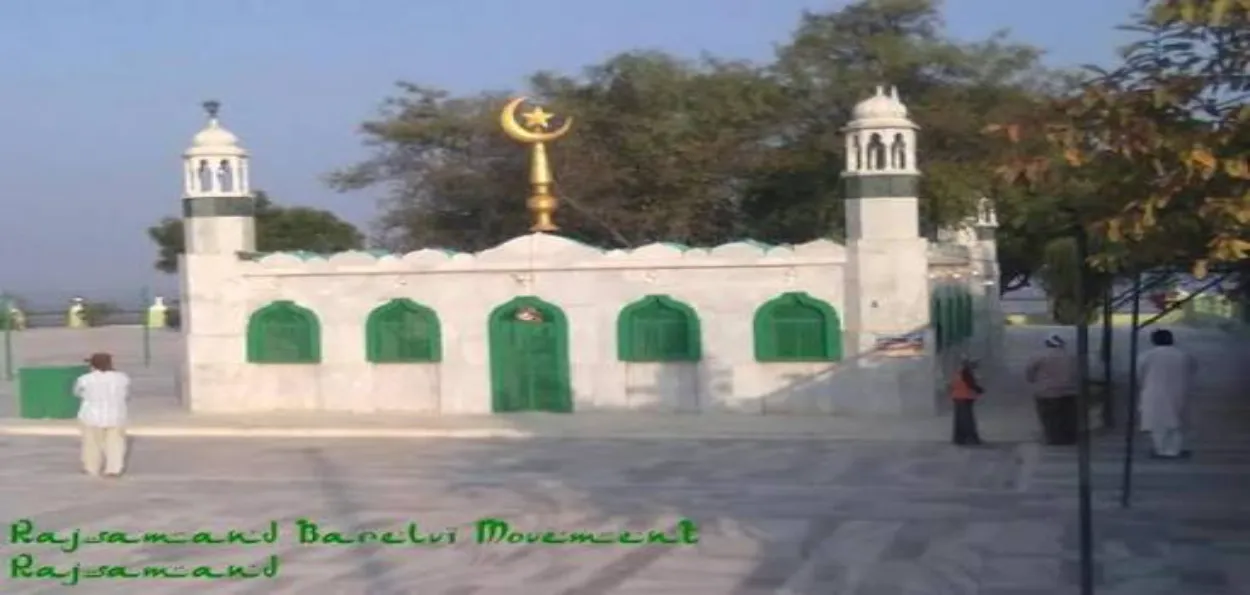
The historic city of Sonipat, Haryana, is home to a unique site known as the 'Mamoon-Bhanje ki Dargah' (The shrine of Maternal Uncle and his Nephew). Situated on the Old DC Road, this shrine is not merely a place of religious worship; it has become an integral part of Sonipat’s cultural identity.
The district administration has also recognised it as a symbol of peace, harmony, and brotherhood among diverse communities.
The shrine stands as a living testament to India’s shared religious tradition, where people of different faiths have long respected one another's beliefs and customs. Sonipat itself boasts an ancient and diverse history. According to the district administration, this region was inhabited even before the era of the earliest urban settlements, and archaeological remains spanning various historical periods have been discovered here.
Amidst ancient settlements, temples, mosques, and other historical landmarks, the Mamoon-Bhanje ki Dargah stands out as a unique site where religious heritage endures as a living tradition.
.webp) People praying at the shrine
People praying at the shrine
The history of the Dargah has passed down through generations via local traditions and legends. According to the official account of the Sonipat district administration, a temple was built at this site approximately 300 years ago. An elderly priest from Garhi Brahmanan used to look after the temple. One day, an elderly Muslim faqir (ascetic) arrived and expressed a desire to enter the temple; he also requested that his nephew be called from Rohtak.
Since the priest was old and blind, he explained that he could not undertake the journey to Rohtak. According to tradition, the faqir demonstrated his spiritual powers and asked the priest to place his hand upon his (Faqir) eyes. It is said that the priest’s eyesight was restored immediately.
Subsequently, the priest travelled to Rohtak and returned with the faqir's nephew. Legend has it that the nephew was granted the opportunity to make a wish; he prayed for the course of the Yamuna River to be altered so that the residents of Sonipat might benefit. Whether viewed as sacred tradition, folklore, or a recollection of historical events, this story certainly holds a profound message.
The two central figures of this tale—a Muslim faqir and a pujari (temple priest)—emerge in history not as adversaries, but as symbols of empathy, understanding, and mutual respect.
This tradition exemplifies how oral narratives can preserve human values and exemplary relationships across generations. A key custom associated with this shrine is the offering of a chadar—a sacred cloth presented as a mark of devotion.
According to accounts attributed to the Sonipat district administration, it was the pujari of Garhi Brahmanan who would offer the first chadar at the faqir’s grave. This practice was passed down to subsequent generations and became an integral part of the shrine's legacy. The tradition is significant because it reflects a unique form of communal harmony and brotherhood that transcends religious differences.
The name "Mamoon-Bhanje ki Dargah" (Shrine of the Maternal Uncle and Nephew) alludes to the very relationship between an uncle and his nephew that local legends associate with this site. District administration records indicate that the site of an ancient temple was later converted into a mosque, and the shrine evolved into a centre of harmony and brotherhood among diverse communities.
The District Gazetteer highlights the ancient 'Mamoon-Bhanja' (Maternal Uncle-Nephew) Dargah in Sonipat as a significant pillar of regional religious harmony and shared cultural traditions. Historical records indicate that local Hindu communities also held deep reverence and respect for this shrine, embracing it as an integral part of the region's religious and cultural fabric rather than a source of division.
This shared devotion has long made the shrine a unique meeting point for diverse communities. Architecturally, the Dargah features a simple design that fosters a serene atmosphere, making it an ideal setting for quiet prayer and contemplation. Its most striking feature is the octagonal dome, adorned with exquisite, colourful floral paintings.
The shrine is not merely a relic of the past but a living place of worship where ancient traditions and religious rituals continue to this day. According to the Sonipat district administration, the cultural legacy of the shrine endures through the uninterrupted observance of its annual rituals.
Foremost among these is the Urs, held annually on the 11th of Muharram. On this occasion, people gather to commemorate the local legends and tales associated with the site.
For travellers and researchers wishing to look beyond conventional tourist spots and grasp the true cultural spirit of a region, the Dargah offers a unique opportunity to gain intimate insight into local folklore, religious rituals, and the deep-rooted cultural harmony. Ultimately, the Dargah stands as a living symbol of collective memory. The legend of the *Faqir* and the *Pujari*, the tradition of offering the Chadar (ceremonial cloth), and the enduring Urs* all bear witness to the site's shared cultural heritage.
In an era where religion is sometimes viewed as a force that drives people apart, this Dargah conveys an enduring message to the contrary: that communities of different faiths can—despite their differences—uphold traditions of mutual respect, devotion, and brotherhood.
Even today, devotees and visitors flock to the Dargah seeking spiritual solace, blessings, and inner peace. The site’s simplicity, serene atmosphere, and ancient traditions evoke a feeling that transcends religious boundaries.





.webp)