Onika Maheshwari/New Delhi
For nearly 15 years, Hamza Sheikh of Pul Doda in Jammu has been plunging into the icy, turbulent waters of rivers across Jammu and Kashmir in search of people who have gone missing. He does it without specialised scuba equipment, without charging families and, often, without waiting to be formally called for help.
Recently, his humanitarian work took him beyond the Chenab Valley to Kashmir, where he volunteered to assist the police and the State Disaster Response Force (SDRF) in searching for missing persons, including minors, in the fast-flowing Madhumati Nullah in Bandipora.
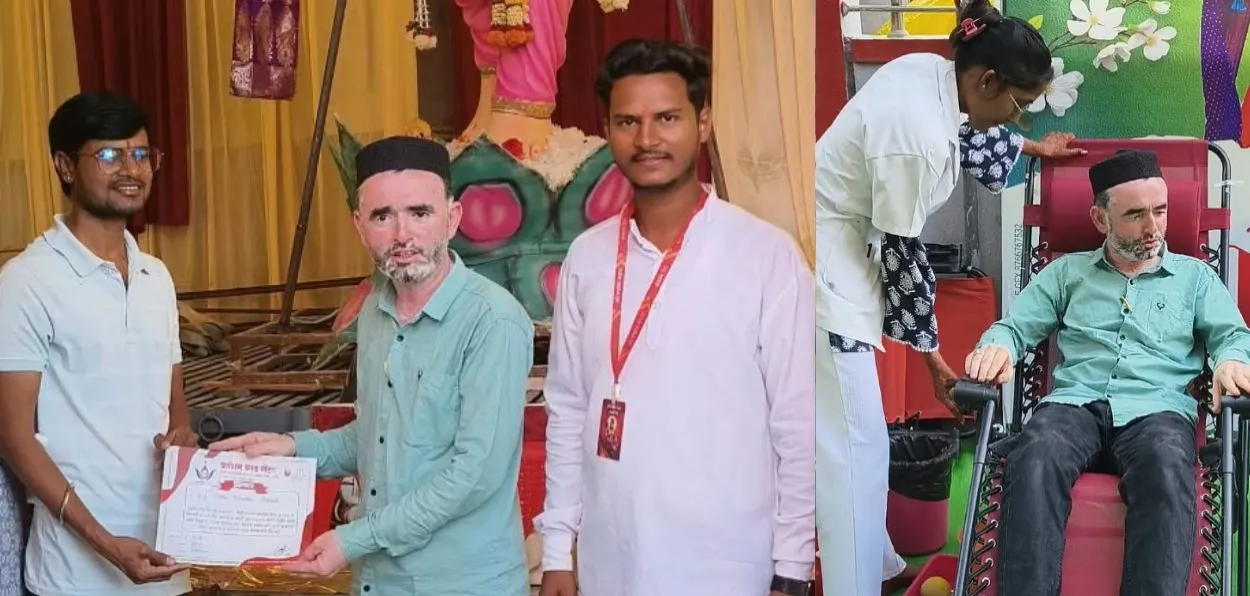
His efforts brought him wider recognition. Bandipora Police honoured him, while the district administration felicitated him during the Independence Day celebrations on August 15. For the first time, the rescuer who had quietly worked for years in Doda and the Chenab Valley was being recognised more widely as J&K’s “Rescue Man.”
 Hamza Sheikh and others
Hamza says he does not consider rescue work a profession. He sees it as a humanitarian responsibility. Whenever he hears about someone drowning, he tries to reach the spot and enter the water, even when the river is swollen, the current is powerful, and the temperature is freezing.
And finding a person who has been carried away by a river can be harder than rescuing someone from it. According to Hamza, trained divers capable of searching deep waters are not easily available in many remote areas. Families are sometimes forced to call private divers from other states, who can charge between Rs 2 lakh and Rs 2.5 lakh for an operation.
For poor families, raising such an amount can be almost impossible. Many are left waiting for days along the riverbank, hoping that their missing relative will be found.
Hamza has seen that anguish at close quarters. Perhaps that is why he decided that he would never turn rescue work into a business. He says he wants families who cannot afford expensive rescue operations to be able to seek his help free of cost.
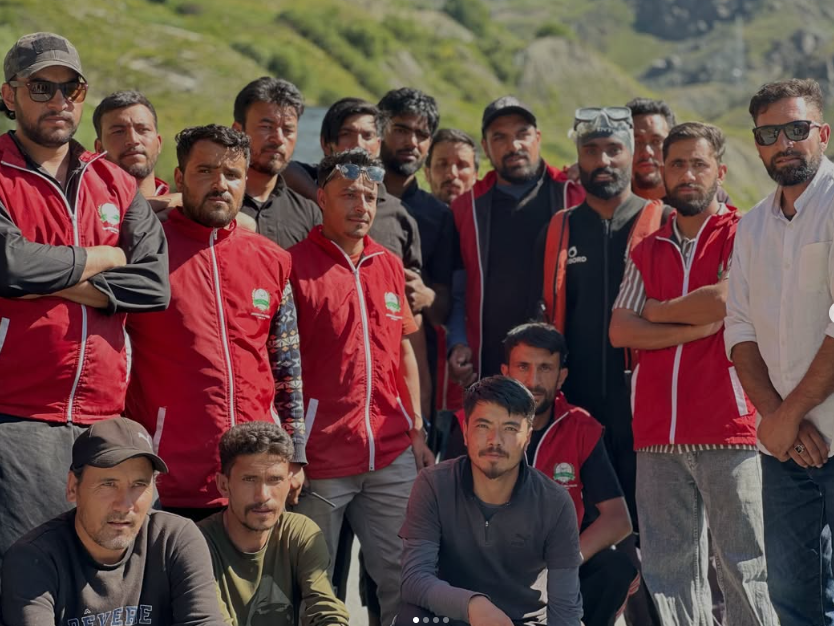 Hamza Sheikh with local volunteers in Kashmir
His own connection with rivers began in childhood.
Hamza’s house was located near a river, and the sound of flowing water was part of his everyday life. When he was around 10, however, the river became the source of a personal tragedy. One of his cousins was swept away by the powerful currents of the Chenab.
His family searched along the banks for nearly three years but could not find him.
For a young Hamza, watching a family live with the pain of losing a child without even being able to recover his body left a lasting impression. Whenever he heard of someone being swept away, he says, the memory of his cousin would return.
His early life also brought him into close contact with the river. He worked extracting sand from the riverbed, spending long hours in and around the water. Constant exposure gradually strengthened his swimming skills and his ability to hold his breath.
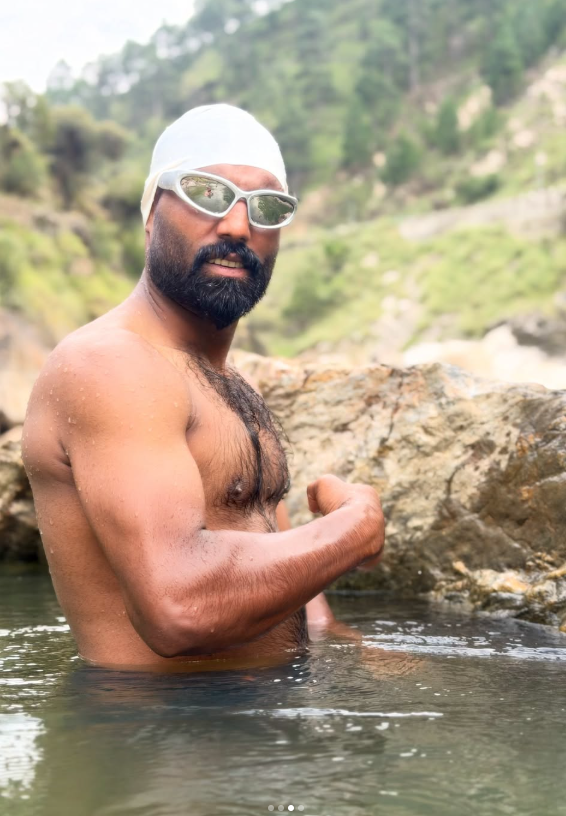 Hamza Sheikh in the icy waters of a river
Then, at the age of 11, he spotted an unidentified body in the river. The sight made him think about the dead man’s family. If the body could be recovered, he thought, the family could at least perform the last rites and bring some closure to their grief. Hamza pulled the body out of the water.
That incident marked the beginning of his rescue journey. From then on, whenever an accident occurred in the rivers around his area, he tried to reach the spot and help with the search.
Over the years, Hamza says, he trained himself to dive into deep waters without modern scuba equipment or oxygen cylinders. He has undertaken free dives to depths of around 50 feet. Some searches have lasted for several days. In some cases, he says, it took as long as 13 days to recover a body.
Hamza knows that he cannot bring a deceased person back to life. But recovering the body, he says, can end a family’s agonising wait. It allows relatives to perform the last rites according to their faith and traditions.
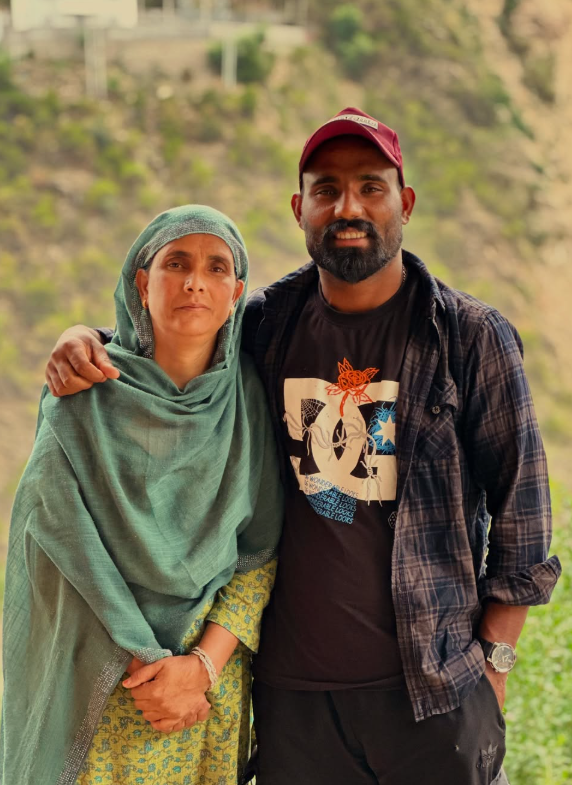 Hamza Sheikh with his mother
For him, that is an important part of the humanitarian purpose of rescue work. For 15 to 16 years, Hamza continued this work across Doda and the Chenab Valley, largely away from the public eye. Few people outside the region knew about his efforts.
That changed about eight months ago when he travelled from the Chenab Valley to Kashmir. Water levels in several rivers were high, and reports of accidents were emerging from different parts of the Valley.
Hamza says he did not wait for a formal request for assistance. Wherever he felt his services were needed, he entered the water.
People in Kashmir soon began noticing the man who was willing to enter fast-flowing, freezing waters in search of the missing. His work gained wider recognition, and the name “Rescue Man” began to follow him.
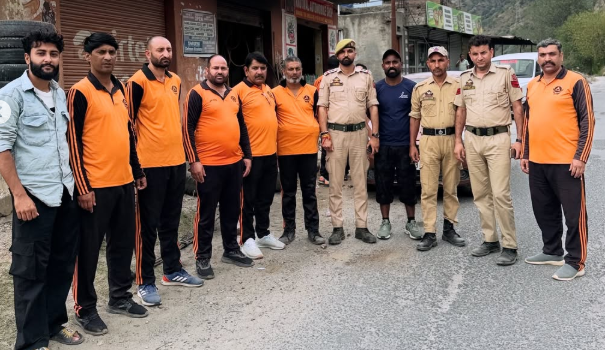 Hamza Sheikh with the J&K Police and SDRF team in Kashmir
Hamza says he had been doing the same work for years in his home region, but the appreciation he received in Kashmir gave him fresh motivation.
There is another aspect of his work that he considers equally important: he does not charge families for rescue operations.
Hamza says he has never undertaken a rescue for money. He knows that when a family member goes missing in a river, the cost of hiring private divers can add another burden to an already devastating situation.
That is why he decided that people in need should be able to call him without worrying about money. He does not see rescue as a job or a business. For him, it is an emotional and humanitarian responsibility.
As long as he has the physical strength, Hamza says, he intends to continue. But does he fear for his own life when he enters a furious river?
Hamza says his faith gives him the courage to face the risks. He believes that if a person dies while serving humanity, they will stand before Allah with their actions and intentions. He says he does not undertake rescue operations for money or fame; what matters to him is the intention behind the act.
His mother was initially frightened whenever she watched her son enter a fast-flowing river. Over time, however, her fear gave way to support as she saw him successfully bring people home or recover those who had been missing.
When videos of Hamza’s rescue efforts in Kashmir began circulating on social media, his mother also saw the admiration he received from people. For her, the journey that had once been a source of fear had become a source of pride.
 Hamza Sheikh standing on the banks of the Chenab
Hamza says his mother now feels that, in Kashmir, he has found a family-like sense of belonging among people who have embraced his humanitarian mission.
He considers the trust he has received from the people of Kashmir a responsibility.
In view of Hamza's services, some people on social media have been urging the Jammu and Kashmir administration to provide him an opportunity to work with the State Disaster Response Force (SDRF) and equip him with modern diving equipment.
Hamza says he has so far received no significant assistance or formal recognition from the administration. He believes that if he gets an opportunity to work within the government system, rescue operations could be carried out more safely and effectively with better equipment and clear protocols.
ALSO READ: Award-winning Arshia Parveen was a reluctant entrant into theatre
As our conversation ended, Hamza was preparing to leave for another rescue operation. Some people were waiting for him near the river.








.webp "Zulekha Shakoor Rajani, Head of the Department of Islamic Psychology at Ummeed")