Sreelatha M
Keeranur Jakirraja is a name to reckon with in the Tamil literary scene. Men, women and children from the marginalised sections of the Muslims in Tamil Nadu and sometimes Kerala breathe and find new lives in the pages of his novels. His writing is bold, honest and provokes criticism from the conservative and orthodox sections of the Muslims.
By his own admission, he is a kind of Salman Rushdie of Tamil Nadu. He says it and suddenly backtracks. "I don’t mean I’m like him as a writer. We are different. But the hatred and anger that we attract are comparable. People have tried to beat me up. They call me Rushdie ….’’
His main characters are underdogs from the community, mostly women. His graphic descriptions and bold portrayals of their lives have not been received well by the more radical sections of Muslims.
As he writes his latest novel, a new woman is taking birth. She is Khatija, a writer, with the pen name Nelli. A character with the same name from Dostoyevsky inspires Nelli. She is a 10-year-old girl in The Insulted and the Injured.
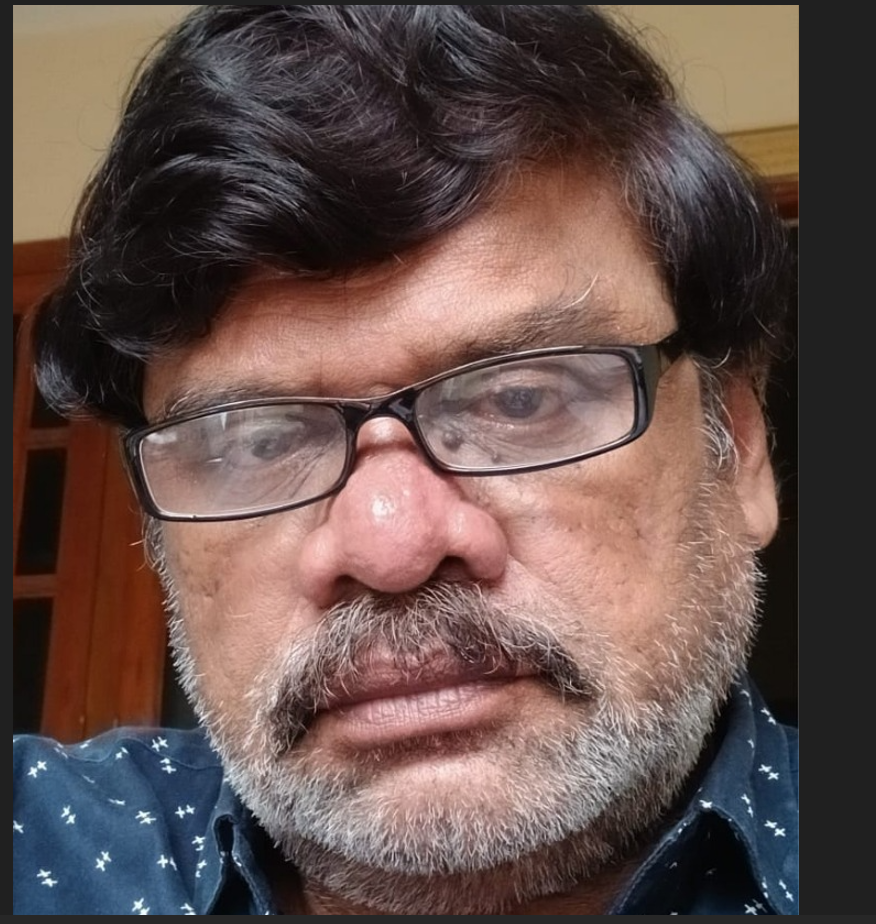 Keeranur Jakirraja
"My Nelli is a brave woman, has been through a couple of divorces and maybe more. She wants to be free, to write, and she becomes a famous writer. The novel includes bits from her novels, stories and poems…’’ Jakiraja, who describes his books as postmodern and is inspired by Malayalam writers such as Bashir, Thakazhy, and MT Vasudevan Nair, as well as global writers like Dostoevsky, Kafka, and Borges.
“In Tamil, I admire Pudhumaipithan, Asogamithran and Jeyamohan, while in Malayalam, I like Vaikom Mohammed Basheer and Paul Sakkariya.”
He says his writing has the openness and honesty found in English/Malayalam writer Kamala Das.
Kamala Das or Kamala Surayya (after her conversion to Islam later in her life) is known for her unfiltered, brutally honest and intense writing about a woman’s internal life and a refusal to self-censor while writing about any theme concerning her life. "My character Nelli is someone like that, ‘’ he agrees.
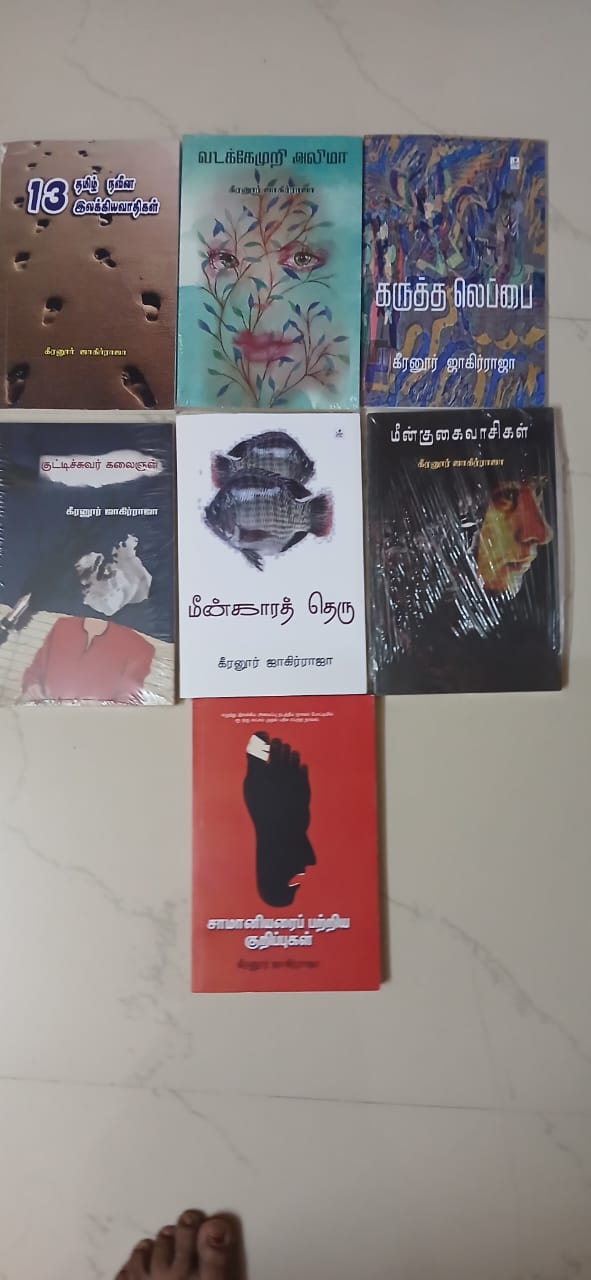 "In my stories, also, the women freely talk of all issues. There is a lot of sexual content in my books, as it is a part of life. All these things have raised eyebrows among the radicals,’’ he says.
One of his favourite women characters, he says, is Halima from his novel Vadakkemuri Halima. It is set in Kochi, Kerala, and Alima, 25, leaves home to become an actress. She is a genius and good at poetry, cinema, and art. She struggles with her mind, her psychological problems as an artist in Chennai.
"It is very post-modern in its style, ‘’ he says.
What has fuelled his pen all these years is his discontent with the lot of the ordinary Muslim folks, especially women in Tamil Nadu. He says the Muslim women in Tamil Nadu in the 50s and 60s were part of a very orthodox society, and they had no freedom. They were kept within the four walls, with no education.
Today, things have changed for the better, and more and more Muslim women are realising their potential in various fields, he says. "I was opposed to this discrimination and this kind of fundamentalist approach to Islam, which makes one gender so weak. I have always opposed this attitude in my novels by creating bold characters. I have also spoken out against terrorist attacks like the blast in Coimbatore. It gives a bad name to the community,’’ he says.
"I bring out these in my writing, and people have threatened to beat me up.’’
He says the Wahabis are extreme in their views, and they have always opposed his books. Asked if any fatwa was issued against him, as in the case of the Lajja, Taslima Nasreen or Rushdie, he says he got something even worse than a fatwa.
"I was removed from the Jamaat after my first novel, Meenkaratheruvu (fishermen’s street). I still give donations to the Jamaat, but I’m not in it,’’ he says.
As a writer, his journey began from near the temple town of Palani, and today, he is a household name in Tamil Nadu among readers of fiction.
He compares the themes in his novels to those of Malayalam writer MT Vasudevan Nair. "Just as MT brought alive the stories of men and women in the Nair tharavadu (ancestral house) in Kerala, I have been drawing the lives of men and mostly women in the Muslim families here,’’ he says, speaking from his home in Thanjavur.
Thanjavur holds a significant place in his life as it is where he found his Asan or guru in writer Tanjai Prakash. "I had started writing then, but he advised me to write my story and the stories of people I knew. That is how I started focusing on the ordinary lives of Muslims I had witnessed around me since I was born,’’ he says.
While writing made progress, it was not very rewarding financially, and he worked as a sub-editor and then as an editor in various magazines in Thanjavur. The other reason was the meager amount writers got as royalties in Tamil Nadu.
_(1).jpeg)
Jakiraja's book release function
Jakirraja cut off ties with his publishers and became his own publisher to make his writing profitable.
“It is the only way to survive,” he says. ``The royalties are very low, and while in Kerala writers get 20 per cent royalties, in Tamil Nadu writers get just 10 per cent, ‘’ he says.
So, he decided to start his own publishing house, which brought out his books. With 10 novels and an endless stream of stories and essays, he is prolific.
He says writers in the state have formed associations, but most of them are with different political affiliations. I used to be a member, but now I don’t want to be part of these, he says, hinting at political differences.
While that has given him financial freedom, it was an accident that made him quit his job and devotes him full-time to writing. `”For the last ten years I have been just writing,’’ he says.
_(1).jpeg)
Jakiraja receiving an honour
He lives with his wife, Salma Bano, who, he says, is a budding writer. She has begun to write now, he says proudly.
Iddah, one of his novels, is about the Islamic period of iddah, the mandatory waiting period that women must observe after their husband’s death or after divorce. Mariam, the protagonist who had never seen her husband, is widowed but is forced to sit in iddah for a period of three menstrual cycles to demonstrate her purity to society.
In Meenkara Theru, the writer explores economic and social challenges faced by traditional fishing families.
These are not families in the coastal areas, says Jakirraja. These are people who lived in Keeranur near Palani. There is a pond there, and poor Muslims who live there earn their livelihood catching fish from the pond. The book tells their stories.
He says that while he was opposed to radical views among Muslims, he is all for a secular outlook in society. So, members of all communities are free citizens and can practise their faith, wear the clothes they want, and pray the way they want. This basic fabric of secularism should not be disturbed.
READ MORE: IUML's Fatima Muzaffar Ahmed is the epitome of Muslim woman leadership
From his novel Wadakkemuri Halima:
"If Halima descended on some town with a mind to stay there for quite some time, it would be certain that the month of Ramzan was round the corner. It had been her wont for the past ten years to arrive for every Ramzan at Puliyakulam on the very first day of that month with a travel bag on her shoulder and sheer defiance in her gait, and take her abode at the Gounder Inn. The stray dogs, discovering her arrival by their sense of smell, would make a choral announcement of her coming to the town. For an hour, there would be no other noise in the town except their howling. Normally, whenever a strange face makes an appearance in a place, there would be dog-barking. However, for Halima, there was a special welcome from the dog population. To be sure, she was proud of this distinction.’’

_(1).jpg "Visitors gather at the Santosh Mitra Square Durga Puja pandal, themed on the 150th anniversary of Vande Mataram and its historic role in India's freedom movement, ahead of the festival, in Kolkata")
.jpg "Gujarat’s women entrepreneurs bring their craftsmanship to life during Navratri")







_(4).webp)
_(2).webp)