New Delhi
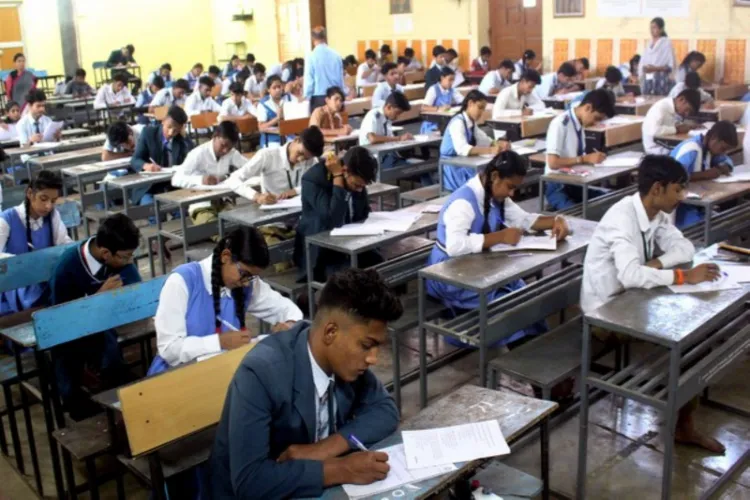
The Central Board of Secondary Education has announced that students entering Class IX from July 1, 2026, will be required to study three languages as part of the revised curriculum framework, aligning with the objectives of the National Education Policy 2020 and the National Curriculum Framework for School Education 2023.
In a circular issued on May 15, the board stated that the three-language structure—identified as R1, R2 and R3—will become compulsory for all Class IX students. Under the new framework, at least two of the three languages chosen by a student must be native Indian languages.
The board, however, clarified that students will not be required to appear for a separate Class X board examination in the third language, a move aimed at easing academic pressure while still encouraging multilingual learning.
According to the circular, all evaluations for the third language will be conducted internally by schools, and students’ performance in the subject will be reflected in their official CBSE certificates. The board also emphasised that no student will be denied the opportunity to sit for the Class X board examinations on account of the third language requirement.
Schools have been given flexibility in selecting the languages offered from the approved CBSE subject list, provided the rule regarding two Indian languages is followed. Foreign languages may be chosen only as the third language if the first two are Indian languages, or alternatively as an optional fourth language.
As part of the transition to the new curriculum, the board said Class IX students will temporarily use third-language textbooks currently prescribed for Class VI until dedicated secondary-level learning materials are introduced. Schools have also been encouraged to enrich classroom teaching with regional literature and local cultural content.
To address possible shortages of qualified language teachers, the board has suggested interim arrangements such as sharing faculty between schools, using virtual teaching platforms, and engaging retired educators or suitably qualified postgraduate instructors.
The board also announced that special provisions and exemptions would be considered on a case-by-case basis for children with special needs, Indian schools operating overseas, and foreign students relocating to India.
READ MORE: Najma Akhtar: Ex-VC played a key role in shaping India's educational growth
The new language policy marks a significant step in implementing the multilingual vision outlined in India’s education reforms, with a stronger emphasis on linguistic diversity, cultural roots and flexible learning pathways.











.webp "Dharmendra Pradhan")

.jpg "Delhi Lieutenant Governor Taranjit Singh Sandhu")


_(1).webp)