Alfiya Shaikh/Mumbai
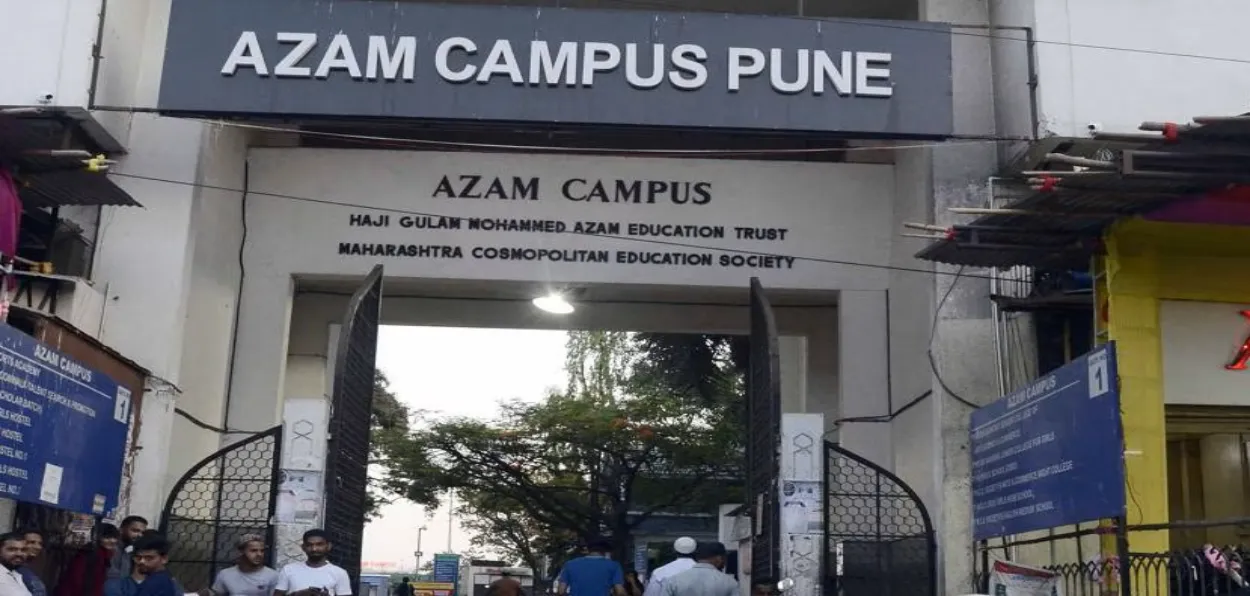
In a major relief to minority educational institutions in Maharashtra, the state government has lifted the nine-month-long ban on granting religious and linguistic minority status to educational institutions.
An official notification announcing the decision was issued on Thursday evening. The move is expected to clear several pending applications and resolve long-standing issues faced by minority educational institutions across the state.
The process of issuing minority status certificates had been suspended following the death of then Deputy Chief Minister and Minority Development Minister Ajit Pawar in a plane crash in January. The suspension came amid a major controversy over certain approvals granted shortly after his death.
Under Article 30 of the Indian Constitution, religious and linguistic minorities have the fundamental right to establish and administer educational institutions of their choice. The minority status certificate provides official recognition of this constitutional entitlement.
However, securing minority status involves fulfilling certain conditions. The trust or board managing the institution must belong to the respective minority community. The institution must also demonstrate that at least 51 per cent of its admissions are reserved for students belonging to that community.
In Maharashtra, minority status is granted not only to religious communities but also to linguistic minorities, including Urdu-, Sindhi- and Gujarati-speaking communities.
As part of the revised arrangement, the state government has designated an administrative head in the Minority Development Department to oversee the process of granting minority status to educational institutions. According to the government order, the new arrangement is intended to ensure greater uniformity and transparency in the certification process.
Institutions recognised as religious or linguistic minority institutions enjoy several administrative and financial concessions. These include exemption from the 25 per cent admission quota under the Right to Education (RTE) Act and certain mandatory reservation requirements.
Such institutions can give preference to students from their respective minority communities, subject to applicable laws. They also enjoy greater autonomy in staff recruitment and administration.
Exemptions from the government's reservation roster allow them to recruit eligible teachers and headmasters without following the reservation requirements applicable to other institutions. This gives them considerable flexibility in admissions, recruitment and internal administration.
However, these provisions have also been vulnerable to misuse. Allegations have surfaced that some institutions attempt to obtain minority status fraudulently to circumvent RTE provisions and impose arbitrary fees.
To prevent such practices, the state government has constituted a special committee headed by B. Venugopal Reddy, Additional Chief Secretary of the Higher and Technical Education Department.
The committee will examine old and suspicious cases and is expected to ensure that minority status is not misused for commercial purposes. Its task will be to strengthen scrutiny and prevent institutions from exploiting the provisions meant to protect minority educational rights.
Alongside these administrative changes, the government has also increased the annual financial assistance provided to minority schools in Maharashtra from Rs 2 lakh to Rs 10 lakh.
The increase in financial assistance, coupled with the resumption of the certification process, is expected to encourage genuine minority institutions to seek official recognition.
READ MORE: Burn survivor Parveen Khan turns her ordeal into a mission to help others
The government's decision marks an important step towards restoring the functioning of minority educational institutions and ensuring that their constitutional rights are supported by a more transparent administrative process.