New Delhi
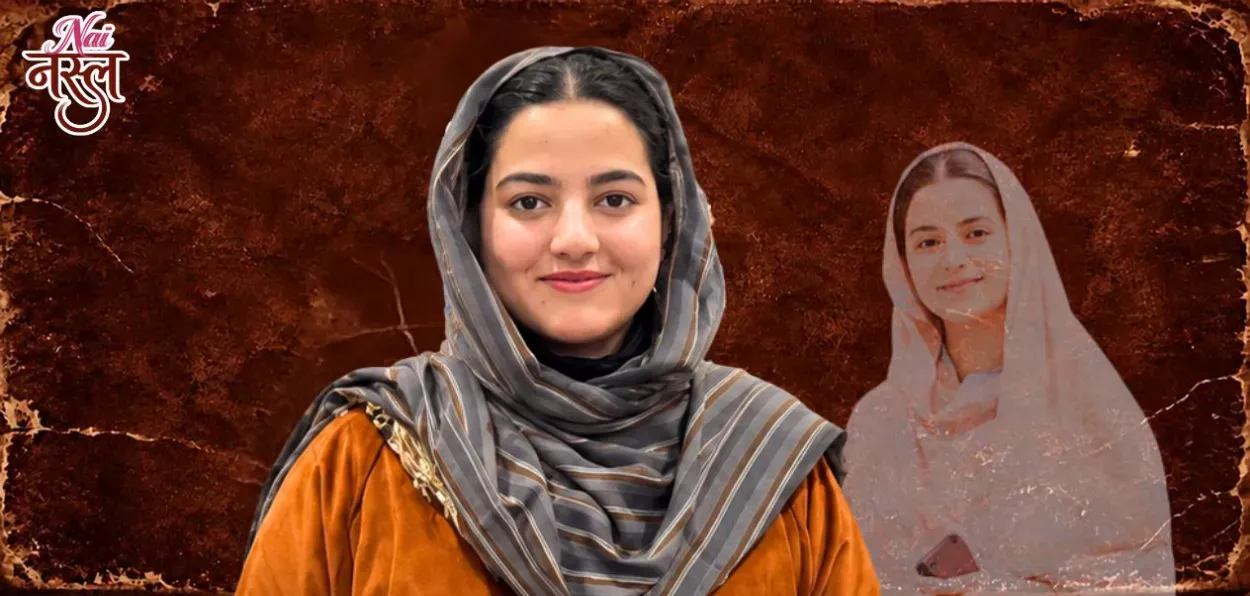
A winner of five national gold medals in martial arts, Srinagar-based Munntaha Baba is now training young girls from remote areas of Kashmir, turning her personal struggles into a mission to empower women and bring about social change. A sportswoman, peace educator, youth advocate and motivational speaker, Munntaha is also the founder of the Khatoon Initiative, which works for women's empowerment, gender awareness and social transformation.
In an exclusive interview with Ameena Majid of Awaz-the Voice, Munntaha spoke about her experiences in sports and her journey from a martial arts champion to a social change maker.
Recalling her early years, Munntaha said that training in Taekwondo and martial arts gave direction to her life. However, growing up, she had to contend with resistance from both her family and society.
During her school days, she was often told that sports were meant for boys and that she should concentrate on her studies instead. But her interests lay in sports, and she was already winning medals.
The lack of encouragement was disheartening. Rather than being appreciated for her achievements, she was made to feel that she was pursuing the wrong path.
Nevertheless, she refused to give up. Gradually, she managed to convince her family of her passion. The struggle also made her reflect on the difficulties faced by girls who lacked even the limited resources and opportunities available to her.
 Munntaha Baba wiuth students of her Academy
If she had to overcome so many obstacles to pursue sports, she wondered, what must girls from remote areas, with little access to opportunities or guidance, be going through?
That realisation marked the beginning of a new chapter in her life.
Munntaha established an academy where she trains girls in martial arts and self-defence. So far, she has trained more than 250 girls in Taekwondo across Kashmir.
She found that introducing self-defence training was an effective way to persuade parents to send their daughters to the academy, as they readily understood its practical importance. Once the girls joined, they gradually developed an interest in martial arts while gaining self-confidence, self-reliance and the ability to make independent decisions.
She has travelled to remote areas, including Keran, Uri and Pahalgam, to organise training camps for women. While acknowledging the improvement in education and awareness in rural areas, she says that changing deeply entrenched social attitudes remains a slow process.
 Munntaha Baba receiving an award in Delhi
Often, the biggest obstacle a girl faces is not the absence of opportunities but the persistent question: "What will society say?"
These experiences gradually drew Munntaha towards social activism. She launched the Khatoon Initiative to raise issues concerning women and challenge the restrictions imposed on them.
Her concerns went beyond asking why a girl could not become an athlete. She also questioned why girls should be denied the freedoms and opportunities routinely available to boys.
In Srinagar, she began bringing together women from different professional backgrounds and recognising their achievements. The idea was to showcase them as role models and inspire others to follow their dreams. The message was simple: if one woman could overcome difficult circumstances and forge ahead, others could do so too.
For Munntaha, however, women's issues cannot be viewed in isolation from the larger social and political environment in Kashmir. Terrorism, the future of young people, unemployment, infrastructure and policy-related concerns are all interconnected with the region's development.
She believes that understanding the challenges confronting Kashmiri women requires an understanding of the wider circumstances in which they live. The impact of terrorism, she points out, goes far beyond security concerns, affecting families, children and, particularly, women.
 Munntaha Baba receiving an award in J&K
Consequently, she has expanded her work to involve men and young people, too. She places special emphasis on the youth, believing that prolonged exposure to violence and extremist ideologies can profoundly influence the thinking and choices of a generation.
Munntaha's opposition to terrorism is unequivocal. Drawing on her interactions with people who were once associated with terrorist groups or their networks but later sought to abandon that path, she says that some young people are drawn towards extremist ideologies at an impressionable age, often without understanding the lifelong consequences.
She recalls the case of a young man whose involvement in violent activities landed him in prison and jeopardised his prospects of appearing for the medical entrance examination, NEET. He subsequently faced serious personal and social difficulties.
For Munntaha, such experiences underline the urgency of providing young people with proper guidance, opportunities and hope before they are drawn into violence.
She believes that social attitudes and mindsets shaped over decades cannot be transformed in just a few years. Peace, in her view, is not a destination that can be reached once and for all, but an ongoing process that begins with individuals and extends to families, society and the wider community.
She also believes that Kashmiri women are inherently strong. The task, therefore, is not to teach them to be confident but to help them recognise and bring out the confidence they already possess.
Women who have held their families together through personal tragedies and immense hardship have demonstrated extraordinary resilience. Small but focused interventions, she says, can help them realise their potential.

The challenges faced by Munntaha are not confined to traditional social attitudes. Women who step into public life often have to deal with criticism, character assassination and personal attacks.
She says that when a woman makes progress, attempts are sometimes made to undermine her by questioning her character or subjecting her to derogatory labels. However, she believes that retreating in the face of such pressure only strengthens those who seek to silence women.
As she puts it, if a woman stops, the challenge remains hers; but if she continues moving forward, the challenge shifts to those trying to stop her.
Social media has become an important platform for her to pursue this mission. Through her writings and public interventions, she has tried to bring stories and concerns from Kashmir to audiences across the country, particularly those that often remain outside mainstream public discourse.
Over the years, Munntaha has participated in national-level forums and collaborative initiatives focusing on peace education, menstrual health awareness, mental health and campaigns against substance abuse.
Through the Khatoon Initiative, she continues to work towards women's empowerment, skill development and peacebuilding. The initiative seeks to help women acquire practical skills, build confidence and become active contributors to their communities. It also promotes social responsibility, women's leadership and meaningful dialogue.
She uses social media to encourage truth, accountability and empathy, particularly among young people. Her larger objective is to inspire women and youth to become agents of peace, leadership and positive social transformation.
READ MORE: Ghazala Parveen uses art to challenge social stereotypes
Munntaha says that change cannot be brought about through a single speech, event or campaign. It requires sustained efforts: creating opportunities for girls, guiding young people towards a better future, challenging entrenched social norms and encouraging dialogue against violence.
Transcribed by Onika Maheshwari