New Delhi
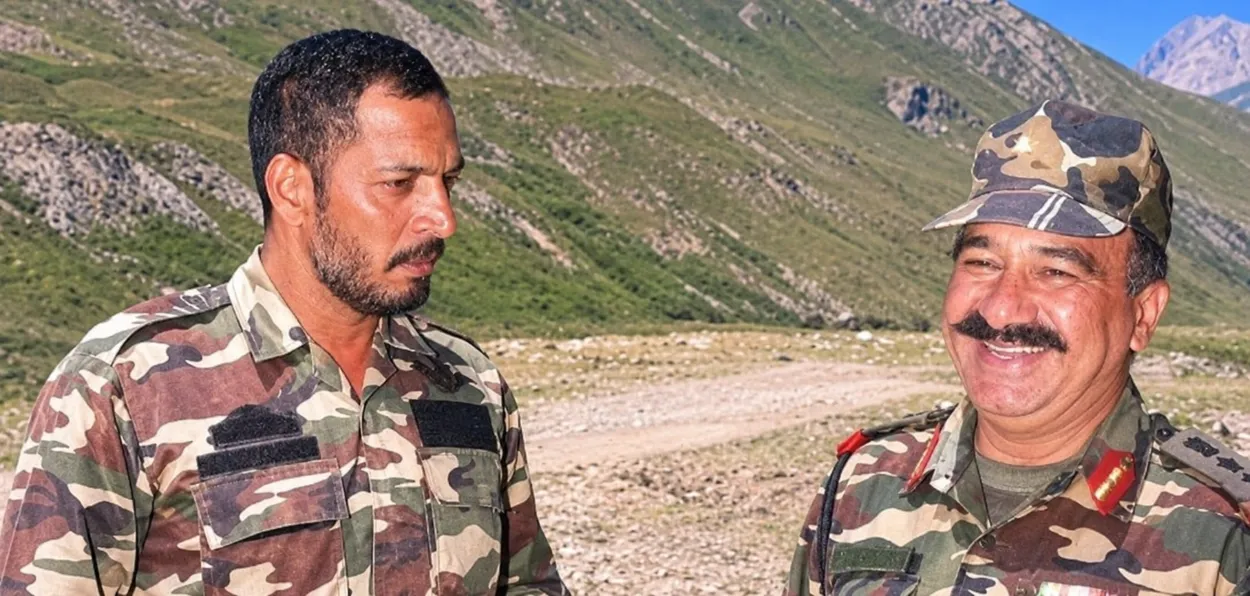
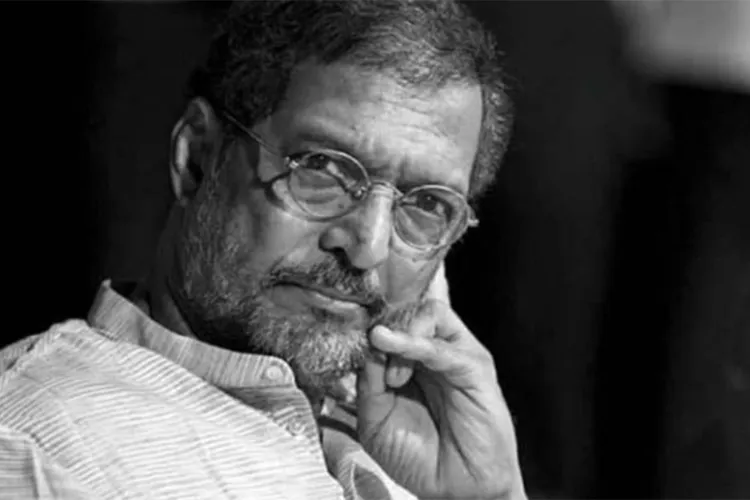
Nana Patekar is among those rare actors whose reel-life roles have spillled over into real life. His association with the Indian Army is one such example. For his 1991 directorial film Prahaar, Patekar underwent three years of rigorous military training with the Maratha Light Infantry. Years later, when the Kargil War broke out in 1999, he volunteered to serve with the Indian Army and spent about three months with the Quick Reaction Team (QRT) in the Kargil sector.
Patekar later revealed that he had approached then Defence Minister George Fernandes, seeking permission to serve as an active combatant on the front lines in Kargil.
During his stint with the Army, Patekar spent several weeks in highly volatile areas, including Dras, Kupwara, Baramulla and Sopore, and patrolled the Line of Control (LoC). His presence boosted the morale of troops stationed at different posts. He also assisted medical personnel at a military base hospital.
The demanding duties and harsh high-altitude conditions took a physical toll on him, and he reportedly lost around 20 kg during his deployment.
Patekar, who has often played characters fighting for justice for ordinary people on screen, has also tried to address social problems away from the camera. His experience in Kargil eventually created a lasting bond with the region and led him to work with the Army to improve educational and vocational opportunities for children and young people living in remote areas close to the LoC.
From Kargil to Kashmir
Patekar’s NGO, NAAM Foundation, which he founded with veteran Marathi actor Makarand Anaspure in 2015, initially focused on helping distressed farmers in Maharashtra’s Vidarbha and Beed districts, where farmer suicides had become a major concern.
Nana Patekar’s dialogue on the threat of “internal enemies” goes viral after his demise. https://t.co/kEQCRjBLaO
— News Algebra (@NewsAlgebraIND) October 8, 2026
The foundation is now also working in Jammu and Kashmir, particularly in areas close to the LoC, with a focus on education, vocational training and community development.
Patekar’s son, Malhar Patekar, and his manager, Ganesh Thorat, are involved in running the foundation. Thorat told Awaz-The Voice: “Based on our research, we made a comprehensive plan which will be implemented in a phased manner.”
The Kashmir initiative began with an effort to encourage companies to contribute their Corporate Social Responsibility (CSR) funds towards rebuilding school infrastructure and promoting education in the region.
“The idea is that the locals would eventually monitor it,” Thorat said.
The Gaggar Hill Primary School in north Kashmir was the first school adopted by NAAM. According to a post shared by the foundation on social media, the Indian Army’s Chinar Corps, Dagger Division and Pir Panjal Brigade, in collaboration with NAAM Foundation, inaugurated the renovated school.
Students from Gaggar Hill, Chotali and Kurali were also provided with essential educational materials.
As part of the initiative, NAAM provided equipment and other essentials for hospitality, bakery, IT and tailoring courses at the Army’s Chinar 9 Jawan Club in Boniyar. The courses are aimed at equipping local youth with vocational skills and improving their employment prospects.
Thorat said that NAAM is also collaborating with the Army to establish a vocational centre at Boniyar in Kupwara district. The centre will train young people in skills that can help them secure employment or start their own ventures.
The broader objective, he said, is to create greater economic opportunities and a positive environment for young people in the region.
Malhar Patekar said, “This area is very close to the Line of Control of Pakistan-occupied Kashmir. The Gaggar Hill Primary School has undergone a transformational renovation to provide the students with a proper, comfortable and safe learning environment.”
नाना पाटेकर जी का जीवन तिरंगे की आन-बान और शान के लिए समर्पित रहा। मैं नाना पाटेकर जी को श्रद्धांजलि अर्पित करता हूं और उनके परिवारजनों एवं चाहने वालों के प्रति संवेदना व्यक्त करता हूं। - माननीय प्रधानमंत्री श्री @narendramodi जी https://t.co/jX7I40Q1I3
— Sambit Patra (@sambitswaraj) October 8, 2026
An NGO Born from a Personal Contribution
Patekar’s commitment to social work also has an interesting personal story behind it.
He once revealed on a television programme that he had set aside Rs 1.5 crore to buy a luxury car. Instead, he decided to use the money to help families of farmers who had died by suicide.
He distributed Rs 15,000 each to 1,000 wives and other dependants of farmers who had taken their own lives following crop failures and drought in Maharashtra’s Vidarbha region.
Patekar soon realised that one-time financial assistance could not address the deeper causes behind farmer distress. The problem required sustained and long-term intervention. This led to the establishment of the NAAM Foundation.
Since then, NAAM has been working on projects aimed at tackling drought, water scarcity and rural distress in Maharashtra. Its programmes include village development, measures to prevent farmer suicides, water conservation and efforts to improve agricultural livelihoods.
The foundation has constructed water-storage tanks and undertaken the de-silting of water bodies to improve water availability and reduce the impact of recurring floods in areas that had once recorded high numbers of farmer suicides.
Over the years, NAAM has expanded its work beyond Maharashtra and now has pan-India ambitions.
Patekar has also said that the foundation plans to launch the Har Ghar Nal Project in the rain-deficit Bundelkhand region in collaboration with the Uttar Pradesh government and Tata Motors.
ALSO READ: Actor Nana Patekar passes away at 75
From playing a soldier on screen to serving alongside soldiers in Kargil, and from helping distressed farmers in Maharashtra to supporting education and vocational training in remote Kashmir, Patekar’s journey reflects an unusual transition from cinematic roles to real-world social engagement.











.webp)