Vidushi Gaur/New Delhi
A film rooted in the remote hills of Nagaland has suddenly found itself on the international awards map. Theja Rio’s Angh, a story about a Naga village chief, his family and a rapidly disappearing way of life, has won the prestigious Platform Award at the 2026 Toronto International Film Festival (TIFF).
Here are five things to know about the film.
1. Angh tells a story from 1960s Nagaland
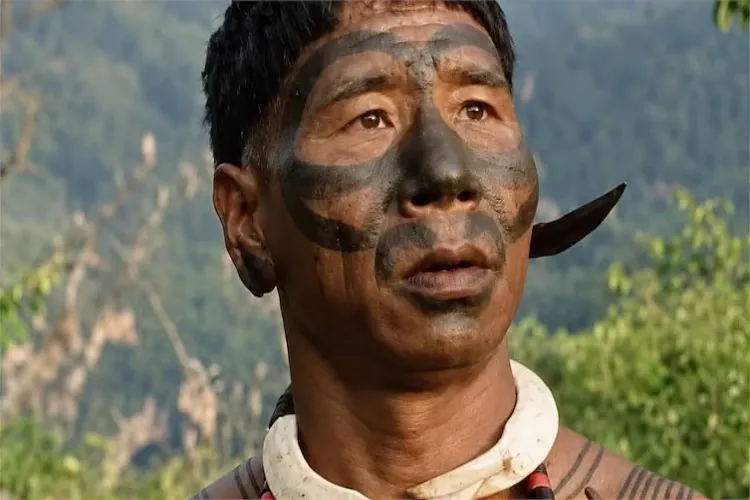
Set in the early 1960s, Angh takes viewers to a remote village in Nagaland near the Indo-Burma border.
At the centre of the story is Anghba, an ageing Konyak Naga village chief who remains behind with his ailing wife and young son after most of the village has been deserted.
The arrival of an American missionary, played by Scottish actor Douglas Henshall, brings a new influence into the family's life.
The film explores what happens when an old way of life encounters a rapidly changing world.
Rather than presenting this transformation simply as a conflict between tradition and modernity, the film examines it through the intimate relationship between a father and his son.
Questions of faith, identity, family, home and cultural change form the heart of the story.
2. The title Angh has a special meaning
The word Angh itself comes from the Konyak Naga tradition.
An Angh is a traditional chief or head of a village, or a group of villages, among the Konyak Naga people.
The film's central character therefore carries not just a personal identity but also a historical and cultural position.
His struggle to preserve his family's beliefs and traditions becomes a larger reflection of a community facing profound transformation.
The film's story is particularly significant because it places Naga history and culture at the centre of the narrative, rather than treating the Northeast merely as a backdrop.
3. It is Theja Rio's debut feature film
Angh is the feature directorial debut of filmmaker Theja Rio, who comes from Nagaland and studied at the UK's National Film and Television School.
The film's journey began several years ago. Rio originally developed Angh as a short film in 2018 before expanding the idea into a feature-length story.
For Rio, the father-son relationship is at the centre of the film, but the story also deals with experiences that extend beyond Nagaland.
“At the heart of the film is the relationship between a father and son, but it is also about letting go, our relationship with home and the transient nature of life,” Rio said.
He added that these emotions were universal and could connect audiences beyond the community in which the story is set.
4. The film is deeply rooted in Naga culture
One of the most distinctive aspects of Angh is its commitment to representing a disappearing world from within.
The film features an Indigenous Naga cast, including Anghlong Konyak in the lead role, alongside Douglas Henshall and actors including Sobino Rengma, Genpai Konyak, Amah Konyak and Wangton Konyak. The screenplay has been written by Theja Rio and James Davis.
The film was also shot on 16mm, a choice that contributes to its visual character and complements its themes of memory, history and a changing way of life.
For Rio and his team, the film represents more than a story about one family. It gives international audiences an opportunity to encounter a part of India's cultural landscape that has rarely occupied the centre of global cinema.
5. How did Angh enter the Oscars race?
Angh did not win the race to become India's official Oscar entry. That honour went to Marathi film Gondhal.
At the 2026 Toronto International Film Festival, it was the only Indian film selected for the prestigious Platform Competition. The section is known for showcasing distinctive filmmaking and strong directorial voices.
Angh won the Platform Award, the top prize in the competition.
Under the Academy's current eligibility rules, winning the designated Platform Award at Toronto provides a direct qualification route for consideration in the International Feature Film category at the Oscars.
For a debut feature from Nagaland, however, the recognition is already significant.
READ MORE:Why Maulana Maududi's political Islam is not relevant in twenty-first-century India
Theja Rio described the TIFF recognition as a deeply moving moment, saying that seeing the film connect with audiences outside his own community was particularly meaningful.


.webp "Representational Image")









.webp)