Mrudgandha Dixit
Ganesha, or Ganpati Bappa, revered as the master of the 14 Vidyas (sciences) and 64 Kalas (arts), is among the most beloved deities of Hindus in Maharashtra. Considered the god of intellect and art, Ganesha has inspired generations of artists. For centuries, not only Hindu artists but also many Muslim painters and sculptors have brought his mesmerising and lifelike form to their canvases, in clay and in stone.
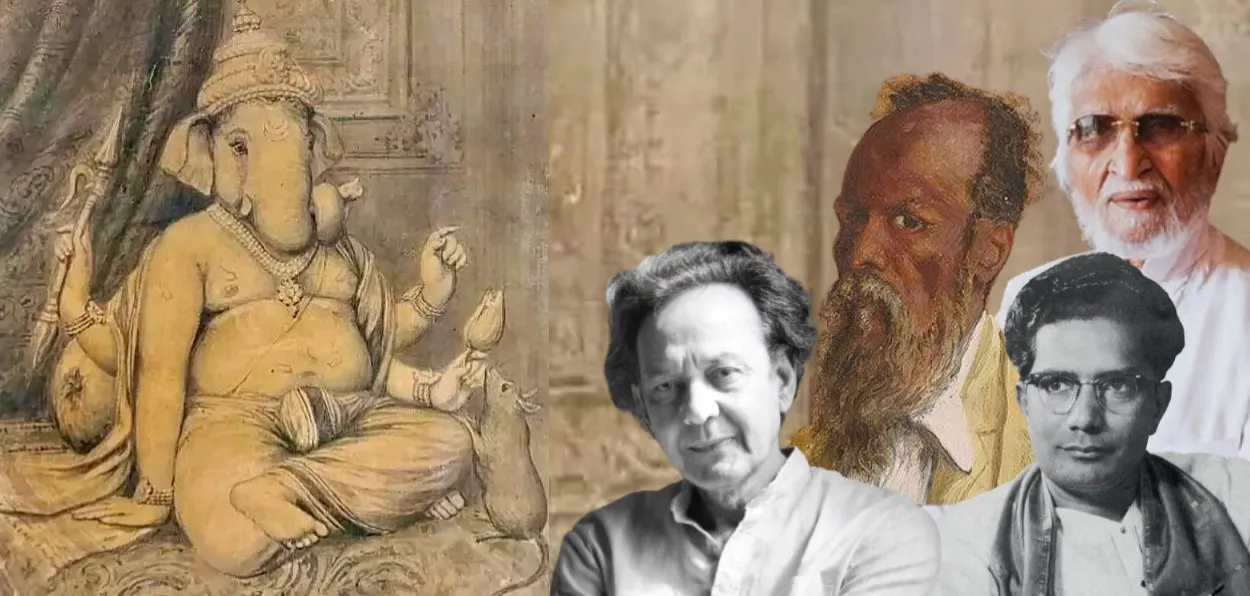
Here are some well-known Muslim artists who have explored Ganesha through their art.
Master Abalal Rehman
The history of painting in Maharashtra would be incomplete without mentioning Master Abalal Rehman. A son of Kolhapur and court painter to Rajarshi Shahu Maharaj, Abalal Rehman—whose original name was Abdul Aziz Rehman—was an exceptional artist who took art beyond the boundaries of religion.
Born into a traditional Muslim family, Abalal learnt the fundamentals of art from his father, who decorated Quranic manuscripts. After completing his education at the J.J. School of Art, Abalal returned to Kolhapur and joined the court of Shahu Maharaj.
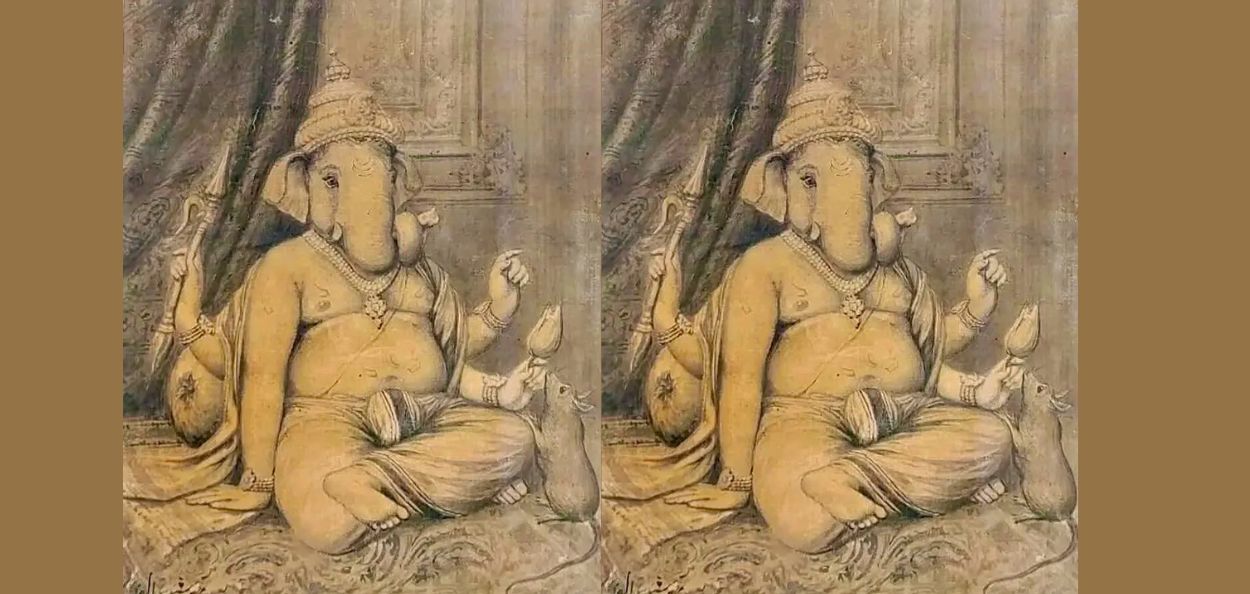
One of his paintings depicts Ganesha seated in a majestic posture. Perhaps created for his royal patron, the image gives Bappa the appearance of a king seated in his court, listening to his subjects.
The painting is a testament not only to Abalal's artistic talent but also to the cultural environment fostered during Shahu Maharaj's reign. A Muslim artist portraying a Hindu deity for a Hindu ruler reflects the shared artistic and cultural traditions of the period. The painting also stands as a visual record of Kolhapur's syncretic culture.
M.F. Husain's Ganesha
Few Indian painters studied and interpreted Indian culture and mythology as extensively as the internationally renowned artist Maqbool Fida Husain. He portrayed numerous deities from Hindu mythology, combining traditional Indian imagery with elements of Cubism and folk art.
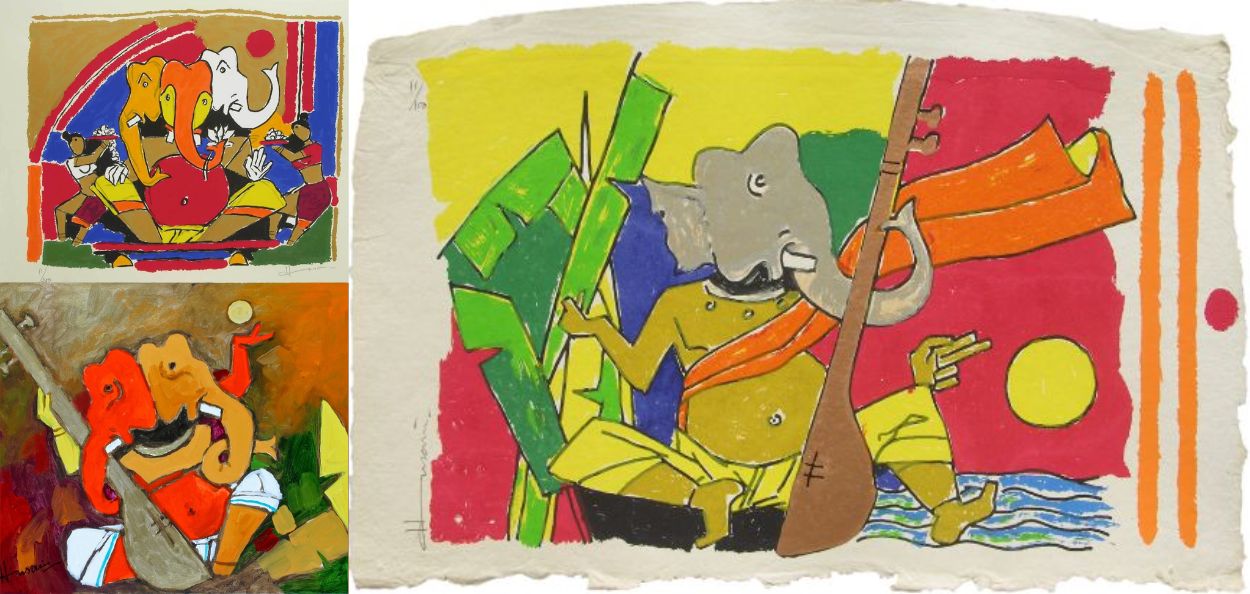
Ganesha appeared repeatedly in Husain's work. He used bold, thick lines, playful forms and deep colours to create striking representations of the deity. Traditional symbols such as the sun, moon and veena often appear alongside Ganesha.
Across his numerous Ganesha paintings, Bappa appears in different forms—sometimes dancing, sometimes seated, sometimes playing an instrument, and at times resting on Goddess Parvati's lap. A distinctive arched line on Ganesha's forehead and the use of strong colours recur in many of these works.
S.H. Raza's Spiritual Vision
Sayed Haider Raza, better known as S.H. Raza, approached art through abstraction, spirituality and the symbolism of the Bindu. His work was not centred on conventional representations of religious figures, yet his paintings drew deeply from Indian philosophical traditions.
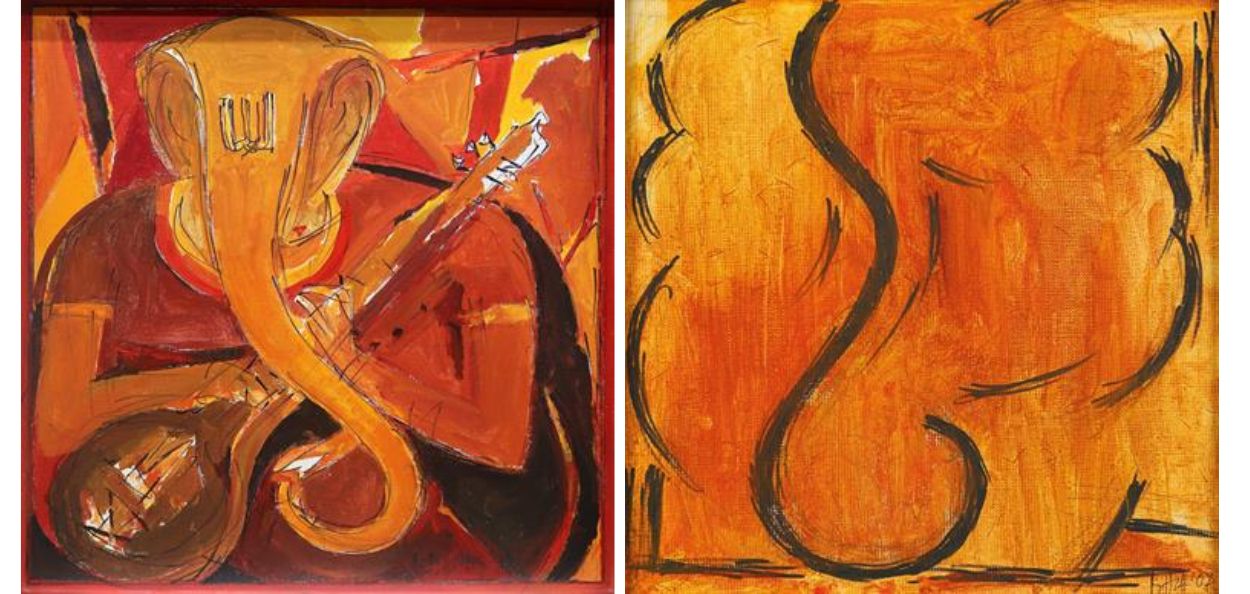
Through colour and geometric forms, Raza explored ideas associated with Shiva, Shakti and Ganesha. His approach suggested the spiritual energy and formless essence associated with these traditions rather than presenting them through conventional figurative imagery.
Farooq Nadaf: Preserving Culture Through Art
Farooq Nadaf is a prominent contemporary name in Maharashtra's art world. After completing his art education at Kalavishwa Mahavidyalaya in Sangli, he developed expertise in watercolour, oil and acrylic painting.
His dancing Ganesha paintings, historical scenes and lively depictions of rural Maharashtra have attracted art lovers. Nadaf has also undertaken the important task of creating illustrations and attractive cover pages for Marathi textbooks published by Balbharati.
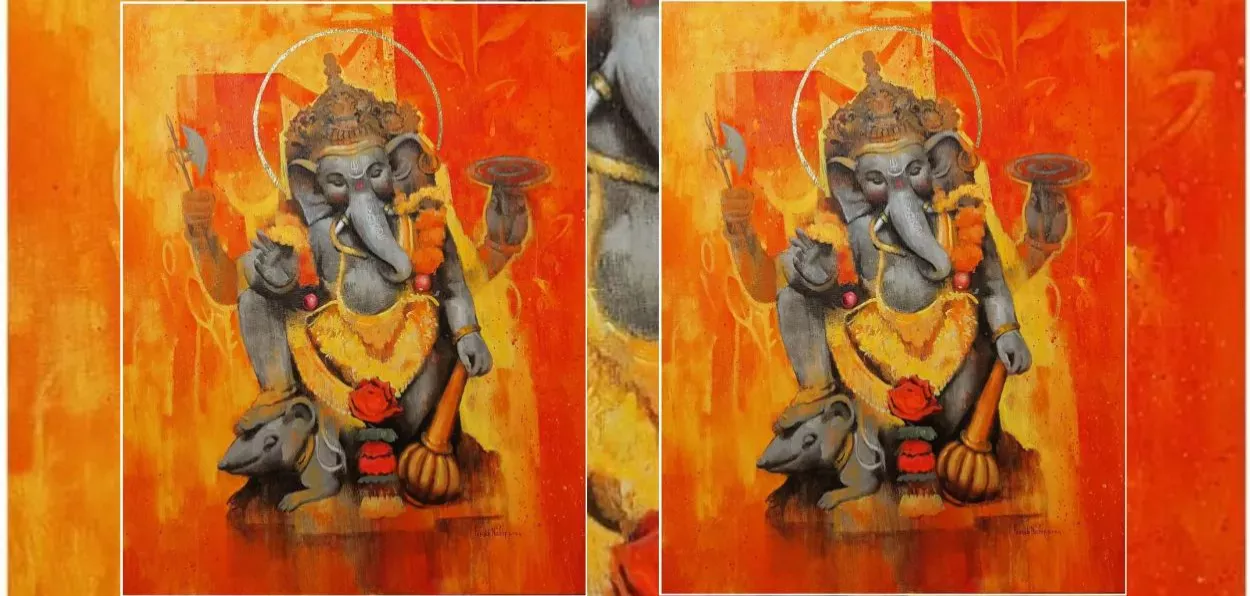
A recipient of awards from the Bombay Art Society and the Camlin Art Foundation, Nadaf's work reflects Maharashtra's composite cultural traditions. His paintings demonstrate how artistic expression can transcend religious boundaries.
Consider one of his Ganesha paintings: Bappa has bowed, peaceful and forgiving eyes, while the mouse has a charming, almost smiling expression. There is no trace of grandeur or arrogance. The image instead conveys a sense of calm, devotion and complete absorption.
Mughal, Deccani Miniatures and Bengal's Patua Tradition
The tradition of Muslim artists depicting Hindu deities has historical roots extending back to the Mughal and Deccan courts.
During the reign of Emperor Akbar, the Mahabharata was translated into Persian as the Razmnama. The illustrated manuscript contains miniature paintings depicting scenes from the epic, including representations of Ganesha. Interestingly, in some of these works, Ganesha is shown wearing a Persian-style jama, reflecting the cultural environment in which the paintings were created.
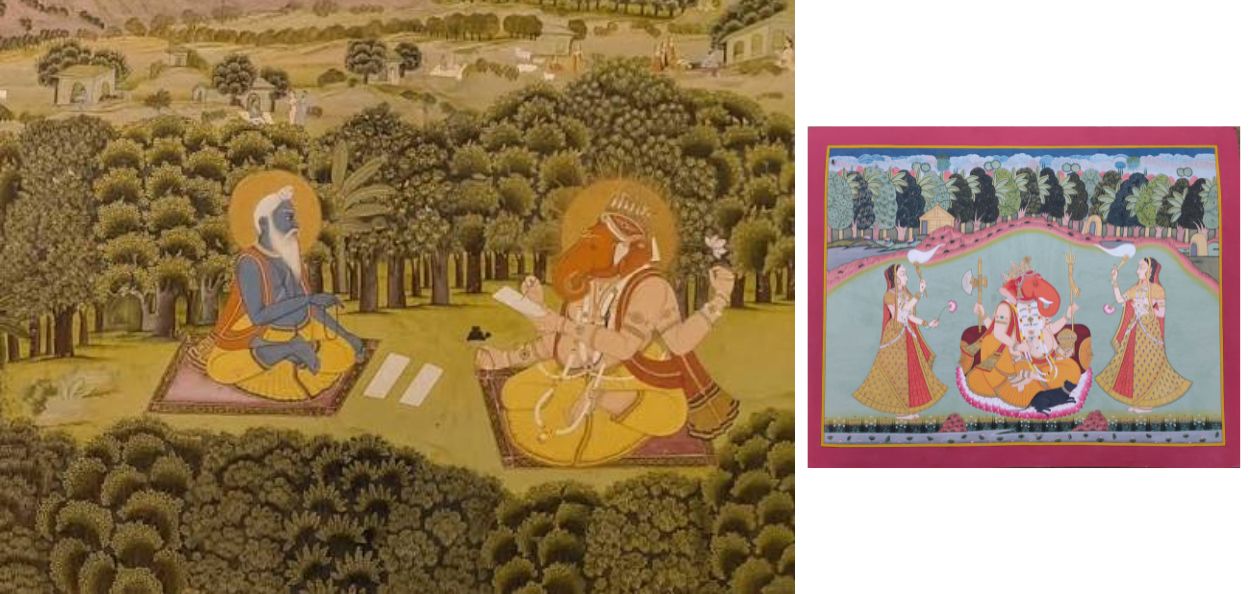
A similar tradition can be seen in Bengal's Pattachitra, one of the region's oldest folk-art traditions. Many of the artists who create these paintings and perform songs associated with them belong to the Muslim Patua community. Artists such as Ranjit Chitrakar have, through generations, depicted stories and figures from Hindu mythology, including Ganesha, Goddess Durga and episodes from the Ramayana.
Contemporary Artists
The tradition continues among contemporary Muslim artists across India.
In Raipur, Chhattisgarh, a young artist named Shadab has been making Ganesha idols for around 15 years. This year alone, he prepared more than 250 different idols. He says, "Whatever the religion may be, it is very important to respect the faith of others."
In Udaipur, Waqar Hussain, known for his intricate glass engraving, has created several detailed and captivating representations of Lord Ganesha on glass.
ALSO READ: Kashmir's Everester Nahida Manzoor wants more women to climb peaks
Across these diverse works, one striking feature often stands out: Ganesha is portrayed not as a fierce or angry deity, but as a peaceful, auspicious and benevolent figure—the Mangalmurti.

.webp "Representational Image")






.webp)
_(1).webp)