New Delhi
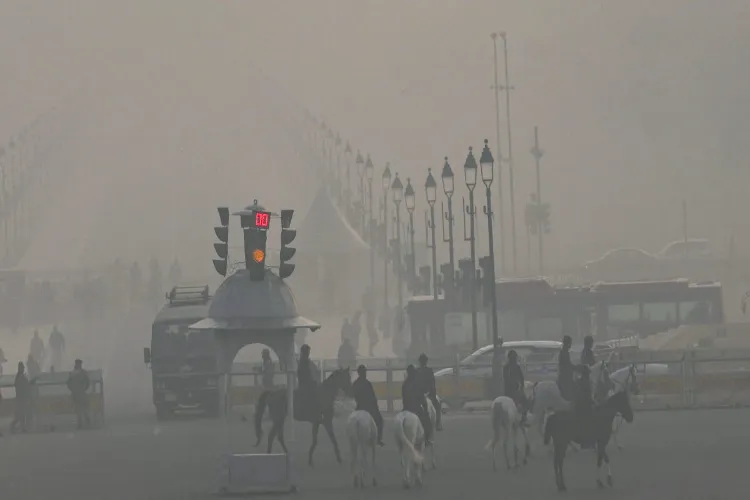
Health experts and policymakers on Thursday warned that prolonged exposure to pollution is fuelling a sharp rise in strokes, cardiovascular and respiratory diseases, neurological disorders such as Alzheimer’s, and mental health conditions, while placing a growing pressure on the healthcare system.
Speaking at the 'Illness to Wellness' (ITW) Conference here, medical experts presented data highlighting the serious health risks posed by the toxic air. They noted that during summer months, the air quality index often remains in the 200-250 range, stressing that air pollution has become a year-round public health crisis threatening the country's growth.
Under the Central Pollution Control Board (CPCB) classification, an AQI between zero and 50 is considered 'good', 51 to 100 'satisfactory', 101 to 200 'moderate', 201 to 300 'poor', 301 to 400 'very poor' and 401 to 500 'severe'.
Former Health Secretary and Illness to Wellness Foundation (ITWF) chairman Rajesh Bhushan said the challenge lay not only in controlling pollution sources but also in addressing its severe public health impact.
"In highly polluted cities, people may survive longer but with chronic illness that reduces productivity, quality of life, and economic contribution," he said, calling for stronger preventive healthcare measures.
Daljit Singh of Max Hospital said nearly 17 per cent of strokes globally are linked to polluted air, with clear seasonal spikes in hospital admissions.
G C Khilnani of PSRI Hospital described air pollution as a "man-made public health emergency" that has already reduced average Indian life expectancy by several years.
While acknowledging government initiatives such as the National Clean Air Programme and Bharat Stage norms, Anil Rajput, chairperson of the Advisory Council of the ITWF, stressed the need for sustained implementation and coordination across agencies.
"The scale of the challenge calls for sustained implementation, coordination, and continued commitment across stakeholders," he added.
Harsh Mahajan, chairman of Mahajan Imaging and Labs, rejected the idea of a technological quick-fix, saying, "We already know what works; what we lack is urgency and accountability."
A report titled 'Countering Delhi NCR Air Pollution' was released at the conference, advocating data-driven policy action based on global best practices from cities such as London and Beijing.
READ MORE: Cricket taught me to value human talent over caste and religion
Three thematic sessions discussed the multi-dimensional impact of pollution, including invisible health effects, mental wellness and neurological risks, and the threat to children's health and education.
Participants agreed that air pollution acts as a silent accelerator of disease across organ systems, disproportionately affecting the poor, children and outdoor workers.


.png)