




Kolkata
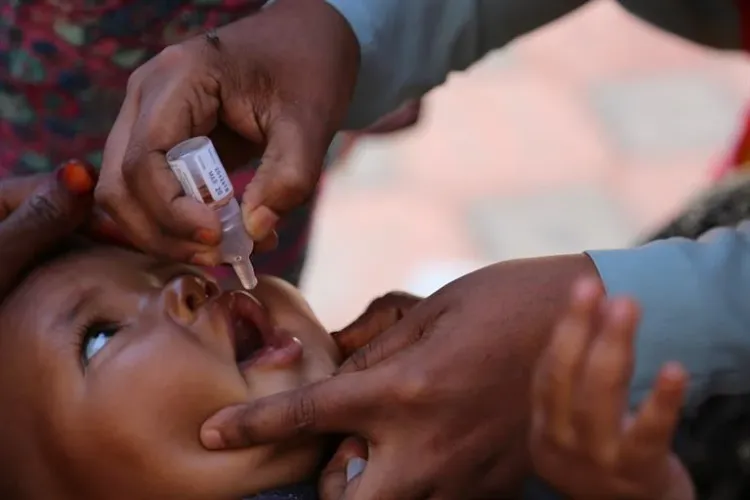
Oral polio vaccines (OPVs) continue to remain safe, effective and indispensable to global eradication efforts, but strengthening immunisation coverage is essential to prevent the emergence of vaccine-derived poliovirus variants, a senior US-based public health expert has said.
Speaking to PTI, Gates Foundation Deputy Director Dr Ananda Sankar Bandyopadhyay said India has not witnessed paralytic outbreaks linked to circulating variant poliovirus strains in recent years, reflecting the country’s success in sustaining high levels of routine immunisation.
India was officially certified polio-free in March 2014.
“Oral polio vaccines are safe, effective, affordable and easy to administer. Their use through routine immunisation and mass vaccination campaigns has eliminated poliovirus transmission and prevented paralysis in children worldwide, with 99.9 per cent of the global population now living in polio-free regions,” Bandyopadhyay said from Seattle.
He explained that variant poliovirus strains typically emerge in areas where immunisation coverage remains weak or inconsistent.
“In communities with persistently low vaccination coverage, variant strains can develop, largely due to viral recombination between OPV strains and other enteroviruses. Therefore, the most effective way to prevent variant poliovirus is to strengthen vaccination coverage,” he said.
Vaccine-derived poliovirus (VDPV) refers to a mutated form of the weakened live virus used in OPV that can circulate in under-immunised populations.
Highlighting recent scientific advances, Bandyopadhyay said the rollout of novel oral polio vaccine type 2 (nOPV2) has significantly reduced the risk associated with variant strains.
“The large-scale deployment of innovative tools such as nOPV2, which is now being used for outbreak response in over 40 countries, has further lowered the likelihood of vaccine-derived variants,” he said.
He added that the strategic use of inactivated polio vaccine (IPV) alongside OPVs could help close immunity gaps and accelerate progress towards eradication.
“Combining IPV with bivalent oral polio vaccine can minimise the risks of variant strains while strengthening population immunity,” he said.
Referring again to India, Bandyopadhyay noted that the absence of paralytic outbreaks from circulating variant polioviruses in recent years underscores the effectiveness of the country’s immunisation strategy.
“This reflects India’s ability to maintain high routine immunisation coverage with IPV and bOPV, supported by national immunisation days,” he said.
He also stressed the importance of surveillance systems, saying the polio eradication programme is built on a robust monitoring network that tracks virus transmission trends and records adverse events, which are extremely rare.
While acknowledging a global decline in vaccine acceptance over the past five years, the expert said public confidence in life-saving vaccines remains largely intact.
“Despite challenges, parents in most parts of the world continue to seek vaccines that protect their children, including polio vaccines,” he said.
He emphasised that community engagement remains central to sustaining eradication gains.
“Active participation and willingness of communities have been, and will continue to be, essential in ensuring children are vaccinated and protected from paralysis,” he added.
Explaining why global eradication took longer than initially expected, Bandyopadhyay said polio is among the most infectious viruses known.
“Its capacity to spread is second only to measles, particularly in environments with poor sanitation, limited access to clean water, and inconsistent hygiene practices,” he said.
India, with its vast population, geographic diversity and high mobility of seasonal migrant workers, faced significant challenges before achieving polio-free status, he noted.
On concerns about sustaining India’s polio-free status amid competing public health priorities and periodic drops in routine immunisation, Bandyopadhyay expressed confidence.
“More than a decade of polio-free status, validated through a highly sensitive surveillance system, demonstrates India’s capacity to sustain strong immunisation coverage across diverse populations,” he said.
He stressed that protecting future generations from polio-induced paralysis must remain a global priority, including in India, which has also expanded vaccination coverage against pneumonia and severe diarrhoeal diseases.
Responding to doubts about whether worldwide eradication is realistic, the expert pointed to India’s experience as proof that the goal is achievable.
“India’s success in eliminating polio and maintaining that status is a decisive and sustainable achievement, made possible by the dedication of hundreds of thousands of frontline health workers,” he said.
“It serves as a powerful example for the rest of the world and remains one of the most significant milestones in global public health,” he added.
While acknowledging the challenges ahead, Bandyopadhyay said eradication remains within reach.
“We have the tools to end polio everywhere. With sustained commitment at the global, regional and local levels, we are closer than ever to eradicating the second human disease in history,” he said.
READ MORE: Why did popular vlogger Arbaaz Khan cry over Sanjay Patel's death?
Smallpox was the first disease to be eradicated globally, and polio is poised to become the second, he added.








.webp "Representational Image")


_(1).webp)