




Somnath
Prime Minister Narendra Modi on Sunday said that the forces which opposed the reconstruction of the Somnath temple after Independence are “still active among us” and warned that India must remain alert, united and strong to defeat attempts to divide the country.
Addressing a large gathering at the Somnath Swabhiman Parv, organised to mark the resilience of Indian civilisation, Modi said the history of the Somnath temple over the last 1,000 years is not one of defeat but of repeated reconstruction and victory.
Referring to the multiple attacks on the temple beginning with Mahmud of Ghazni’s invasion in 1026, Modi said attempts were made to portray these invasions merely as acts of plunder, while their religious motivation was deliberately concealed.
“Books were written to cover up the religious motivation, portraying it merely as ordinary loot. If the invasions had been only for plunder, they would have stopped after the first major loot 1,000 years ago. But that did not happen,” he said.
The Prime Minister said the repeated desecration of the Somnath deity and attempts to alter the very form of the temple reflected hatred and religious extremism. “No person truly devoted to their religion would support such extremist ideology. Unfortunately, appeasement led some to kneel before such extremism,” he said.
Modi recalled that after Independence, when Sardar Vallabhbhai Patel resolved to rebuild the Somnath temple, objections were raised, including to the presence of then President Rajendra Prasad at the temple’s inauguration in 1951.
“Unfortunately, those forces which opposed the reconstruction of Somnath are still present and active today. Instead of swords, conspiracies are now being hatched through other means,” he said, adding that India must remain vigilant and united to counter such forces.
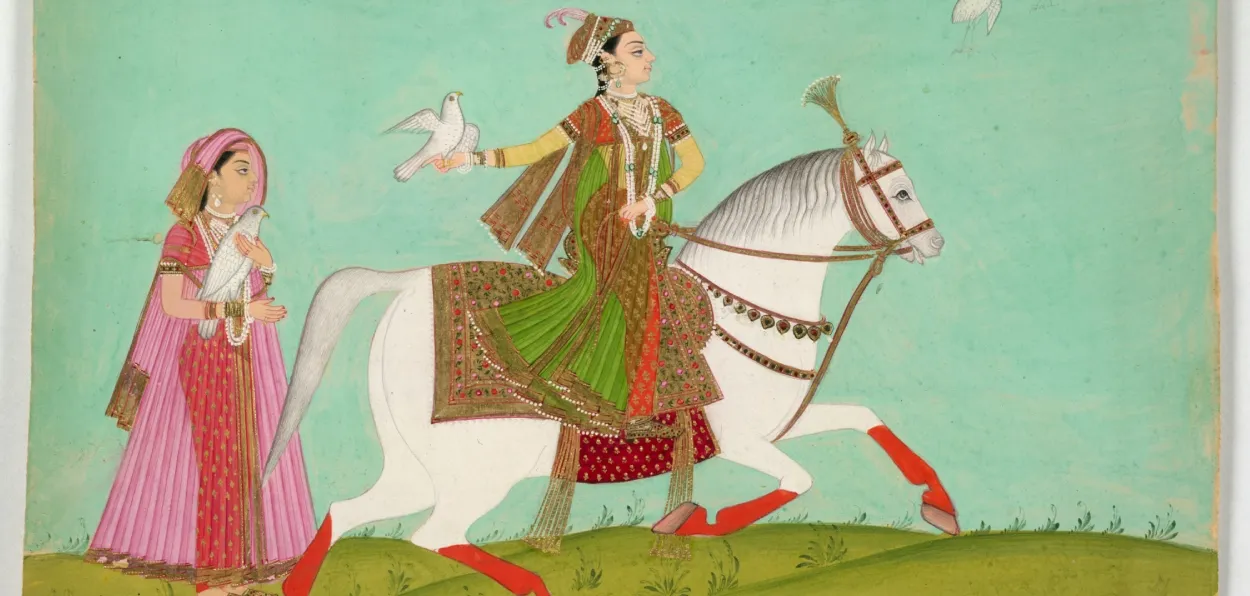
The Prime Minister said the temple endured repeated attacks through the centuries, including during the reigns of Mahmud Begda and Mughal emperor Aurangzeb, who even attempted to convert it into a mosque. Yet, after every destruction, devotees rebuilt it, including Malwa queen Ahilyabai Holkar.
“Civilisations that seek to advance by destroying others ultimately destroy themselves. Somnath teaches us that the path of creation is long, but it is the enduring path,” Modi said.
He noted that invaders who sought to destroy the temple are now confined to history, while the flag of Somnath continues to fly high. “The invaders thought they had won by destroying the temple, but after 1,000 years, Somnath still stands. Such a prolonged struggle and unwavering faith have few parallels in world history,” he said.
Modi also paid tribute to warriors such as Veer Hamirji Gohil and Vegdaji Bhil, who laid down their lives defending the temple, lamenting that their sacrifices were not adequately recognised and that some historians and politicians attempted to whitewash the history of invasions.
Earlier in the day, the Prime Minister led the Shaurya Yatra, a ceremonial procession honouring those who defended the temple. The procession featured 108 horses symbolising valour and sacrifice and covered a one-kilometre route from Shankh Circle to Veer Hamirji Gohil Circle.
Modi, accompanied by Gujarat Chief Minister Bhupendra Patel, greeted devotees from a specially designed vehicle and later offered prayers at the Somnath temple. He also paid tribute to Sardar Vallabhbhai Patel at his statue near the temple premises.
ALSO READ: Kashmir: Naranag offers ensemble of spiritualism, history, nature, and life
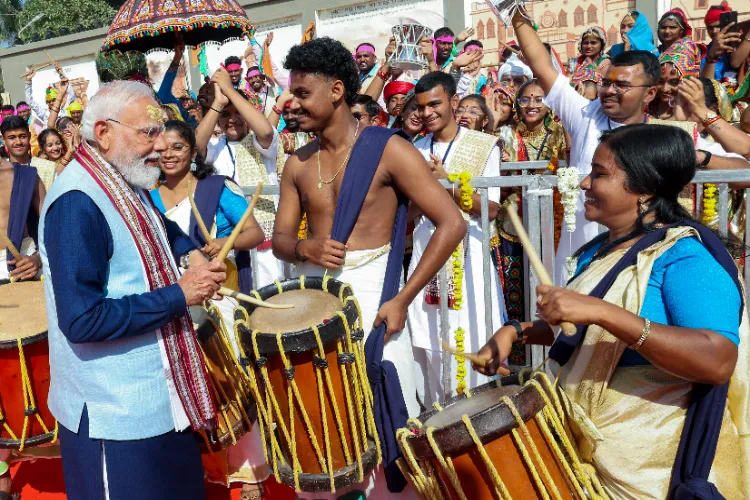
During the procession, a group of young priests walked alongside the Prime Minister’s vehicle playing damru. At one point, Modi took the instrument from a priest and played it himself.

_(1)_(1).webp "Khanqah Emadia Qalandaria, Patna, Bihar")





.webp)

.webp)