

New Delhi
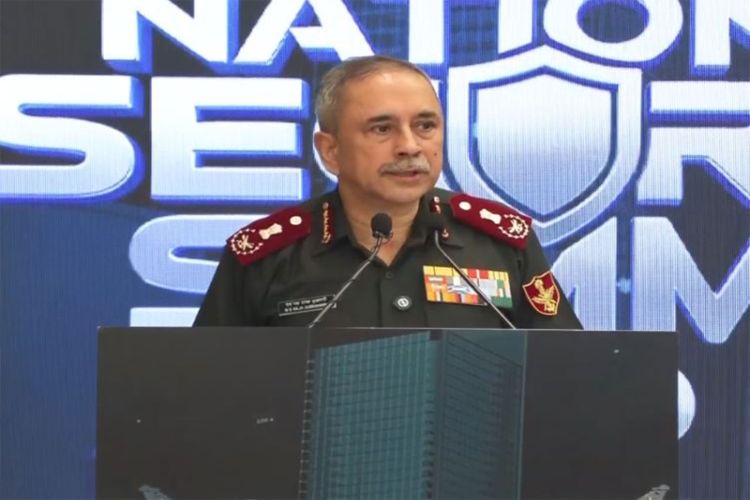
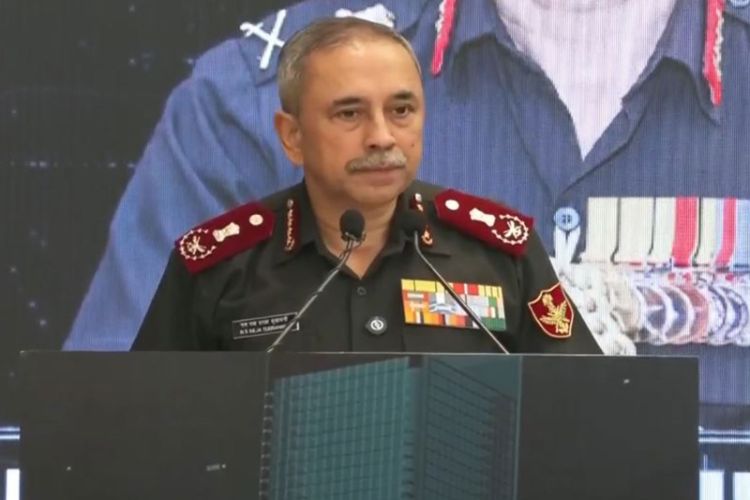
Chief of Defence Staff (CDS) General NS Raja Subramani on Monday said that 'Aatmanirbharta' in national security meant having the freedom to make strategic choices, control critical technologies and maintain resilient supply chains, emphasising that self-reliance did not imply strategic isolation or manufacturing everything domestically.
Addressing a session titled 'Preparing India's Armed Forces & Future Wars' at the ANI National Security Summit 3.0 in New Delhi, the CDS said that Atmanirbharta could be defined through the freedom to decide, the capability to act and the capacity to endure.
"My definition of 'Aatmanirbharta' is the freedom to decide, the capability to act and the capacity to endure. 'Atmanirbharta' is not only about absorbing a setback. It is the ability to absorb a setback, study it, recover from it and again relaunch ourselves. 'Aatmanirbharta' is not about strategic isolation. 'Aatmanirbharta' is not manufacturing everything on our own. 'Atmanirbharta' is having control on our supply chains, having resilient and reliable partners whom we can trust, and controlling the critical capability and technology that we need to ensure that we have the freedom to make our own strategic choices," General Raja Subramani said.
Citing the successful launch of the NavIC satellite NVS-03 by the Indian Space Research Organisation (ISRO) on October 30 this year, the CDS said that the country's ability to learn from setbacks, analyse failures and recover from them was an important aspect of self-reliance.
He referred to two successive failures of the Polar Satellite Launch Vehicle (PSLV) and technical problems with the NVS-02 satellite, saying that ISRO examined the reasons behind the setbacks, revised its projections and conducted a detailed audit before successfully launching NVS-03.
The CDS said that launching a NavIC satellite was not merely a space-related achievement but also had significant implications for national security, particularly in the areas of precision, navigation and timing.
"Let me start by talking about an event which happened on the 30th of October this year. ISRO successfully launched a NavIC satellite, NVS-03. It was marked by two successive failures of the PSLV and technical problems with the NVS-02. But ISRO did not let these setbacks deter it. It looked at the reasons for the failure, revised its projections, carried out a detailed audit, and went about confidently ensuring that it could again put the NVS-02 in orbit through the PSLV. Launching a satellite like NavIC is not only a space event," he said.
"Today, precision, navigation and timing in space have become increasingly important. All our long-range distance weapons are controlled and rely on P&T. Such capabilities, if in the hands of external sources, can be denied to us at any time. And therefore, the ability and the capability to have our own indigenous capability and ability to deploy it at short notice is increasingly important and vital," he added.
General Raja Subramani further emphasised that national security was no longer the responsibility of only the armed forces or the government but required active participation from all sectors, including industry, technology, academia, start-ups and citizens.
"National security today is no longer the prerogative of only the Services or the Government. In fact, today national security is everybody's business, whether it be industry, technology, academia, start-ups or our citizens. Each and everybody has to contribute and is a participant in our national security apparatus," he said.
READ MORE: 'It Is scholars' job to eliminate hatred against country'
The CDS's remarks came during discussions on preparing India's armed forces for future wars and strengthening the country's indigenous defence and technological capabilities.