




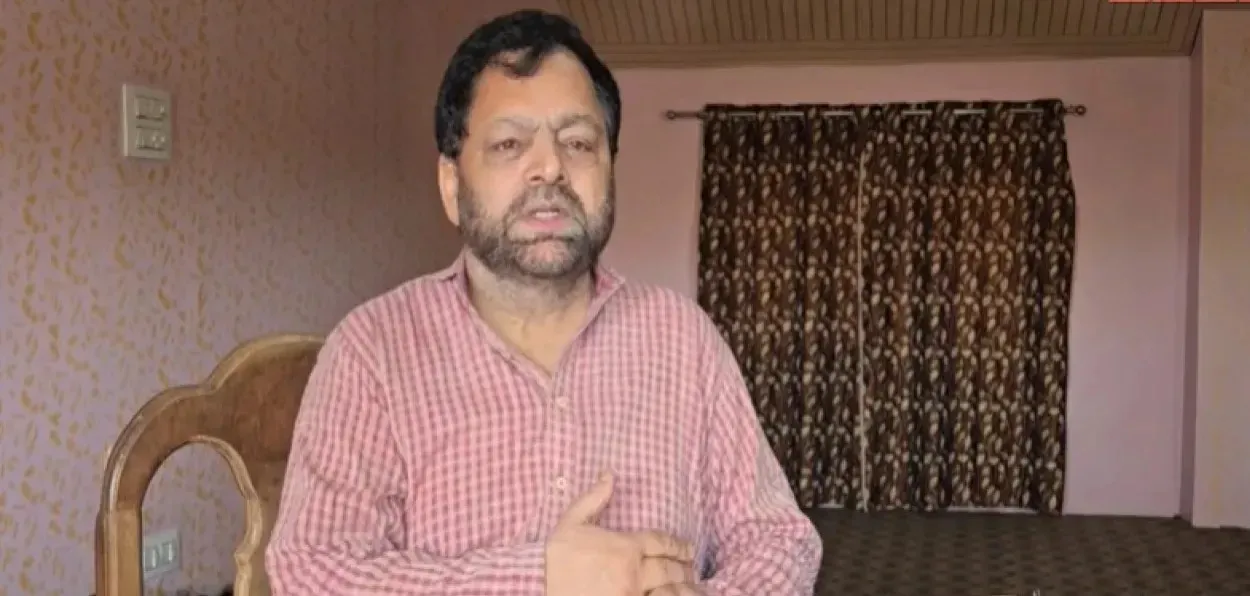
.webp "Raman Bhalla, working president of the Indian National Congress in Jammu and Kashmir")
Jammu
Raman Bhalla, working president of the Indian National Congress in Jammu and Kashmir, on Tuesday cautioned that the proposed Indo-US trade agreement could negatively affect farmers, youth and small businesses in the region if adequate protections are not built into the pact.
Addressing a programme in Jammu, Bhalla said a significant portion of the Union Territory’s population relies on agriculture, horticulture and allied activities, making the local economy particularly sensitive to external competition. While acknowledging the importance of international trade partnerships for economic growth, he stressed that such cooperation should not compromise domestic economic stability.
He warned that allowing heavily subsidised agricultural and industrial products from the United States into Indian markets without sufficient safeguards could disadvantage domestic producers and weaken self-reliance. An influx of cheaper imports, he said, could depress prices of local produce and directly impact farmers’ incomes, especially at a time when they are already contending with erratic weather patterns, high transport costs and infrastructural gaps.
Calling for greater transparency, Bhalla urged the government to hold broader consultations before finalising any agreement. He said farmer groups, trade associations and representatives from states and Union Territories should be part of the decision-making process to ensure that growth remains inclusive and balanced.
The Congress leader also raised concerns about the potential fallout for micro, small and medium enterprises (MSMEs) and traders in the Jammu region. According to him, small manufacturing units, retailers and service providers form the backbone of the local economy, and reduced tariffs coupled with easier market access for multinational corporations could put many of them at risk, leading to job losses and financial uncertainty for numerous families.
Highlighting the employment situation, Bhalla said young people in Jammu and Kashmir are already facing limited opportunities and delays in recruitment processes. He argued that economic policies should prioritise local investment, industrial expansion and skill development rather than exposing vulnerable sectors to intense global competition.
READ MORE: Brotherhood is necessary for growth: Grand Mufti to PM Modi
In addition, he expressed concern over rising inflation and increasing prices of essential goods, stating that any measure likely to raise living costs or shrink income prospects must be carefully reviewed. Bhalla also drew attention to deficiencies in civic amenities in parts of Bahu Fort, calling for improvements in infrastructure, sanitation and public services.









.webp "Union Home Minister Amit Shah")
.webp "Union Minister of Parliamentary Affairs Kiren Rijiju")
.webp)

.webp)


_(1).webp)