Thiruvananthapuram
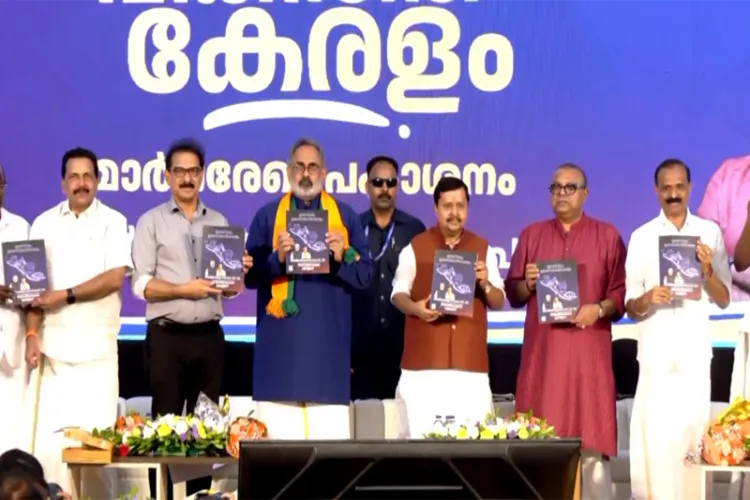
The Bharatiya Janata Party (BJP) on Tuesday released its manifesto for the upcoming Kerala Assembly elections, outlining a roadmap focused on economic development, sector-specific growth, and welfare measures for women and economically weaker sections.
The manifesto was unveiled in Thiruvananthapuram by party leaders Nitin Nabin and Rajeev Chandrasekhar.
Positioning Kerala as a global tourism destination, the BJP proposed developing major cities into specialised economic hubs. Thiruvananthapuram is envisioned as an IT and innovation capital, Kochi as a shipbuilding hub, Kozhikode as a centre for healthcare innovation, Thrissur as a cultural tourism capital, Kollam as a blue economy cluster, and Kannur as a defence innovation hub. The party said these initiatives would generate large-scale employment.
On the welfare front, the party promised a “Bhakshya Arogya Suraksha” card for needy women, offering a monthly benefit of Rs 2,500 for medicines and groceries. It also pledged to establish an AIIMS in the state and develop a high-speed rail network connecting Thiruvananthapuram to Kannur.
Additional promises include two free LPG cylinders annually for poor families—during Onam and Christmas—and provision of 20,000 litres of free water per household every month.
The manifesto also addressed religious and infrastructure issues, promising protection and improved management of major temples such as Sabarimala Temple and Guruvayur Temple through revamped Devaswom Boards. On the Mullaperiyar Dam issue, the party assured it would safeguard Kerala’s interests while ensuring water supply to Tamil Nadu.
Earlier, Nitin Nabin criticised both the Left Democratic Front (LDF) and the Congress-led United Democratic Front (UDF), alleging a long-standing pattern of “game-fixing” politics between the two alliances.
READ MORE: Inspirational story of Kolkata’s ‘Hijabi Biker’ Alima Rahman
Polling for the 140-member Kerala Assembly will be held on April 9, with counting scheduled for May 4. The elections are expected to witness a three-cornered contest between the BJP, the incumbent CPI(M)-led LDF, and the Congress-led UDF.










.webp)