Ariful Islam/Guwahati
After legendary Assamese singer Zubeen Garg’s tragic death, a poem, Sonapuror pora, Moi Zubeen Garge Koisu, by Arifur Rahman, gained widespread attention on social media. In it, the poet asks the drivers passing by Zubeen Garg’s cremation site on the outskirts of Guwahati, to play the legendary artiste’s popular number ‘Mayabini…’ aloud.
This appeal has now become a norm as all drivers play Mayabini aloud on the music systems of their vehicles while passing through Sonapur, where mortal remains of the singer were consigned to flames, conveying the love of the people of Assam to the singer in heaven.
Like the legendary singer, Arifur Rahman, 39, is the people’s poet. His poetry is all about problems faced by common people, be it health issues or the LPG scarcity.
He even left his government job to focus on his poetry and running his pharmacy.
Arifur Rahman hails from No. 2 Duhu village of Kamrup district. His father, Ataur Rahman, is a retired teacher, and his mother, Arabjan Begum,a homemaker. At present, the family, which includes his wife Rozlin Sultana and their two children, Misbah and Nadira, live in Rangia.
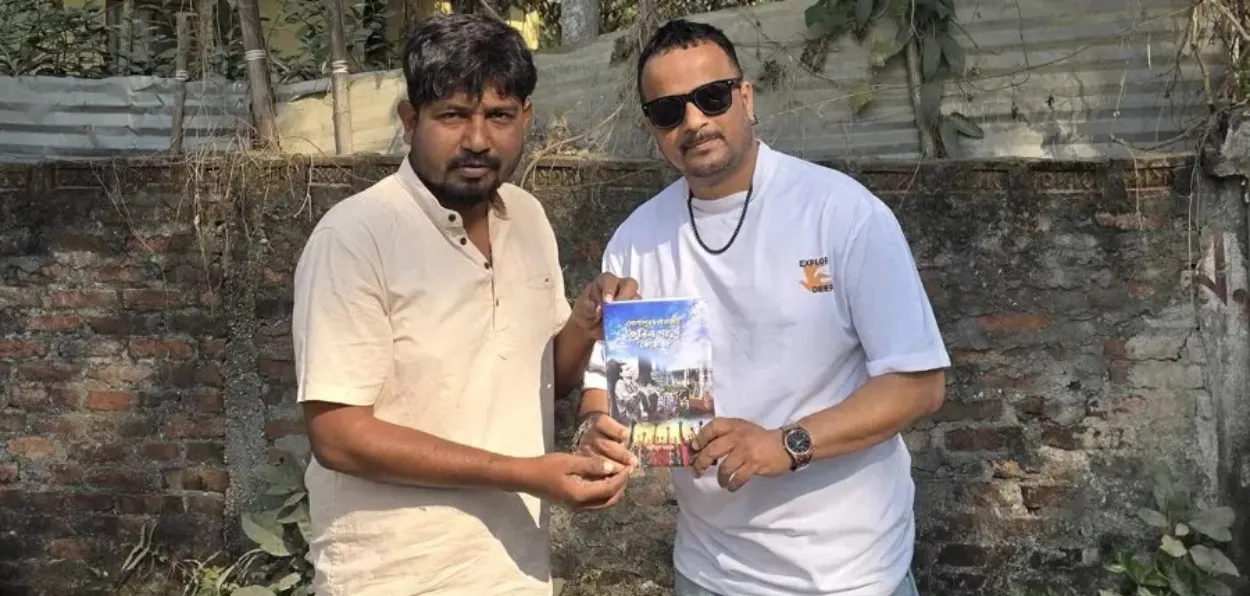
_during_the_release_of_his_poetry_compilation.jpg) Arifur Rahman at the launch of his book
Arifur Rahman at the launch of his bookSpeaking with Awaz–The Voice, Arifur Rahman said, “I write about the people. Whatever I see, I express it through words. I believe that every person who cries at someone’s death is, in a way, a poet.”
While studying pharmacy at Assam Medical College in Dibrugarh, he received the best poet’s award for his poem. “From there, I felt inspired and interested in composing poetry. Many people have influenced my life. My respected Mukul Bezbaruah Sir, poet Pranab Dada, Himangshu Prasad Das Dada, has greatly inspired me.”
He says Himangshu Dada appreciated his poem ‘Amar Cholir Ki Hobo O Master (What Will Happen to Our Child, O Teache)r’, and even shared it on social media.”
Asked about the process of composing a poem, he said: “As I am associated with the healthcare sector, I closely witness many people suffering from health-related problems. I write about them. I express my feelings or bring forth the issues faced by people to the government through my poems. I come from a lower-middle-class family. I am neither a capitalist nor a beneficiary. Even a slight increase in the price of an LPG cylinder causes a lot of difficulties for people like us. People suffer due to the high cost of medicines. So, I try to express these realities in my poetry.”
Thinking about these issues, I composed a poem titled ‘Bemar Huwatkoi, Mrityu Huwai Bhaal Asil (It was Better to Die Than to Fall Sick).”
Arifur Rahman obtained a diploma in pharmacy from Assam Medical College, Dibrugarh, and also a BA degree in Political Science from Barkhetri College.
Being associated with healthcare services, Rahman has been observing people’s joys, sorrows, laughter and tears. These experiences are reflected mostly in his poetry.
About his poem ‘Sonapuror Pora Moi Zubeen Garge Koisu’, he said, “We have seen Zubeen Garg since our childhood. From hearing ‘Pakhi Pakhi Ei Mon’ on the radio in childhood, to ‘Hiya Diya Niya,’ and now ‘Roi Roi Binale,’ we have grown up watching Zubeen da. He is a true artist. His childlike expressions still move us all. His songs play in every Assamese household, irrespective of being Hindu or Muslim.
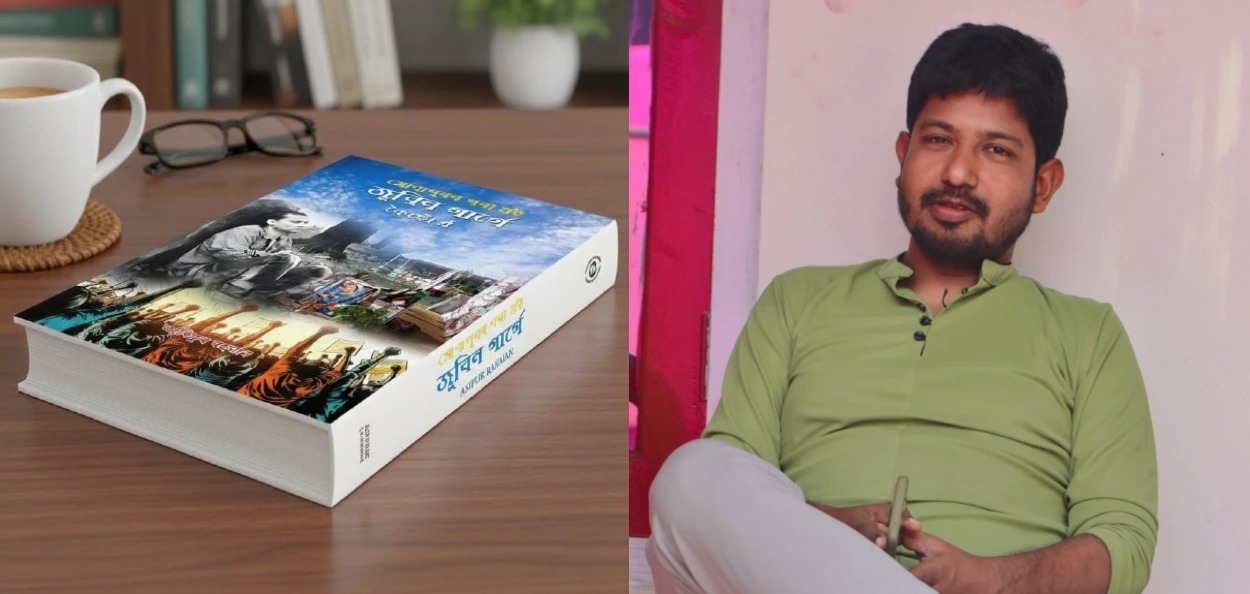 Arifur Rahman and his book
“Nowadays, even small children sing ‘Mayabini…’ instead of ‘Johnny Johnny Yes Papa.’ Being an emotional person, while writing the poem, I thought about what Zubeen Garg’s soul would want to say. That is how the poem took shape. I studied in Dibrugarh and have experience travelling overnight by bus to Eastern Assam. Earlier, I used to fall asleep while passing through Sonapur. But now people don’t sleep until they cross Sonapur, because the immortal god of music rests there. It feels as if Zubeen da is telling us — when you pass by me, at least play a song and call out to me. In this way, we can keep him alive forever.”
Arifur Rahman gained popularity with his poem ‘Sonapuror Pora Moi Zubeen Garge Koisu’. In some events, people even address him as “Sonapuror Dadajon (The Brother from Sonapur)”.
Rahman struggled to find a job after completing his studies. Later, he worked for a short time in the Public Health Engineering Department in Rangia but eventually left the job. He said, “When I left the job, my father asked me why. I told him, "I cannot kill my ideals.”
As a pharmacist, Rahman is deeply concerned about the condition of pharmacies. He said: “Pharmacies have now become like ordinary shops that anyone can set up and run. Even an HSLC passout is running a pharmacy. There are cases of wrong medicines being given to patients. The person at the pharmacy may give a full tablet to an adult and half to a child without understanding proper dosage.
Many people don’t go to doctors and instead approach pharmacies with their illness and take medicines. At a time when we are thinking about going to Mars, our pharmacies don’t even have qualified pharmacists. This is something to ponder about.”
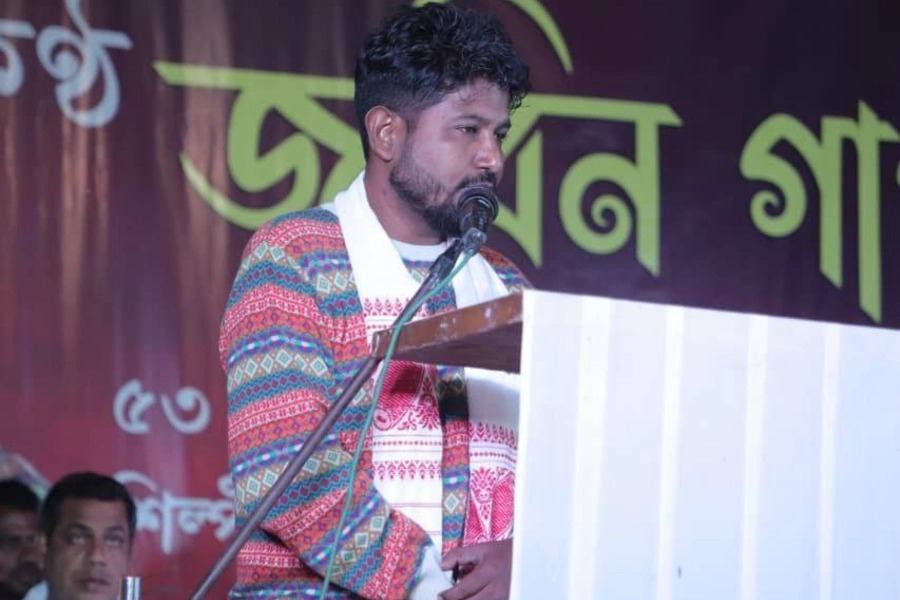 Arifur Rahman at a public function
Rahman’s poems based on real-life experiences — such as ‘Moi Suwalir Deutake Koisu (I Speak as a Girl’s Father)’, ‘Bemar Huwatkoi Mrityu Huwai Bhaal Asil’, and ‘Ami Nimna Madhyabitta Manuh (We Are Lower Middle-Class People)’ — have been published in newspapers, magazines and social media from time to time.
After Zubeen Garg’s demise, Rahman also wrote several poems dedicated to him, including ‘Sonapuror Pora, Moi Zubeen Garge Koisu’ and ‘Zubeen Gargor Atmar Kothare Roi Roi Binali (The Soul of Zubeen Garg Speaks Through Roi Roi Binale’), which have resonated deeply with readers.
ALSO READ: Alfiya Pathan: The rising boxing Star from Nagpur, aspiring to be the Next Mary Kom
The poems of Arifur Rahman are a collective echo of time, society, and emotion. The words used in his poetry are not merely ornamental elements of language; they are vivid expressions of life experiences, joys and sorrows, hopes and despair and human sensitivity. His poems touch the hearts of readers and inspire deep reflection.











.webp)
.webp)