New Delhi
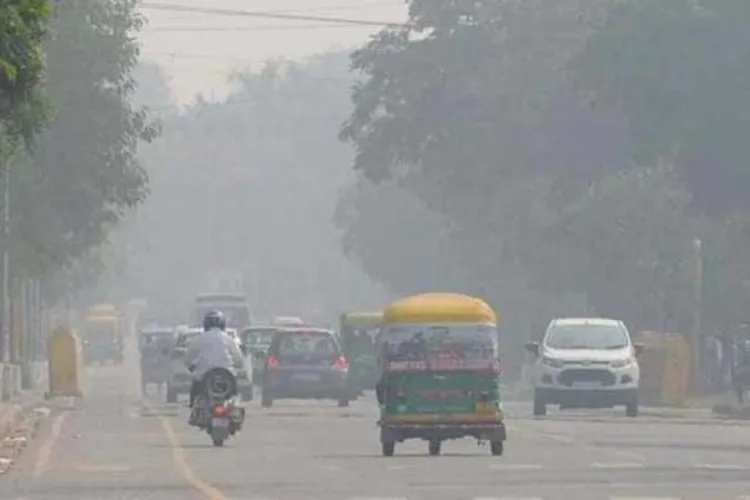
Around 40 per cent of India’s districts do not have a government-operated air quality monitoring station, leaving millions without access to reliable, real-time pollution data, according to a new study by Airvoice.
The report, titled Air Quality Data Accessibility in India: Distribution, Gaps, and Network Correlations, analysed the reach and performance of three major monitoring systems—National Air Monitoring Programme (NAMP), the Continuous Ambient Air Quality Monitoring (CAAQM) network, and the System of Air Quality and Weather Forecasting And Research (SAFAR)—using official datasets up to 2025.
The findings highlight stark disparities in monitoring coverage across the country. Major urban centres such as Delhi, Mumbai, and Bengaluru have dense networks of monitoring stations. However, many medium-sized cities and large districts—some with populations running into millions—have only one or two stations, or none at all.
The study also pointed out that several highly populated districts in states like Uttar Pradesh, Bihar, West Bengal, and Andhra Pradesh remain either poorly monitored or entirely outside real-time air quality networks.
Beyond coverage gaps, the report flagged concerns over data reliability. Only about half of the continuous monitoring stations consistently provide stable data, while others face frequent outages, interruptions, or incomplete reporting—limiting their effectiveness for public health alerts and policymaking.
Another key issue is the mismatch between pollution levels and monitoring infrastructure. The study found only a moderate correlation between PM2.5 pollution levels and the number of monitoring stations at state and district levels. This means that some of the most polluted areas still lack adequate real-time monitoring, while less polluted regions may have better coverage.
Vitalii Matiunin, CEO of Airvoice, said the findings reveal a critical gap in India’s air quality management system.
“Automated monitoring remains unavailable in several states, and even where infrastructure exists, significant data is lost due to technical downtime. While expanding the network is important, equal focus must be placed on ensuring data stability and developing actionable services,” he said.
The study underscores the urgent need to not only expand monitoring infrastructure but also improve its reliability to better inform citizens and guide effective environmental policy.

















.webp)