New Delhi
In a major push to strengthen India’s climate commitments, the Union Cabinet has approved the country’s updated Nationally Determined Contribution (NDC) for the period 2031–2035 under the United Nations Framework Convention on Climate Change and the Paris Agreement.
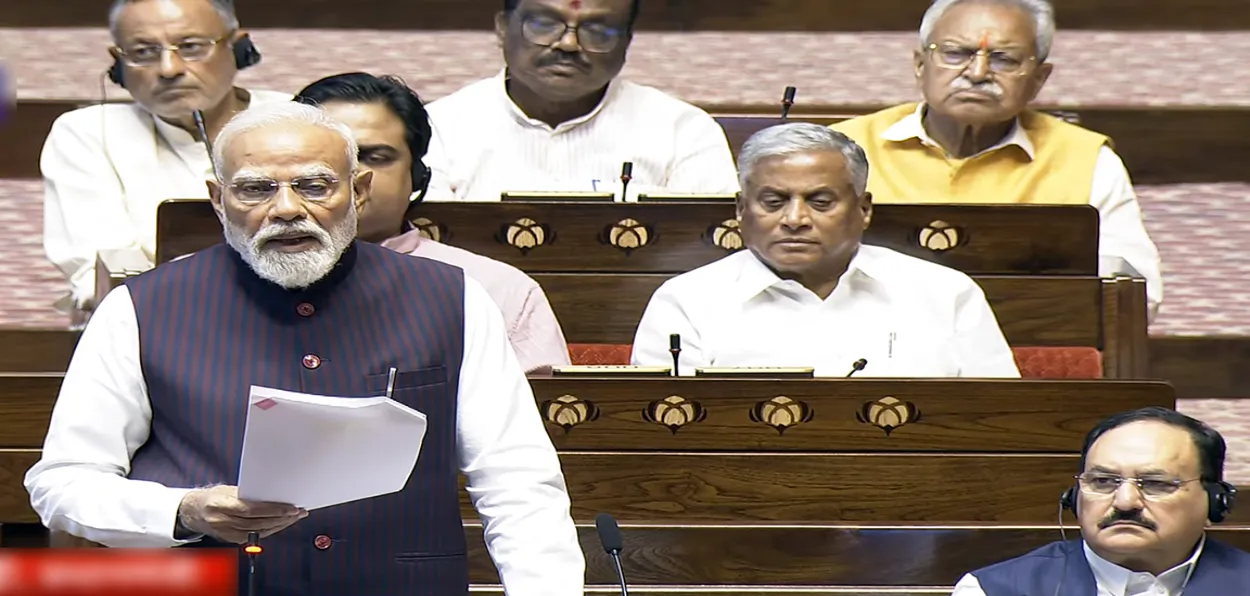
The decision, taken at a Cabinet meeting chaired by Prime Minister Narendra Modi, aims to enhance India’s climate ambition while aligning with its long-term vision of sustainable development and climate justice.
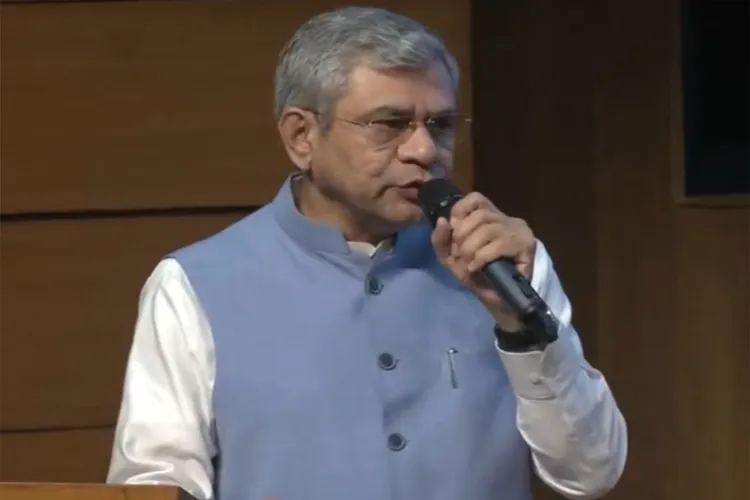
Briefing the media, Information and Broadcasting Minister Ashwini Vaishnaw said the new targets build upon India’s earlier commitments, many of which have already been achieved ahead of schedule. He highlighted India’s “consistent track record” in delivering on climate goals.
Key targets for 2031–2035
The updated NDC outlines a set of ambitious goals:
The government noted that these targets mark a significant step toward India’s long-term goal of achieving net-zero emissions by 2070.
Focus on sustainability and resilience
The updated climate strategy emphasizes integrating sustainability into governance and daily life, while ensuring a “just and inclusive transition” for all sections of society. It aligns with the broader vision of “Viksit Bharat,” aiming to build a climate-resilient and prosperous nation by 2047.
India’s approach includes large-scale expansion of renewable energy, development of battery storage systems, and investment in green infrastructure such as energy corridors and cleaner manufacturing systems.
Key flagship initiatives supporting these goals include the Green Hydrogen Mission, PM Surya Ghar: Muft Bijli Yojana, Production Linked Incentive (PLI) schemes, and PM-KUSUM. The government is also promoting emerging technologies like Carbon Capture, Utilization and Storage (CCUS) and expanding nuclear energy capacity.
Adaptation and local action
Beyond mitigation, the NDC places strong emphasis on climate adaptation and resilience. Measures include:
These efforts are implemented through frameworks such as the National Action Plan on Climate Change (NAPCC) and State Action Plans on Climate Change (SAPCC), ensuring coordination across sectors and levels of government.
Global leadership and partnerships
India continues to play an active role in global climate cooperation through initiatives such as the International Solar Alliance, Coalition for Disaster Resilient Infrastructure, and the Global Biofuel Alliance.
The updated NDC also reflects principles such as equity and “Common but Differentiated Responsibilities and Respective Capabilities” (CBDR-RC), balancing developmental priorities with climate action.
People-driven climate movement
The government highlighted initiatives like “Lifestyle for Environment (LiFE)” and campaigns such as “Ek Ped Maa Ke Nam,” aimed at turning climate action into a mass movement. It also noted that the green transition is expected to create new opportunities for youth and women.
READ MORE: AdvocateTuba Snowbar is unapologetic, unstoppable
With this approval, India reinforces its position as a key global player in climate action, demonstrating that economic growth and environmental sustainability can go hand in hand.
.gif)











.webp "Home Minister Amit Shah")
_Bill,_Oppn_MPs_oppose.webp "MoS Home Nityanand Rai")