New Delhi
Chief Justice of India (CJI) Surya Kant on Monday said that access to water must go beyond household tap connections, stressing that a dry pipe cannot fulfil the promise of water access and contaminated water poses a threat to life and health.
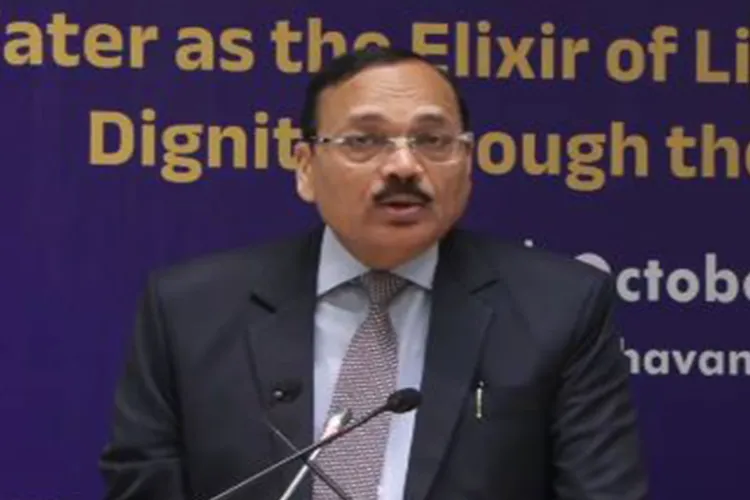
Addressing the National Human Rights Commission's Foundation Day celebrations and a one-day conference on 'Water – The Elixir of Life', the CJI said that access to safe and reliable water was essential to ensuring human dignity and fulfilling constitutional rights.
"A mere tap is not the same as access to water. A pipe that runs dry cannot fulfil the promise that the pipe represents. And water contaminated with arsenic, fluoride or other harmful substances is not a service; it is a threat to life and health," he said.
Highlighting the link between water and human rights, CJI Surya Kant said water sustains health, enables education, protects dignity and shapes the conditions in which families live and work.
"A community without reliable access to water cannot fully enjoy the dignity that our Constitution promises. Water, therefore, is not an isolated entitlement. It is one of the conditions that makes the fulfilment of every other right possible," he said.
The CJI also stressed the need for a collective approach to addressing water-related challenges, stating that governments, courts, human rights commissions, civil society and international institutions all had roles to play.
He said governments must build and maintain systems to ensure water reaches people, while courts must intervene when constitutional rights are violated. Human Rights Commissions, he added, must investigate complaints, identify systemic failures and ensure that concerns receive institutional attention.
Emphasising the responsibility towards future generations, Surya Kant warned against depleting aquifers, polluting rivers and compromising drinking water sources.
"The water right must therefore be understood not only as a right of the present, but as a responsibility towards the future," he said.
On the role of the National Human Rights Commission (NHRC), the CJI said the institution had registered more than 24 lakh cases and disposed of over 23 lakh cases over its 33-year existence, with a disposal rate exceeding 98 per cent.
Describing the Commission as a keeper of the Constitution's promises, he said its role was particularly significant in reaching people who faced difficulties accessing courts.
"If the Constitution is the promise, the Commission is one of its keepers. It goes where the court cannot easily go; it listens to those who cannot easily speak, and it can act on its own without waiting to be asked," he said.
The CJI also highlighted the importance of protecting the rights of marginalised communities, undertrial prisoners, migrant workers, elderly people, persons with disabilities and women.
READ MORE:Abdul Hamid: UGC-NET Arabic topper worked in farm, as Imam
He further commended the NHRC for launching its mobile application and digitising its records, saying the initiative would make the Commission more accessible by allowing citizens to file complaints, track their progress and access information.

.jpg "Gujarat’s women entrepreneurs bring their craftsmanship to life during Navratri")








.jpg "Delhi High Court")