New Delhi
The Travancore Devaswom Board told the Supreme Court of India on Wednesday that courts cannot sit in judgment over the religious beliefs of a denomination, arguing that such beliefs must be assessed through the community’s own faith and practices.
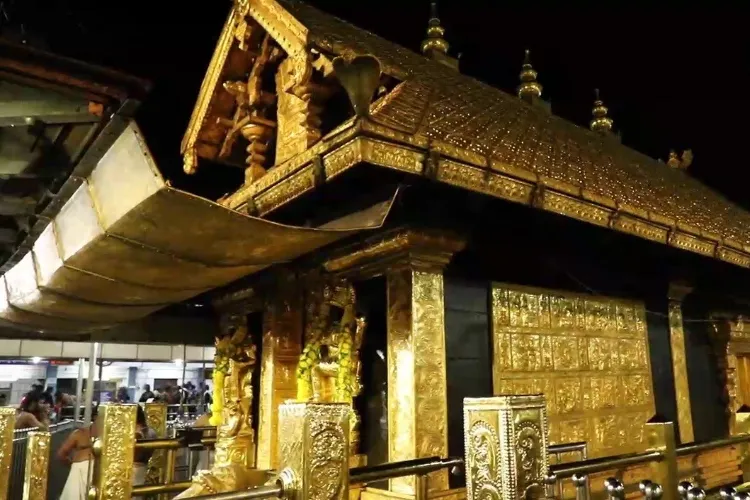
The board, which manages the historic Sabarimala Temple and over 1,000 temples in South India, made the submission before a nine-judge Constitution bench headed by Justice Surya Kant.
Senior advocate Abhishek Singhvi, appearing for the TDB, said religion is a set of beliefs and practices followed by a sect or denomination with a broadly similar identity.
He argued that while Article 25 of the Constitution grants individuals the right to profess, practise and propagate religion, those rights cannot intrude upon the collective rights of adherents of that religion or denomination.
Singhvi further submitted that courts should not add to or modify the constitutional text, and said the doctrine of “essential religious practices” developed through some judgments was impermissible.
The bench, also comprising Justices B. V. Nagarathna, M. M. Sundresh, Ahsanuddin Amanullah, Aravind Kumar, Augustine George Masih, Prasanna B. Varale, R. Mahadevan and Joymalya Bagchi, is hearing petitions concerning discrimination against women at religious places and the scope of religious freedom across faiths.
On April 9, the court had orally observed that Hinduism would be adversely affected and society divided if temples and mutts restricted entry on grounds of sect or denomination.
Those remarks came during submissions by senior advocate C. S. Vaidyanathan, appearing for devotees of Lord Ayyappa, who argued that Article 26(b) gives denominations the right to manage their own affairs and takes precedence over Article 25(2)(b), which allows the state to open Hindu public religious institutions to all classes.
In September 2018, a five-judge Constitution bench of the Supreme Court, by a 4:1 majority, struck down the ban on entry of women aged 10 to 50 into the Sabarimala temple, holding the centuries-old practice unconstitutional.
READ MORE: Ayesha Tabassum’s journey from breaking news to building narratives
Later, in November 2019, another five-judge bench headed by former Chief Justice Ranjan Gogoi referred broader issues relating to discrimination at places of worship to a larger bench.









.webp)